
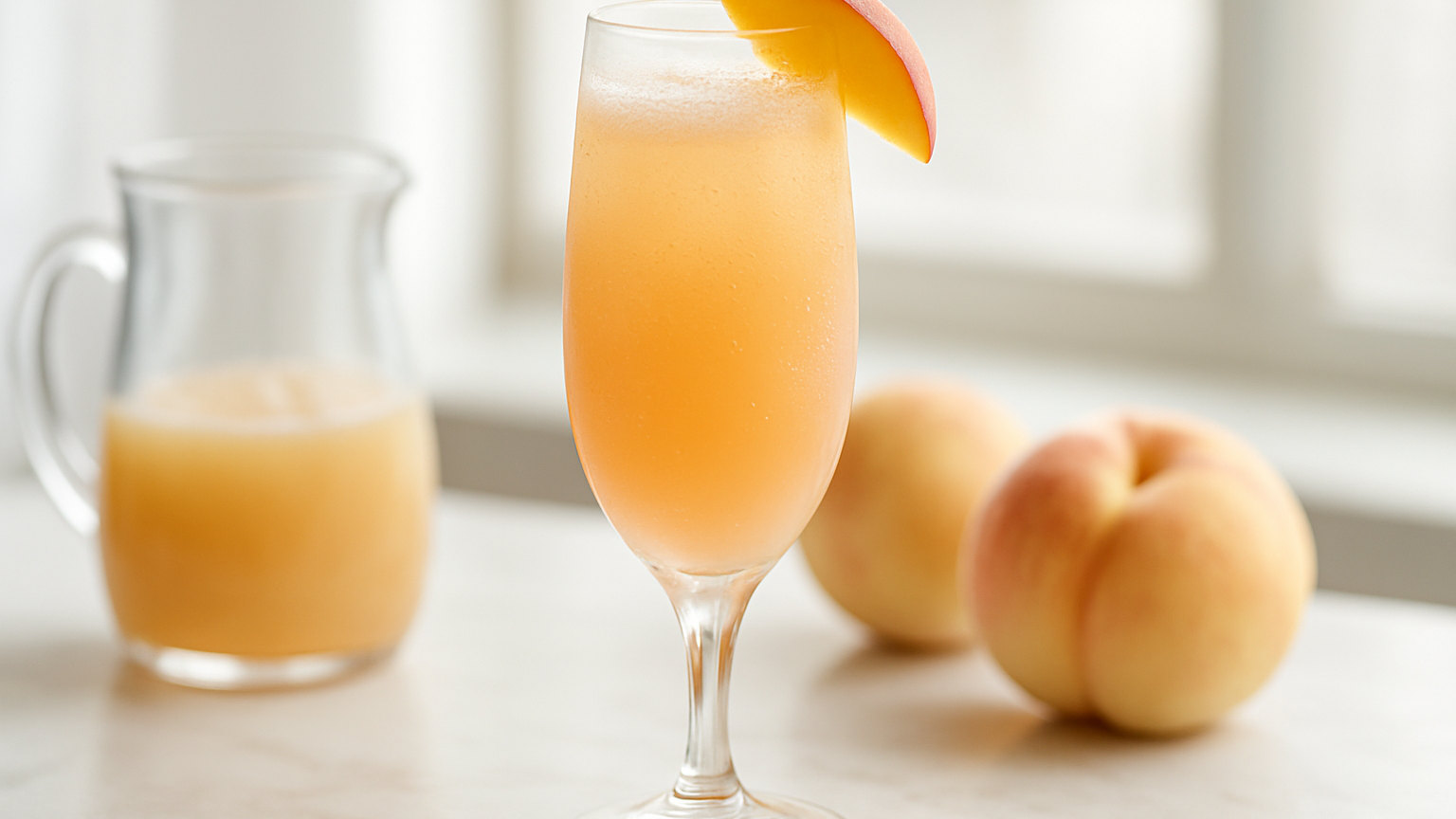
A bellini has two ingredients, so the quality of one of them decides everything. Made with fresh white peach it is excellent; made with bottled peach nectar it is a sweet fizzy drink with little to recommend it.
What is the recipe?
- 100ml dry prosecco
- 50ml white peach purée
Pour the purée into a chilled flute or small wine glass. Add the prosecco slowly and stir once gently with a bar spoon.
Why white peach?
Because it is more delicate, more floral and less acidic than yellow peach, which suits the drink better. It is also what the original used.
Yellow peaches work and give a stronger, sweeter, more obviously peachy drink. Neither is wrong and the white version is the more elegant.
How do you make the purée?
Blend ripe peeled peaches with a little lemon juice and a small amount of sugar syrup if they need it. Pass through a sieve if you want it perfectly smooth.
Peeling is easier if you score a cross in the base, cover with boiling water for thirty seconds and refresh in cold water. The skins slip off.
How much purée does a peach give?
Roughly 60 to 80ml per medium peach once peeled and blended, so three or four peaches cover a bottle of prosecco. Ripe fruit gives more and blends more smoothly.
What if peaches are out of season?
Frozen peaches, blended from frozen, work well and are usually better than out-of-season fresh ones. Good quality bottled purée is the next option.
Peach nectar from a carton is thin and heavily sweetened and gives a poor result, which is what most disappointing bellinis are made with.
Which sparkling wine?
Dry prosecco, traditionally and correctly. It is soft, fruity and inexpensive, and its character suits peach.
Champagne is wasted here since the purée covers most of its complexity. Cava works and is drier, which some prefer.
Should it be shaken?
No. Shaking anything sparkling is a mistake, and the purée is thin enough to combine with a single stir.
If the purée is thick, loosen it with a little cold water or lemon juice before adding the wine rather than stirring harder.
How cold should everything be?
Purée from the fridge and prosecco properly chilled, around 6 to 8 degrees. Warm sparkling wine foams over as it meets the purée and loses its carbonation within a minute.
Chilling the glass buys several more minutes of a lively drink.
How strong is it?
Around 1.2 units, which is genuinely low and part of why it suits daytime drinking.
What are the related drinks?
- Rossini. Strawberry purée.
- Puccini. Fresh mandarin juice.
- Tintoretto. Pomegranate juice.
- Mimosa. Orange juice, at equal parts.
Can you batch it?
Make the purée hours ahead and keep it cold. Wine goes in per glass, since a batched bellini is flat within twenty minutes.
Where does it come from?
Venice in the 1940s, created at Harry’s Bar and named for the pink tones in a Bellini painting. White peaches were seasonal and local, which is why the original is built around them.
What ruins it?
Peach nectar from a carton, which is thin and heavily sweetened, and warm prosecco, which foams over and goes flat within a minute.
What glass should you use?
A chilled flute or a small wine glass. The original was served in a small tumbler, and any of the three works provided it is cold.
Should you add sugar to the purée?
Only if the peaches need it. Ripe fruit in season usually does not, and a small amount of sugar syrup and a squeeze of lemon helps out-of-season fruit considerably.
Taste the purée before it goes near the wine, since it is much easier to adjust at that stage.
Is it worth making from scratch?
Yes, and it is the clearest example in this section of one ingredient deciding the whole drink. The gap between fresh purée and bottled nectar is larger than the gap between two sparkling wines.


