
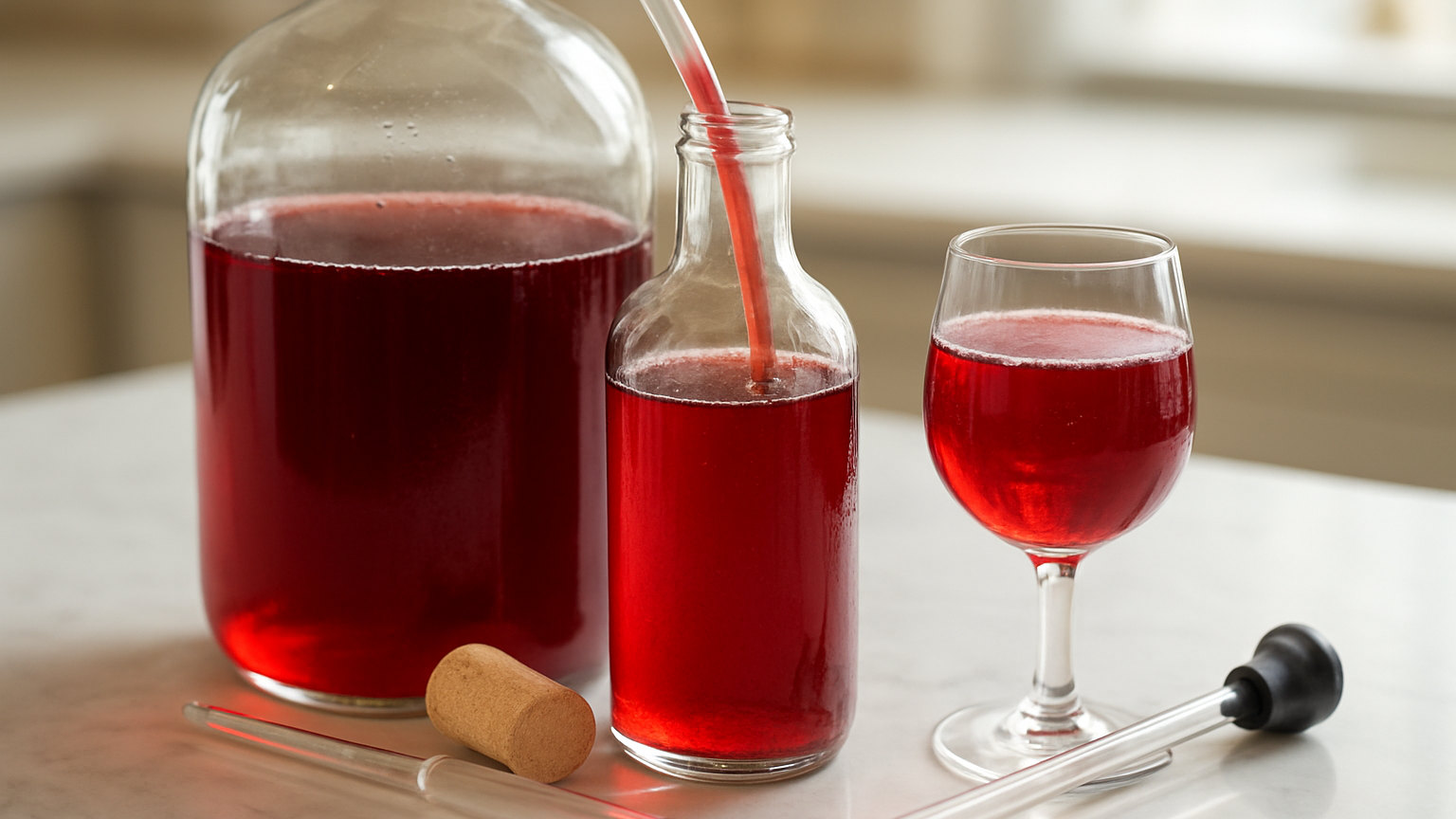
Bottling is the point at which a batch stops being adjustable. Anything wrong at that moment stays wrong, and one particular error can be genuinely hazardous. The technique itself is straightforward; the checks that come first are what matter.
What should you check before bottling?
- Fermentation has finished. Three identical hydrometer readings on consecutive days, ideally below 1.000.
- The wine has been racked at least twice and is dropping little or no new sediment.
- It is reasonably clear. Not necessarily brilliant, but not soupy.
- It has been stabilised if you intend to sweeten it, or if the final gravity sat above 1.000.
The first of these is the safety-critical one. Sugar plus live yeast in a sealed bottle builds pressure until a cork pushes out or the glass fails.
How long after fermentation should you wait?
Longer than most people do. A sensible pattern is to confirm the finish, rack, leave a month, rack again, then bottle. Four to six months from brew day is typical for a country wine.
The wine is not idle during that time. It is dropping fine sediment, softening, and letting harsh compounds settle. Bottling early gives bottles with a deposit and a wine that tastes rougher than it needed to.
Corks or screw caps?
Both work and they suit different intentions:
- Natural corks. Traditional, allow very slow oxygen exchange, suit wines being aged for years. Need a corker and must be stored on their side.
- Synthetic corks. Cheaper, consistent, no risk of cork taint. Best for wines drunk within two or three years.
- Screw caps. Require the right bottles but are the easiest option and seal reliably.
- Swing tops. Reusable and convenient, though they take more space.
For an elderberry meant to sit for three years, natural cork. For a rhubarb wine to be drunk by summer, anything that seals.
Should bottles be stored on their side?
With natural cork, yes. A dry cork shrinks and lets air in. With synthetic corks and screw caps it makes no difference, and upright storage is easier and safer.
How do you fill bottles cleanly?
Sanitise the bottles and let them drain rather than rinsing with tap water. Siphon rather than pour, with the tube running to the bottom of each bottle so the wine fills from below without splashing. Splashing introduces oxygen, which browns wine over months.
Fill to about two centimetres below where the base of the cork will sit. A bottling stick, which stops the flow when lifted, makes this far easier and costs very little.
How much wine does a gallon fill?
About six standard 75cl bottles, allowing for losses to sediment and racking. Sterilise seven, since it is easier than being one short with wine in the siphon.
A gallon at 12 per cent is roughly 54 units in total, or about nine units per bottle. Worth knowing against the UK guideline of no more than 14 units a week spread over three or more days, particularly since home made wine rarely carries a label telling you what is in it.
How long should it age?
By style, roughly:
- Rhubarb, gooseberry, elderflower: three to six months. Drink young.
- Apple, pear, white currant: six to twelve months.
- Blackberry, damson, plum: one to two years.
- Elderberry, sloe: eighteen months minimum, better at three years.
Label every bottle with the fruit and the date. It seems unnecessary with six bottles and becomes essential by the third batch, when everything looks the same in a dim cupboard.
Where should you store the bottles?
Somewhere cool, dark and steady. A temperature around 12 degrees is ideal and consistency matters more than the exact figure, since repeated warming and cooling pushes wine past the cork and lets air in.
Light is the other enemy. Ultraviolet degrades wine quickly, which is why bottles are green or brown in the first place. A cupboard under the stairs beats a rack in a sunny kitchen by a wide margin.
Should you reuse commercial bottles?
Yes, and most home wine makers do. Soak the labels off, scrub the inside with a bottle brush, and sanitise thoroughly. Check the neck for chips, since a chipped rim will not seal.
Screw cap bottles need matching caps and a capping tool, so it is simpler to collect corked bottles if you intend to cork. Avoid bottles that held anything strongly flavoured, since the residue is difficult to remove entirely.


