
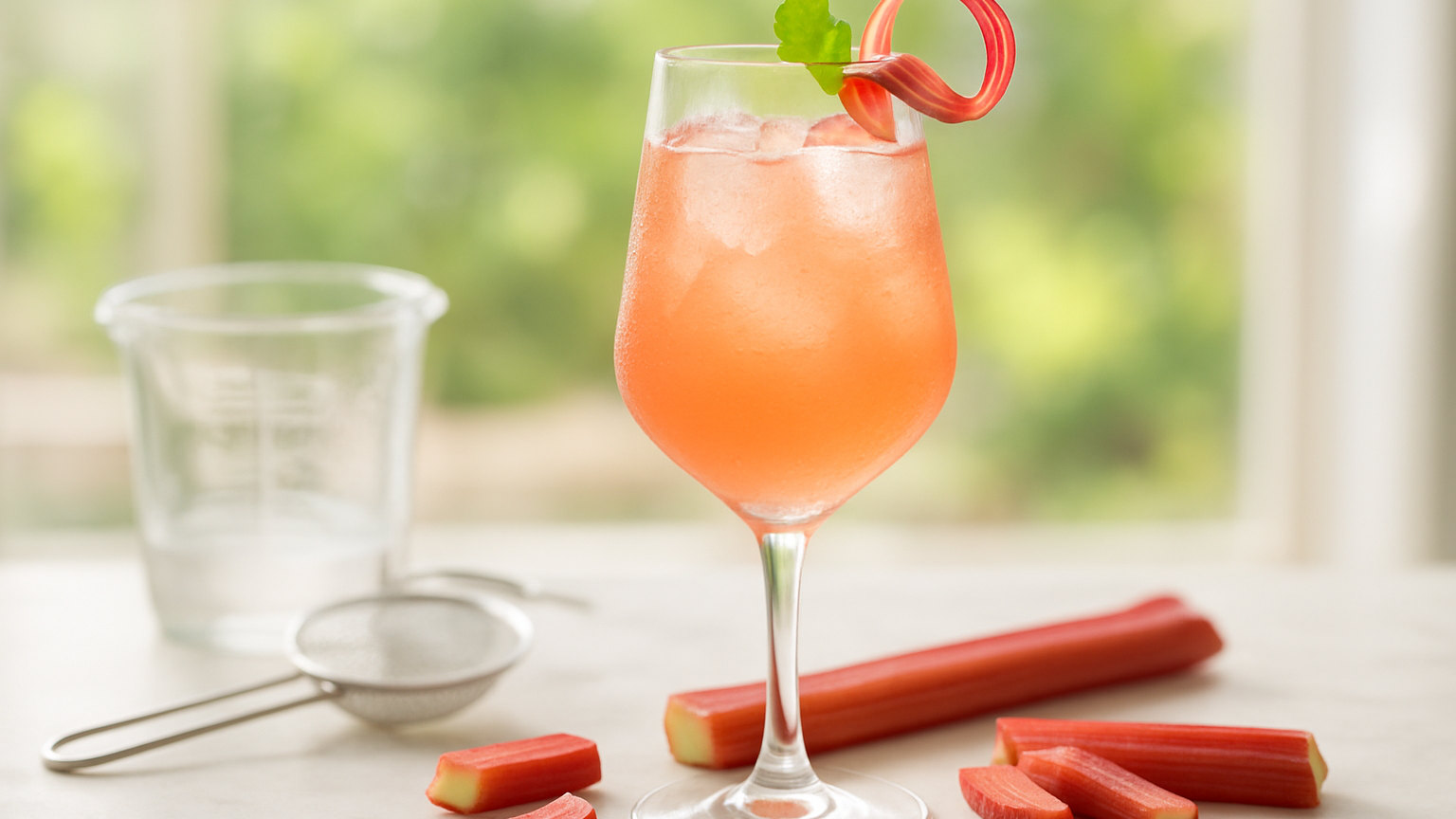
Rhubarb arrives when nothing else does, which alone earns it a place in the country wine calendar. It also produces a crisp, dry, faintly appley white wine that is drinkable within six months rather than the years an elderberry demands. It does, however, need treating differently from other fruit.
Why is rhubarb a special case?
Because of oxalic acid. Rhubarb contains it in the stalks and in far higher concentration in the leaves. In wine making it causes two problems: it gives a hard, sharp character, and it can combine with calcium to form a deposit.
The leaves must never be used at all. They contain enough oxalic acid to be genuinely poisonous and they go on the compost heap, not in the bucket.
How do you reduce the oxalic acid?
The traditional method is to add precipitated chalk, which is calcium carbonate. Around one teaspoon per gallon reacts with the oxalic acid to form calcium oxalate, which is insoluble and settles out as sediment.
Add it after the initial extraction, stir well, and expect fizzing. Let it settle for a day before straining. Many modern recipes skip this and simply accept a sharper wine, which is a legitimate choice if you like the style.
Is home made rhubarb wine safe?
Yes, made from the stalks. The oxalic acid in stalks is at levels people eat routinely in crumbles and jams. It is only the leaves that present a genuine hazard, and only if used in quantity.
What is the one gallon recipe?
- 1.5kg rhubarb stalks, leaves removed, chopped into short lengths
- 1.1kg granulated sugar
- Water to 4.5 litres
- 1 teaspoon pectic enzyme
- 1 teaspoon yeast nutrient
- 1 teaspoon precipitated chalk, optional
- 1 sachet white wine yeast
- 1 Campden tablet
No added acid is needed. Rhubarb has plenty of its own, which is unusual among country wine fruit and one of the reasons it works so well.
Why is cold extraction used?
Because boiling water sets the pectin in rhubarb and produces a wine that will never clear. This is the opposite of the usual country wine method and the most common reason a first rhubarb batch stays permanently cloudy.
The traditional approach is to layer the chopped stalks with the sugar in a bucket and leave them for 24 to 48 hours. The sugar draws the juice out osmotically without any heat at all. Strain off the liquid, press the stalks lightly, and make up to volume with cold water.
What is the timetable?
- Days 1 to 2. Layer with sugar and leave to draw.
- Day 3. Strain, make up to volume, add chalk if using, add Campden tablet.
- Day 4. Add pectic enzyme.
- Day 5. Hydrometer reading, then pitch yeast and nutrient.
- Week 2. Transfer to demijohn with airlock.
- Weeks 4 and 10. Rack.
- Month 4. Rack, bottle.
When should you pick it?
Early season, roughly March to May, when the stalks are still slender and pink. Later stalks are coarser, greener and higher in oxalic acid, and they make a harsher wine.
Pull the stalks rather than cutting them, twisting gently at the base. Cutting leaves a stub that rots back into the crown.
How soon can you drink it?
Six months from starting is realistic and it is genuinely good at that point, which makes it one of the few country wines that does not require patience. Started in April, it is drinkable by October.
It does not improve much beyond about eighteen months, so there is no reason to hold it. Expect around 11 to 12 per cent, dry, crisp and pale straw in colour.
Can you use forced rhubarb?
Yes, and it makes a particularly good wine. Forced rhubarb is grown in the dark, which gives slender pink stalks that are lower in oxalic acid and noticeably less fibrous. It is available from around January, which pushes the season earlier still.
It is more expensive than garden rhubarb, so it is worth reserving for a batch where you want the pink tint and the softer character rather than using it routinely.
What variations work?
Adding 250g of raisins gives body and a rounder mouthfeel, which addresses the main criticism of rhubarb wine. A few slices of root ginger in the demijohn produces a warming version. Blending with elderflower, which comes into season shortly afterwards, makes something better than either alone.


