
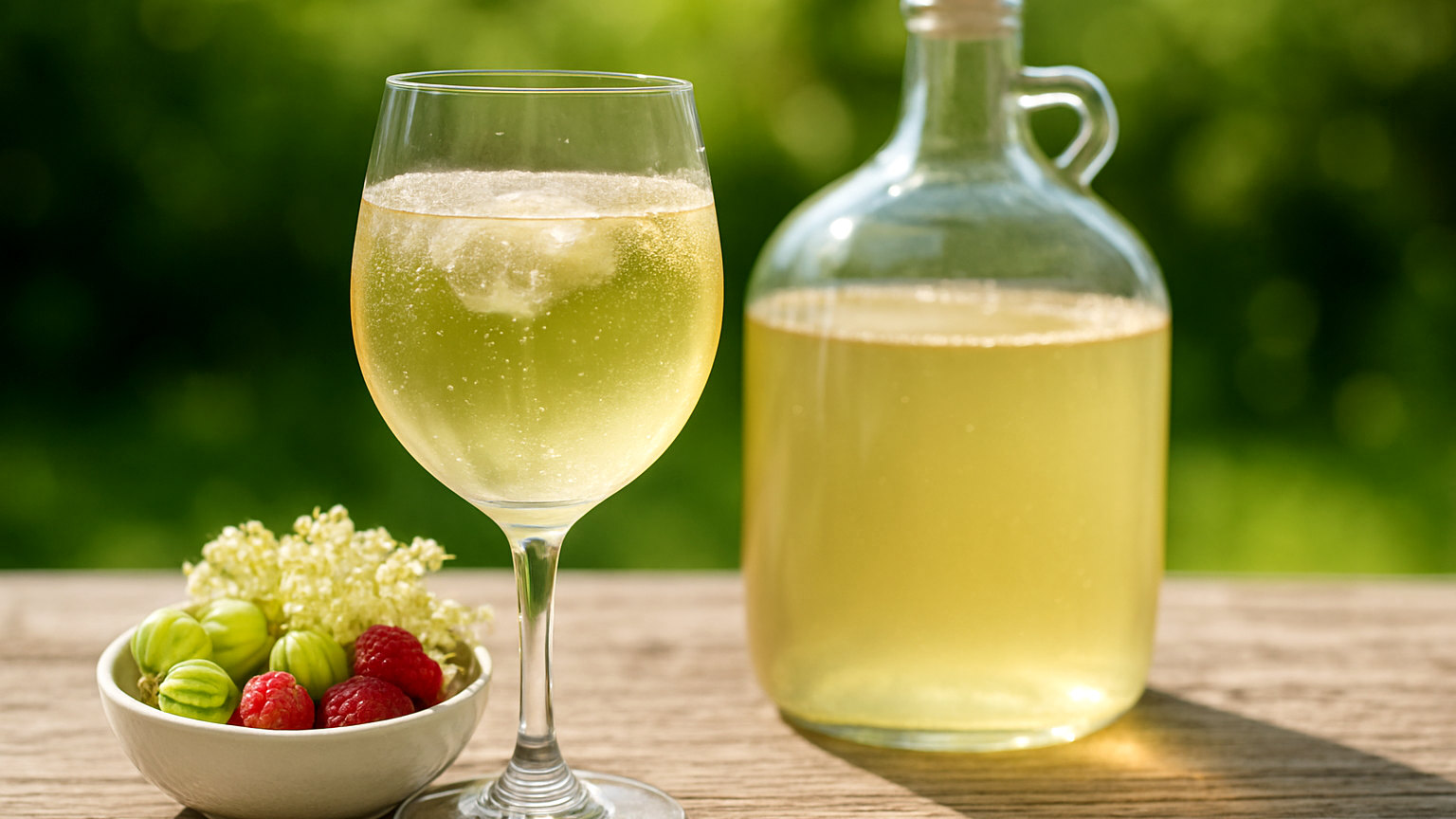
Country wine means wine made from anything other than grapes, which in practice means whatever is growing in quantity near you. It predates home brewing as a hobby by centuries and it needs a demijohn, an airlock and a bucket. The method below works for almost any fruit with only the quantities changing.
What is the basic one gallon recipe?
For 4.5 litres of finished wine:
- 1.5kg to 2kg prepared fruit
- 1kg to 1.2kg granulated sugar
- Water to make up to 4.5 litres
- 1 teaspoon citric acid, or the juice of two lemons
- 1 teaspoon pectic enzyme
- 1 teaspoon yeast nutrient
- 1 sachet wine yeast
- 1 Campden tablet
That is the skeleton of nearly every country wine recipe ever written. Soft berries sit at the lower end of the fruit range and firm fruit such as apples or plums at the higher end.
What does each of the additions do?
None of them is optional padding:
- Acid. Fruit other than grapes is usually low in acid. Without it the wine tastes flat and is more prone to spoiling.
- Pectic enzyme. Breaks down the pectin that makes fruit set as jam. Without it the wine will never clear.
- Nutrient. Fruit musts lack the nitrogen grape juice provides, and a starved yeast produces off flavours or stops entirely.
- Campden tablet. Releases sulphur dioxide, which kills wild yeasts and bacteria on the fruit.
What is the timetable?
From picking to drinking is around six months, most of it waiting:
- Day 1. Prepare the fruit, add boiling water, sugar, acid. Cool, then add one crushed Campden tablet. Cover and leave 24 hours.
- Day 2. Add pectic enzyme. Leave 12 hours.
- Day 3. Take a hydrometer reading, then pitch the yeast and nutrient.
- Days 4 to 7. Ferment on the pulp in a covered bucket, pressing the fruit down twice daily.
- Day 8. Strain into a demijohn and fit an airlock.
- Weeks 3 to 8. Fermentation slows and stops. Rack off the sediment at around week three and again at week eight.
- Months 3 to 6. Clear, stabilise, bottle and age.
Why ferment on the pulp at first?
Because colour, tannin and much of the flavour sit in the skins rather than the juice, and alcohol extracts them far better than water does. Four to seven days is the usual window. Longer than that and you start pulling out harsh, stalky flavours.
Which fruit works best?
Blackberry, elderberry, damson and blackcurrant give the fullest red wines. Apple, pear, gooseberry and white currant give lighter whites. Rhubarb makes a crisp and surprisingly good wine and is available when nothing else is.
Whatever you pick, use fruit that is properly ripe and free of mould. One mouldy berry in a batch introduces flavours that no amount of ageing will remove.
What about foraged fruit?
Identification is your responsibility and some hedgerow lookalikes are genuinely toxic. If you are not completely certain what a plant is, do not use it. Elderberries in particular must be cooked before use, since raw ones contain compounds that cause nausea and sickness.
Pick away from busy roads and from ground that may have been sprayed, and wash everything thoroughly.
What strength should you expect?
Between 10 and 13 per cent, depending on the sugar. Roughly 1kg of sugar in a gallon gives around 11 per cent if the yeast ferments it out completely.
Take a hydrometer reading before pitching and another when fermentation stops. The difference between the two, divided by 7.36, gives the alcohol by volume. Guessing is how people end up with wine considerably stronger than they intended.
What goes wrong most often on a first batch?
- Pitching yeast too soon after the Campden tablet. The sulphur kills it. Wait a full 24 hours.
- Skipping the pectic enzyme. The wine never clears and no amount of racking will fix it.
- Fermenting somewhere too cold. Below 15 degrees most wine yeasts simply stop.
- Bottling on a quiet airlock. The only reliable test is three identical hydrometer readings.
None of these is about the recipe, which is why two people following the same instructions can get quite different results from the same hedgerow.


