
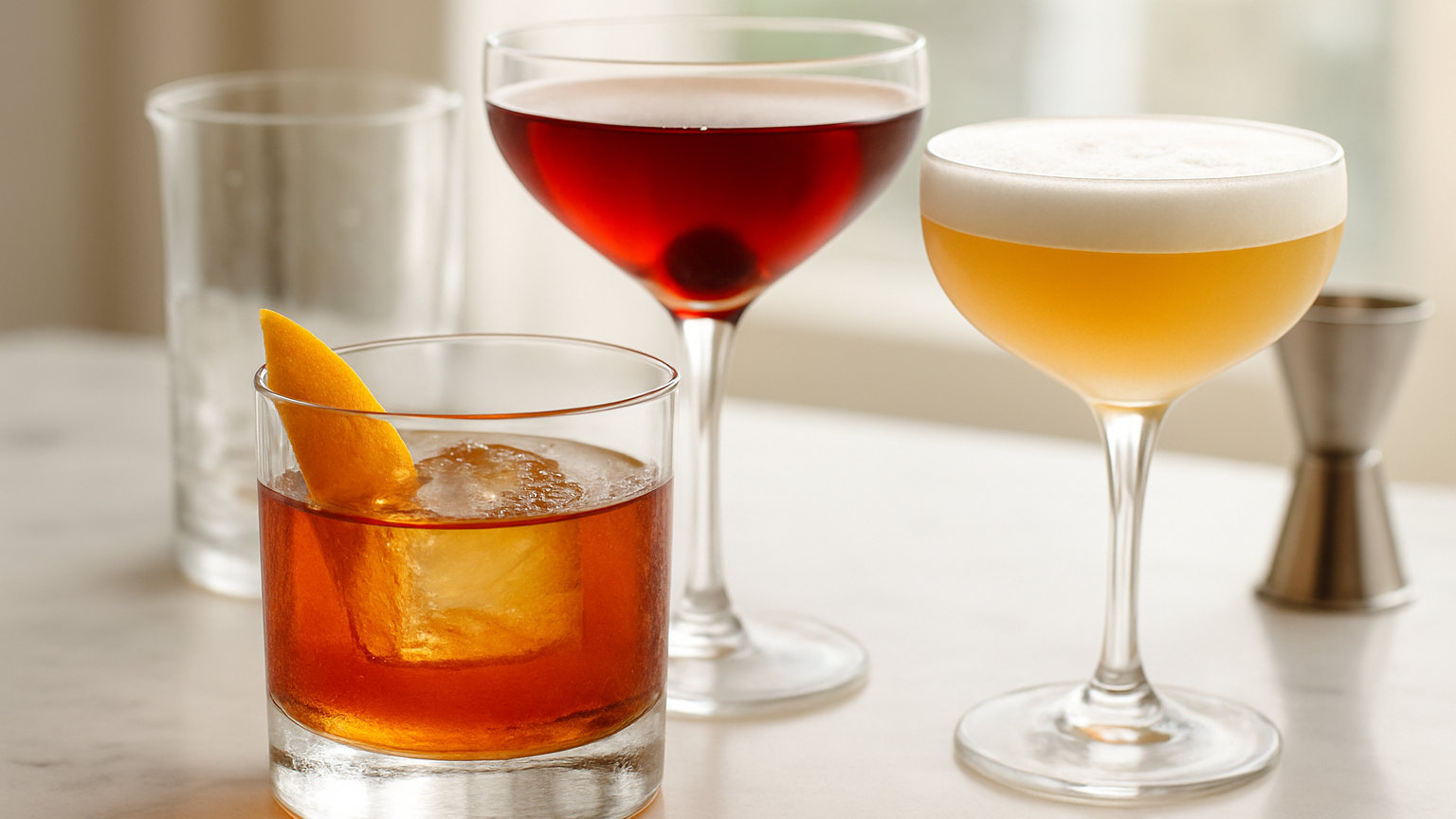
Choosing whiskey for cocktails is usually framed as a question of which style, and the more useful first question is strength. A 40 per cent whiskey and a 50 per cent one behave very differently once a drink has been stirred with ice.
Why does strength matter so much?
Because a stirred cocktail ends up around 20 to 25 per cent water by volume and a shaken one around 25 to 30. A 40 per cent whiskey diluted that far becomes thin and loses its grip on the drink.
At 45 to 50 per cent the whiskey still asserts itself against vermouth, sugar and bitters. This is the main reason bonded and higher-proof bottlings are popular for mixing, and it matters far more than which distillery made it.
What is the practical minimum?
Around 43 per cent for cocktails. Below 40 per cent the drink tastes hollow, and many standard bottlings sit exactly at 40, which is a common reason a home Manhattan disappoints.
Which whiskey for which drink?
- Old fashioned: bourbon for a rounder drink, rye for a drier one. Both work.
- Manhattan: rye. The dryness contrasts with sweet vermouth rather than doubling the sweetness.
- Whiskey sour: bourbon. Vanilla and caramel suit lemon and sugar.
- Sazerac: rye, traditionally, with absinthe and Peychaud bitters.
- Mint julep: bourbon, and the vanilla suits mint.
- Penicillin: blended scotch, with a peated float on top.
- Rob Roy: blended scotch, essentially a scotch Manhattan.
- Highball: Irish or blended scotch, where lightness is an advantage.
Does peated whisky work in cocktails?
In small quantities, extremely well. Peat is powerful enough to dominate a drink entirely, so it works best as a modifier rather than a base.
A 10ml float on a Penicillin, or a rinse of the glass before building a drink, adds smoke without taking over. Using 60ml of a heavily peated Islay as a cocktail base generally produces something that tastes only of peat.
What about scotch generally?
Blended scotch mixes well and is considerably cheaper than single malt. Using an expensive aged single malt in a cocktail wastes most of what you paid for, since the subtlety disappears under sugar and bitters.
This is the same argument as cooking with wine. Use something decent and unremarkable, and keep the good bottle for drinking neat.
Which single bottle covers the most?
A straight rye at 45 to 50 per cent. It makes a good Manhattan, a good old fashioned, a good sazerac and an acceptable whiskey sour.
Bourbon at similar strength is the alternative, better in sours and juleps, less good in a Manhattan. Either covers the majority of the whiskey canon on its own.
What is the second bottle?
Whichever of bourbon or rye you did not buy first. A blended scotch is a reasonable third, and a peated Islay is a fourth that unlocks a small number of drinks and is used a few millilitres at a time.
How much do these drinks contain?
A Manhattan with 60ml of 45 per cent rye and 30ml of vermouth is around 3.2 units. That is comparable to a strong pint, in a glass that looks considerably smaller.
Does an expensive bottle make a better cocktail?
Rarely enough to justify it. Once a whiskey is mixed with vermouth, sugar and bitters and diluted by a third, the subtlety that justified the price is largely gone.
Buy something well made and unremarkable at a good strength for mixing, and keep anything special for drinking neat. That single decision saves more money than any other in a home bar.
What about whisky highballs?
The most forgiving whisky drink there is and the one where a lighter spirit shines. Fifty millilitres of Irish or blended scotch, a full glass of ice, topped with cold soda and a lemon twist.
Pour the soda down the side of a tilted glass and lift once gently from the bottom rather than stirring, since hard stirring knocks the carbonation out immediately.


