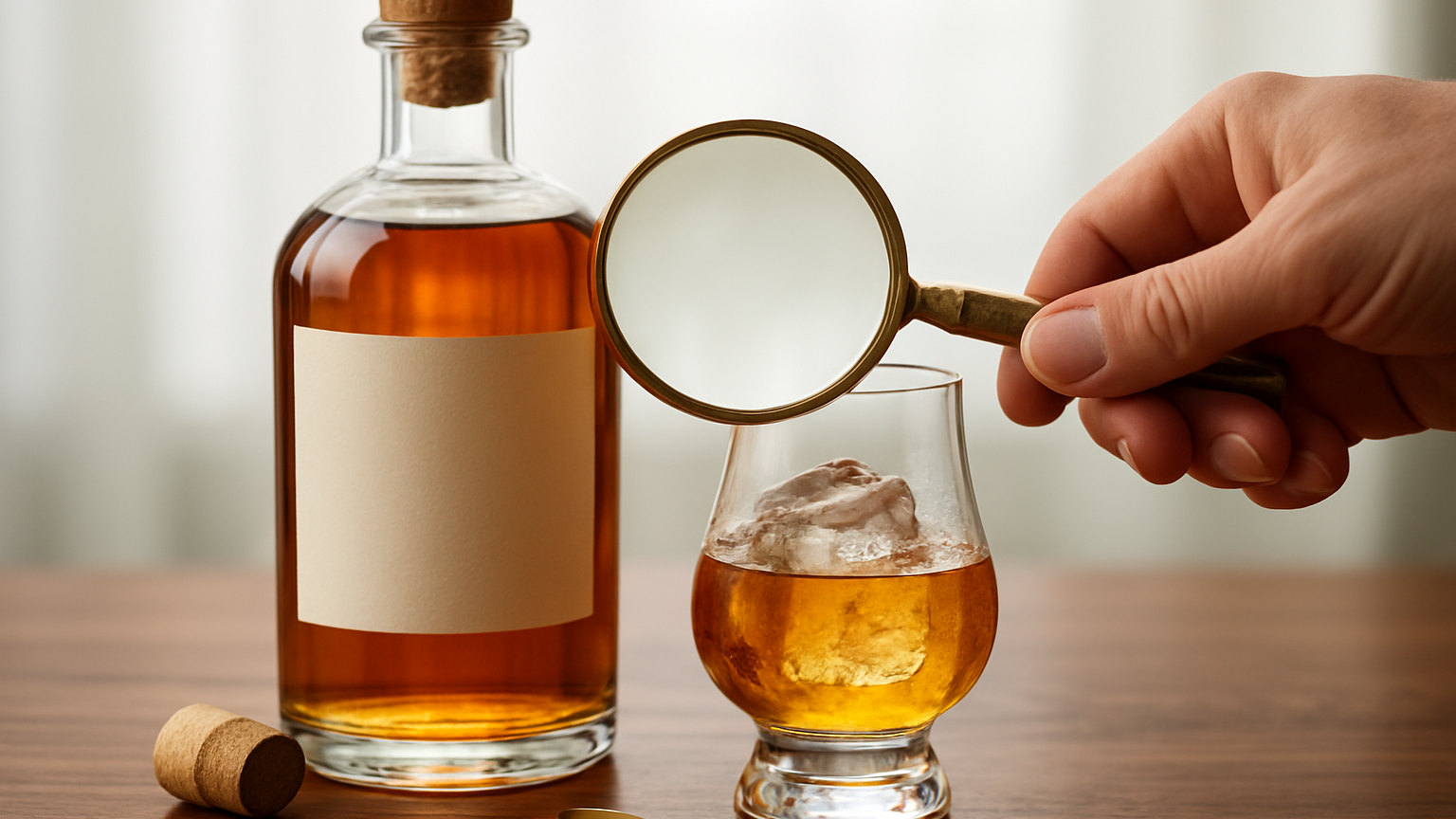
Sloe gin sits in an odd place. It is made from gin, it is legally a liqueur, and it is among the easiest things to make at home. The flavoured gin category around it is far more variable.
What is sloe gin?
Gin steeped with sloes, the small dark fruit of the blackthorn, and sweetened with sugar. The result is deep red, sweet, and tastes of almond and dark stone fruit.
Under UK and EU rules it is classified as a liqueur rather than a gin, with a minimum strength of 25 per cent. Most commercial versions sit between 26 and 30 per cent.
How do you make it?
Roughly 500g of sloes, 250g of sugar and one litre of gin, in a sealed jar.
- Prick each sloe once, or freeze them overnight so the skins split. Freezing is far quicker.
- Combine fruit, sugar and gin in a sterilised jar.
- Shake daily for the first week, then weekly.
- Leave two to three months, longer if you can.
- Strain through muslin and bottle.
Use a mid-range gin at 40 per cent. Expensive botanical gin is wasted, since the fruit and sugar cover most of it.
What about the stones?
Leave them whole and do not crush them. Sloes are a prunus species and the kernels inside the stones contain compounds that release cyanide when broken and metabolised.
Intact stones steeping in gin are not a problem and are what gives sloe gin its almond note. The rule is simply not to break them open, which is the same principle that applies to cherry stones and apricot kernels.
When should you pick sloes?
After the first frost, traditionally, which softens the skins. Freezing them at home achieves the same thing and means you can pick from late September.
Be certain of identification before picking anything from a hedgerow. Blackthorn has vicious spines and the fruit is intensely astringent raw, which is a fair identifying feature in itself.
Can you use other fruit?
Yes, and the method is nearly identical. Damson gin is arguably better than sloe. Blackberry, raspberry, rhubarb and quince all work.
Adjust the sugar to the fruit. Sharp fruit takes more, sweet fruit takes less, and it is easier to add sugar syrup at the end than to remove it.
What about commercial flavoured gins?
An enormous and uneven category. At one end are genuine distilled gins with fruit or botanicals properly incorporated. At the other are sweetened, coloured products bottled around 20 per cent that are closer to alcopops.
Check the strength and the ingredients. Anything below 37.5 per cent cannot legally be called gin in the UK and will be labelled as a gin liqueur or spirit drink, which is a useful signal.
What is pink gin?
Two different things. Historically, gin with a dash of Angostura bitters, which is dry and barely pink. Commercially, it now usually means a sweetened fruit-flavoured gin liqueur.
They are unrelated drinks sharing a name, which causes regular confusion when ordering.
How should you drink sloe gin?
Neat in a small glass, in cold weather, or topped with sparkling wine for a sloe gin fizz. It also works in a sloe gin negroni in place of some of the gin.
At 27 per cent, a 50ml measure is around 1.4 units, which is less than a standard gin measure and easy to drink more of given the sweetness.
What do you do with the strained fruit?
It still holds flavour and alcohol. Sloes left over from a batch can go into a chocolate cake or a crumble, or be covered with port or brandy for a second, weaker infusion.
They are not pleasant eaten straight, being both astringent and strongly alcoholic.
How long does it keep?
Years, and it improves for the first one or two. Sugar and alcohol together preserve it well, so a batch made in autumn is often better the following winter than in its first.
Strain the fruit out before long storage rather than leaving it in indefinitely.