
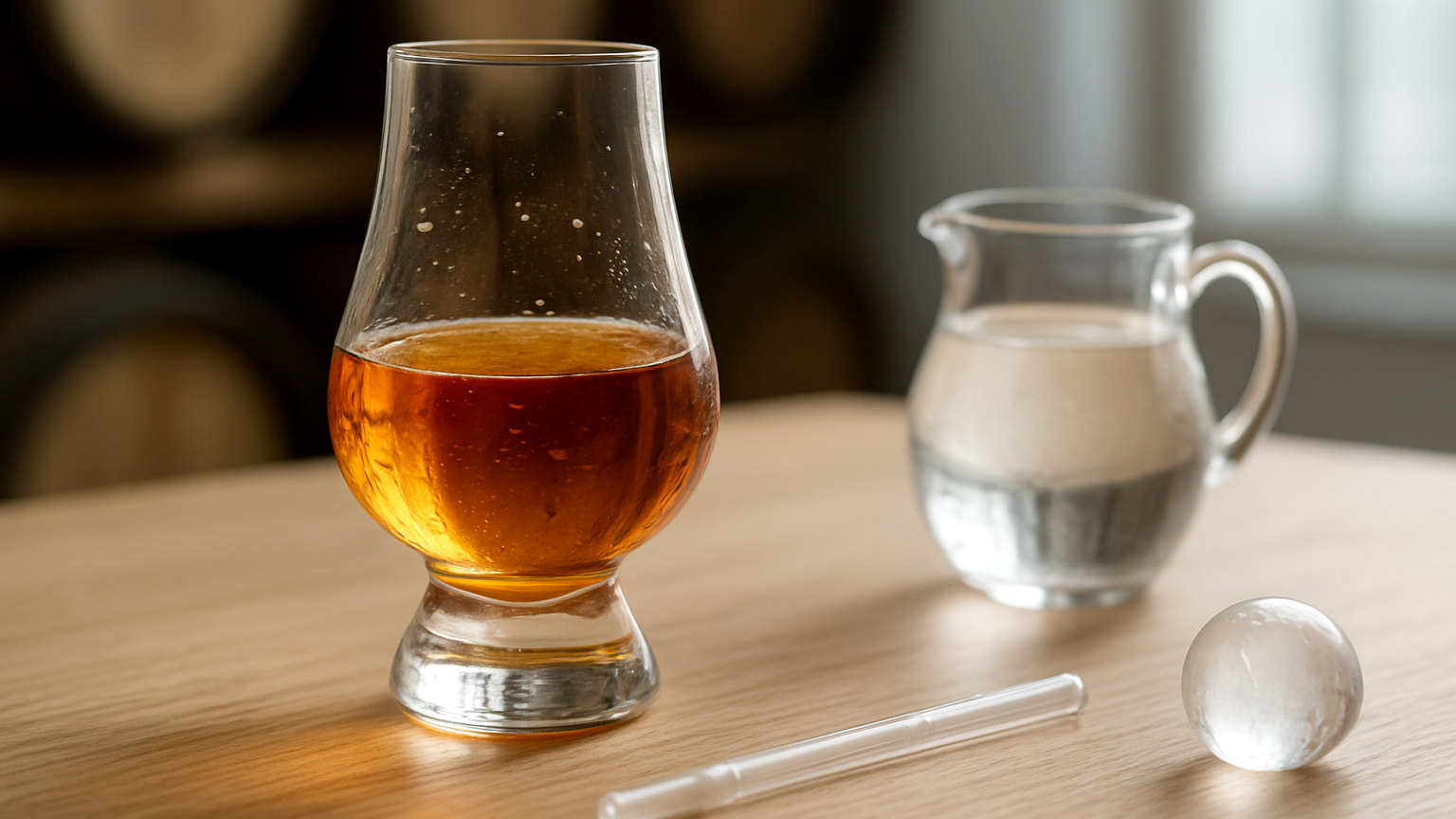
Most whisky is diluted with water before bottling, usually to 40 or 43 per cent. Cask strength whisky skips that step, arriving at whatever strength it happened to reach in the barrel, and that transfers a decision from the producer to you.
What strength does it come out at?
Typically 50 to 65 per cent, varying by whisky and by batch. The figure is printed on the bottle and differs between releases, which is why cask strength bottles often carry a batch number.
Spirit goes into the barrel at around 62 to 63 per cent. What happens next depends on the warehouse: in Scotland strength usually falls over time, while in hotter American warehouses it frequently rises as water evaporates faster than alcohol.
What is the angel’s share?
The proportion lost to evaporation through the barrel each year, roughly 2 per cent in Scotland and considerably more in Kentucky. Over twelve years that is a substantial quantity, and it is part of why older whisky costs more.
Why is it more expensive?
Straightforwardly, because there is more whisky in the bottle. A 60 per cent bottling contains half as much water again in actual spirit as a 40 per cent one, so a producer gets fewer bottles from the same barrel.
It is not automatically better whisky. It is more whisky, undiluted, with the decision left to you.
How should you dilute it?
Gradually and deliberately. Pour a small measure, taste it neat, then add water a few drops at a time, tasting after each addition.
Most cask strength whisky opens up noticeably somewhere between 45 and 50 per cent. Adding too much at once cannot be undone, so work slowly. A pipette or a small jug is genuinely useful here.
Use still water at room temperature, low in minerals. Chlorinated tap water contributes a chemical note that undermines the exercise.
Why does water improve it?
Alcohol binds some aromatic compounds and holds them in solution. Reducing the strength releases them into the vapour above the glass, which is where you smell them.
That is why a whisky at 58 per cent can smell closed and become expressive at 48. It is a genuine effect rather than ritual, and it is the main practical argument for buying cask strength: you can find the point that suits you.
Is it good for cocktails?
Yes, and it needs accounting for. A cask strength whiskey holds its character against dilution far better than a 40 per cent bottling, which is a real advantage in a stirred drink.
It also makes the drink considerably stronger. An old fashioned with 60ml of 60 per cent whiskey is 3.6 units against 2.4 with a standard bottling, so the measure is worth reducing rather than pouring the usual amount.
What is non-chill filtered?
A related term that often appears alongside. Chill filtering removes compounds that cause haze when whisky is cooled or watered, and it removes some flavour compounds with them.
Non-chill filtered whisky may go cloudy with water or ice, which is cosmetic rather than a fault. Most cask strength bottlings are non-chill filtered, since above about 46 per cent the haze does not occur anyway.
Is it worth buying?
If you enjoy adjusting a whisky to your own preference, yes. If you would drink it neat as poured, a well-judged 46 per cent bottling gives much the same result for less money.
How should you store it?
Upright, out of direct light, at room temperature, like any spirit. Cask strength whisky is no more fragile than any other and it changes slowly once the bottle is half empty, as oxidation works on the remaining liquid.
Decanting the last third into a smaller bottle reduces the air in contact with it and genuinely slows that down.
What is single barrel?
A related but separate term meaning the whisky came from one individual cask rather than being blended with others. A whisky can be single barrel without being cask strength, and vice versa.
Single barrel bottlings vary noticeably between releases, since no two casks mature identically. That variation is the appeal for some buyers and a frustration for others.


