
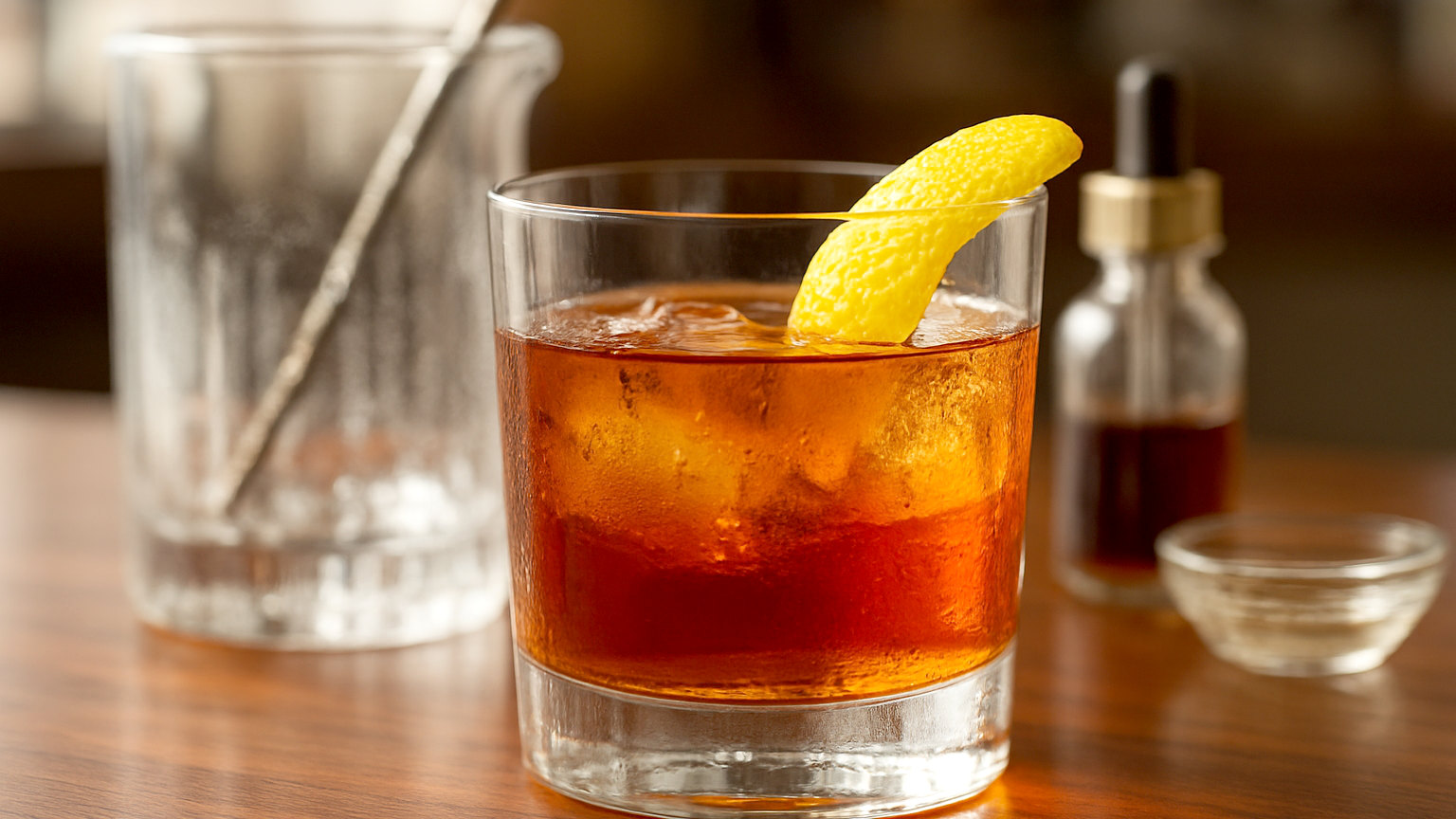
The sazerac is a New Orleans classic and one of the oldest cocktails still made to its original specification. It is essentially an old fashioned with a different bitters and an absinthe-rinsed glass.
What is the recipe?
- 60ml rye whiskey
- 10ml sugar syrup, or one sugar cube
- 4 dashes Peychaud style bitters
- A dash of aromatic bitters, optional
- A small measure of absinthe, for the rinse
- A lemon peel
Rinse a chilled rocks glass with absinthe and discard the excess. Stir the rye, syrup and bitters with ice for 30 seconds and strain into the rinsed glass. Express a lemon peel over the surface and discard it.
What is an absinthe rinse?
Pouring a small quantity into the glass, swirling to coat the inside, then tipping the rest out. What remains is a film of absinthe on the glass, which perfumes the drink without adding a measure of a very strong spirit.
Absinthe is typically 45 to 68 per cent and intensely aromatic. A full measure would dominate the drink entirely, so the rinse is the point rather than a shortcut.
Can you use pastis instead?
Yes. It is sweeter and lower in strength and gives a similar anise character. A few drops of absinthe added directly, rather than rinsed, is another workable approach.
Why two glasses?
Because the drink is stirred in one and served in another. The serving glass is chilled and rinsed while the cocktail is stirred separately, so the rinse is not diluted by the ice.
A mixing glass and a rocks glass covers it. Stirring in the serving glass and then rinsing would defeat the purpose.
Which bitters are essential?
Peychaud style, which is lighter and more floral than aromatic bitters, with anise and cherry notes. It is the defining flavour of the drink and aromatic bitters alone give a quite different result.
Four dashes sounds like a lot and it is correct here, since Peychaud style is gentler than the aromatic kind.
Why is the lemon peel discarded?
Because the oils are what matter, not the peel itself. Express it over the surface so the oils spray across the drink, then drop it away rather than into the glass.
Leaving it in adds bitterness from the pith over time, and the drink is meant to be aromatic rather than citrus-forward.
Should it have ice in it?
No. It is stirred with ice and strained into an empty chilled glass, which makes it a short, strong, undiluted drink.
That is unusual for something served in a rocks glass and it is deliberate.
Which rye should you use?
A straight rye at 45 per cent or above. The spice is central to the drink and a softer bourbon gives a rounder, less characteristic result.
Cognac was the original base and a half-and-half split of rye and cognac is a historically accurate and very good variation.
How strong is it?
Around 3 units after dilution, served neat in a small glass. It is one of the stronger classics and it is easy to underestimate.
Can you batch it?
The rye, syrup and bitters batch well with 20 per cent water added. The rinse happens per glass, since it is a coating rather than an ingredient.
What glass should you use?
A chilled rocks glass, rinsed with absinthe and served with no ice. That combination is unusual and it is what the drink calls for.
How much absinthe does the rinse use?
Around 5ml poured in, swirled and tipped out, of which perhaps 1 to 2ml remains as a film. That contributes negligible alcohol and a great deal of aroma.
Some bartenders keep a dedicated bottle with a spray top for exactly this, which uses even less.
Should you use rye or cognac?
Rye is the modern standard and cognac was the original base, replaced when the phylloxera blight reduced supply in the nineteenth century.
A half-and-half split of the two is historically defensible and makes an excellent drink, richer than the rye version and drier than the cognac one.


