
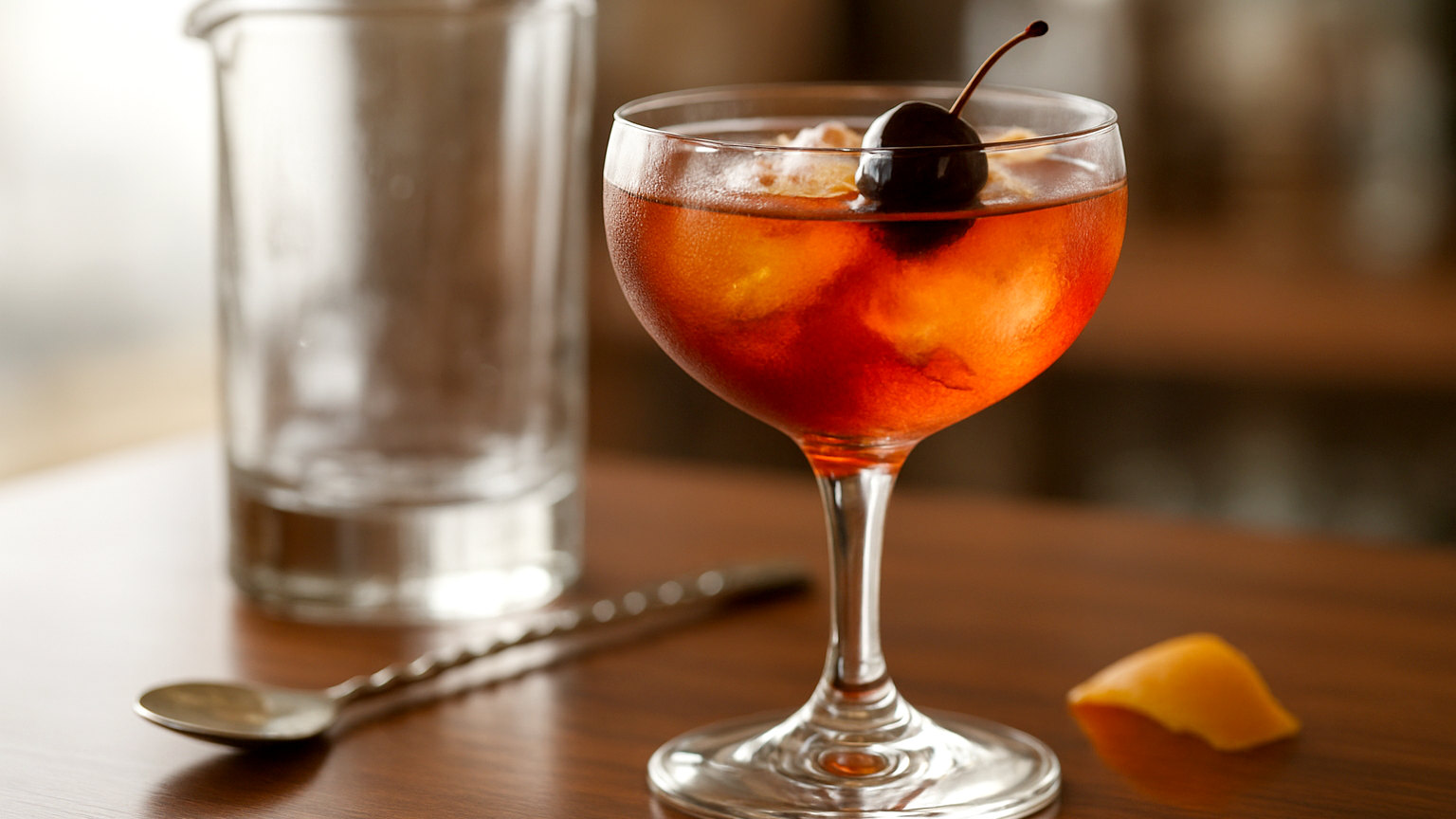
A Rob Roy is Scotch whisky, sweet vermouth and bitters. It is structurally identical to a Manhattan and it tastes quite different, because Scotch and rye pull in opposite directions.
What is the recipe?
- 60ml blended Scotch whisky
- 30ml sweet red vermouth
- 2 dashes aromatic bitters
Stir with plenty of ice for 30 seconds. Strain into a chilled coupe. Garnish with a good cocktail cherry.
How does it differ from a Manhattan?
Only the spirit, and that changes everything. Rye is dry and peppery, so it contrasts with sweet vermouth. Scotch is malty and sometimes smoky, so it blends with it instead.
The result is rounder and more savoury than a Manhattan, with the malt and the vermouth herbs working together rather than against each other.
Which Scotch should you use?
A decent blend, which is what the drink was built around. Blended Scotch has the malt and grain balance that suits vermouth without dominating it.
A lightly peated whisky makes a good version. A heavily peated Islay will overwhelm the vermouth entirely, which some people enjoy and most do not.
Does a single malt improve it?
Rarely enough to justify it. The subtlety that makes a good single malt worth drinking neat is largely covered by vermouth and bitters.
What are the variations?
- Dry Rob Roy. Dry vermouth instead of sweet. Much leaner.
- Perfect Rob Roy. Equal parts sweet and dry vermouth.
- Bobby Burns. With a measure of honeyed herbal liqueur added.
- Blood and sand. A quite different Scotch drink with cherry and orange.
Perfect refers to the vermouth split rather than to quality, which is a common misunderstanding.
Why does the vermouth matter?
Because it is a third of the drink and it is wine, so it oxidises after opening. Keep it in the fridge and buy small bottles.
A stale vermouth is the commonest reason a home Rob Roy disappoints, and the Scotch usually takes the blame.
Why stir rather than shake?
Because there is no citrus or egg. Shaking clouds the drink, aerates it and over-dilutes it, and this should arrive clear and silky.
Stir 30 seconds with plenty of ice until the mixing glass is properly cold.
What garnish?
A proper cocktail cherry preserved in syrup, since it sits in the drink and leaches into it. A lemon twist works for the dry version, where citrus suits the leaner profile better.
How strong is it?
Around 3.2 units after dilution, in a small glass. It is one of the stronger classics and it drinks smoothly, which is worth remembering.
Can you batch it?
Very well. Mix Scotch, vermouth and bitters, add around 20 per cent water for the stirring dilution, and keep it in the fridge. Pour into a chilled glass and garnish.
What glass should you use?
A chilled coupe. Served without ice, so the glass needs to come from the freezer or at least from a cold tap rinse.
How long should you stir it?
Thirty seconds with plenty of ice, until the mixing glass is properly cold. That gives the 20 to 25 per cent dilution the drink needs to integrate.
Which bitters should you use?
Aromatic bitters are standard, and two dashes is right. Orange bitters work well with Scotch and brighten the drink noticeably if you have them.
Where does the name come from?
A Broadway operetta of the 1890s about the Scottish folk hero, which is also why the drink uses Scotch.
Is it worth trying alongside a Manhattan?
Very much so, and it is one of the clearest demonstrations available of what a base spirit does. Identical modifiers, identical method, and two noticeably different drinks.
What ratio should you use?
Two to one is standard. Three to one gives a drier, more whisky-forward drink, and equal parts was common in older recipes and is noticeably sweet by modern standards.
Does it work with peated Scotch?
In small proportions. A quarter peated to three quarters blended gives a smoky edge without burying the vermouth, which a full measure of Islay would do entirely.


