
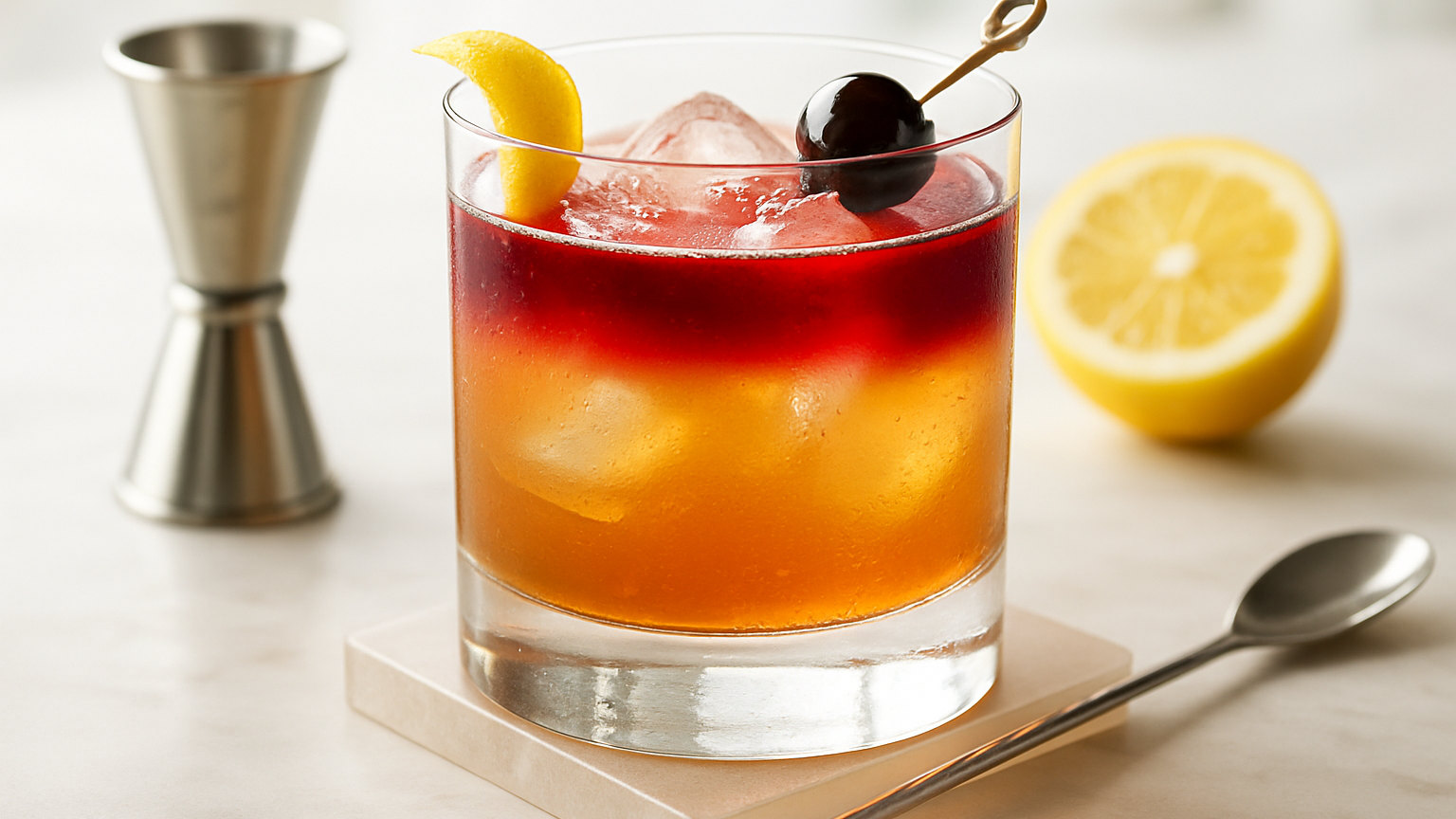
A New York sour is a whiskey sour with a float of red wine over the top. It looks dramatic, it takes ten extra seconds, and the combination is considerably better than it sounds.
What is the recipe?
- 50ml bourbon or rye
- 25ml fresh lemon juice
- 15ml sugar syrup
- 1 egg white, optional
- 15ml dry red wine, floated
Shake the whiskey, lemon and syrup with ice, dry shaking first if using egg white. Strain into a rocks glass over ice or into a chilled coupe. Float the wine gently over the back of a spoon.
Why does the wine float?
Because the sour base contains sugar, which makes it denser than the wine. Poured gently, the wine settles as a distinct layer rather than sinking through.
If your float sinks, the base is not sweet enough or the pour was too fast. A little more syrup usually fixes it.
How do you float it properly?
Hold a bar spoon just above the surface, curved side up, and pour the wine slowly over the back of it. The spoon spreads the flow so the wine settles.
Pouring down the inside wall of the glass works nearly as well.
Which wine should you use?
A dry, fruity red with moderate tannin. Malbec, shiraz, merlot and Spanish garnacha all work well.
Avoid heavily oaked or very tannic wines, since tannin against citrus can turn harsh. Avoid anything sweet, since the drink already has syrup.
Everyday supermarket wine is right. It is a 15ml float and an expensive bottle is wasted.
Why does the combination work?
Because the tannin in the wine and fruit contrast with the sharp citrus underneath. Each sip picks up wine first and sour second, which gives the drink a progression.
It also adds a dry, slightly grippy finish that a plain whiskey sour does not have.
Should you use egg white?
It gives a firmer surface for the wine to sit on, which makes the float more reliable and the layering cleaner.
Without it the drink still works. Use British Lion marked eggs, or aquafaba at around 20ml, which foams comparably and makes the drink vegan.
Is it a good use for leftover wine?
An excellent one. A bottle a day or two past its best is entirely suitable here, provided it is stale rather than genuinely vinegary.
How strong is it?
Around 2.5 units, since the wine adds very little at 15ml. It is comparable to a standard whiskey sour.
Should you stir it in?
The drinker decides. Left alone, the layers stay separate for several minutes. Stirred, it becomes a uniform drink that is pleasant and loses the contrast.
Can you batch it?
Mix the whiskey, lemon and syrup ahead. Shake and float per serve, since neither the foam nor the layer survives batching.
What glass should you use?
A rocks glass over ice, or a chilled coupe. The coupe shows the layer more clearly, and the rocks glass keeps it colder for longer.
How much wine should you float?
Fifteen millilitres, which is enough for a clear layer without unbalancing the drink. More and the tannin starts to dominate the citrus underneath.
Does the whiskey choice matter?
Bourbon gives a rounder base that suits the wine; rye gives a drier one with more contrast. Both work and bourbon is the more common choice.
Forty-five per cent or above holds up better once the drink has been shaken and diluted.
Where does it come from?
Late nineteenth century America, under several names including the claret snap and the continental sour. The current name settled in the twentieth century.
Should it be served over ice?
Over a large cube is usual, which keeps it cold while the layer holds. Straight up in a coupe shows the layer more clearly and warms faster.
Either way, pour the wine last and leave it undisturbed.
Why is it worth the extra step?
Because fifteen millilitres of wine and ten seconds of pouring turns a familiar drink into something that looks and tastes distinctly different. Few additions give that much return for so little effort.


