
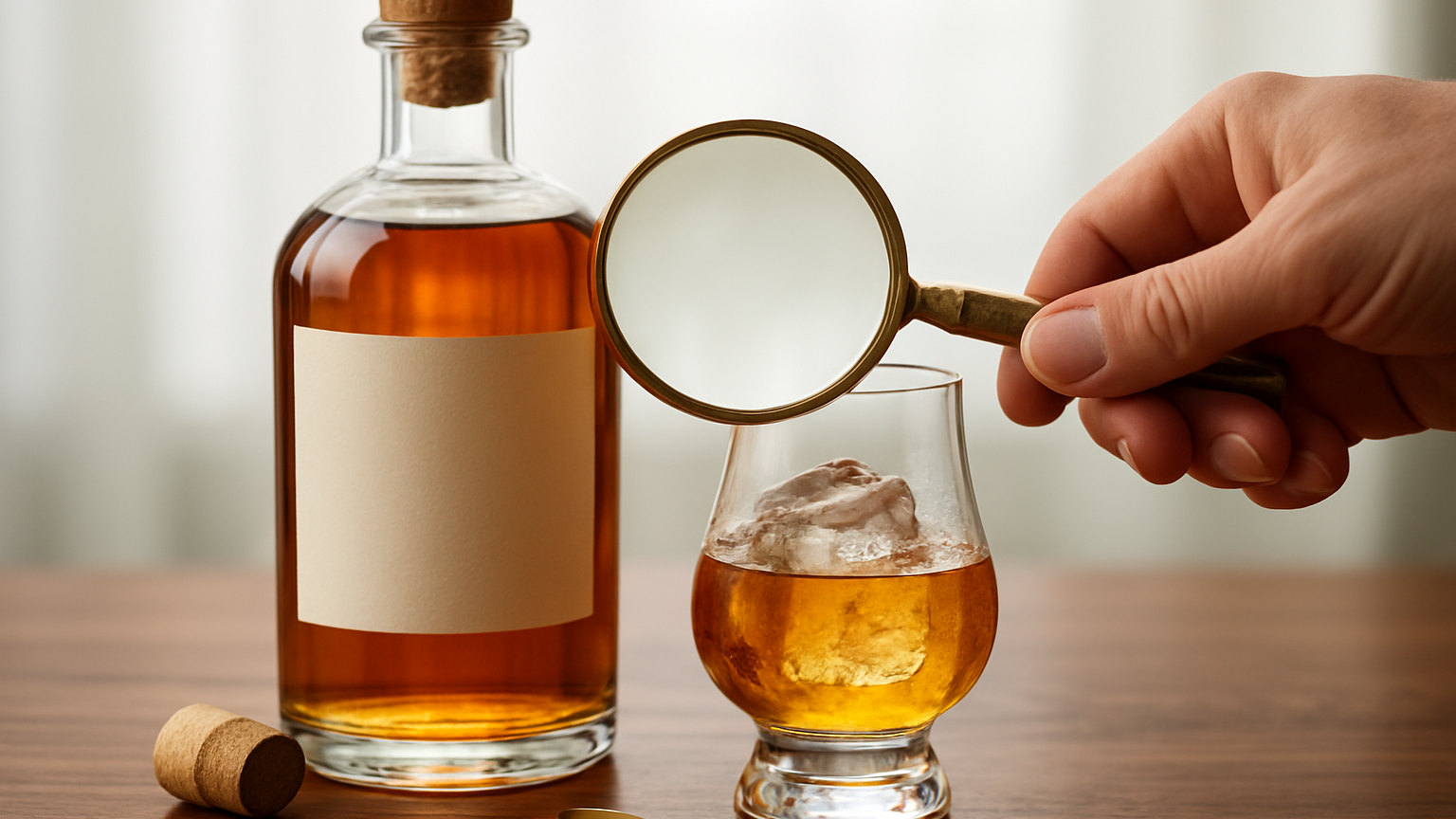
Whisky labels are dense with words and most of them mean nothing. Four pieces of information genuinely tell you about the liquid, and a large proportion of the rest is decoration designed to imply heritage.
What are the four that matter?
- ABV. Legally required. Tells you strength and, indirectly, quite a lot about intent.
- Cask type, if stated. Ex-bourbon, ex-sherry, and what was in it before.
- Age statement, if present. Legally must be the youngest whisky in the bottle.
- Category. Bourbon, straight rye, single malt, blended. Each has a legal definition.
Two more are worth noting when present: non-chill filtered and natural colour, both of which suggest a producer confident enough to let the whisky arrive as it is.
Why does ABV tell you about intent?
Because 40 per cent is the legal minimum and adding water is the cheapest way to increase yield. A bottling at 46 per cent has deliberately given up volume.
Forty-six is also the threshold above which chill filtering becomes unnecessary, so it frequently signals a whisky bottled without stripping anything out. It is the single most informative number on the label.
What does chill filtering do?
Removes fatty acids and esters that make whisky go cloudy when cooled or watered. It is purely cosmetic and it removes some flavour compounds along with the haze.
Non-chill filtered whisky may turn cloudy with ice or water, which is a sign of what was left in rather than a fault.
What does an age statement mean?
The youngest whisky in the bottle, in years. A twelve-year-old blend may contain much older whisky, and it cannot contain anything younger.
No age statement, often shown as NAS, means the producer has chosen not to declare it. That usually implies younger whisky and does not necessarily mean poor whisky, since blending young and old components is legitimate.
Which terms carry legal weight?
- Bourbon, straight bourbon, rye, single malt, blended. All defined.
- Bottled in bond. Four years, 50 per cent, one distillery, one season.
- Scotch whisky. Made and matured in Scotland, three years minimum.
Which mean nothing?
- Small batch. No definition. Could be one barrel or five hundred.
- Handcrafted, artisan, premium, reserve. Marketing only.
- Established 1780. Frequently refers to a brand name rather than continuous production.
- Master distiller selection. Unenforceable.
- Finest, rare, exclusive. Decoration.
What about colour?
An unreliable guide, since caramel colouring is permitted in scotch and widely used for batch consistency. A dark whisky may have spent years in a sherry cask or may have been coloured that morning.
Bottles stating natural colour are declaring they have not. In American whiskey, colouring is not permitted in straight categories, so colour there is more informative.
What is the quickest assessment?
Check the ABV, then the category, then look for cask type and natural colour. That takes five seconds and tells you more than the entire front label.
What about the back label?
Frequently more informative than the front, since that is where cask details, filtration and colouring statements usually appear. It is worth turning the bottle round before deciding anything.
Tasting notes on the back are written to sell and should be read as direction rather than description.
What if the label says almost nothing?
Treat the silence as information. A bottle stating only a brand name, a category and 40 per cent has chosen not to tell you the age, the cask or the filtration, and producers generally state details that flatter them.
That does not make it bad whisky. It makes it whisky you know nothing about, at which point price and reputation are all you have to go on.
Does an expensive-looking bottle mean anything?
Only about the packaging budget. Heavy glass, wooden boxes, wax seals and parchment labels are all cheap to specify and are frequently used to justify a price the liquid does not.
Some excellent whisky comes in elaborate packaging and some comes in a plain bottle with a printed label. The presentation is not evidence either way.
What does a batch or cask number tell you?
That the bottling varies between releases, which usually indicates single cask or small batch production without blending to a consistent profile. It is a genuine piece of information, unlike most of the front label.


