
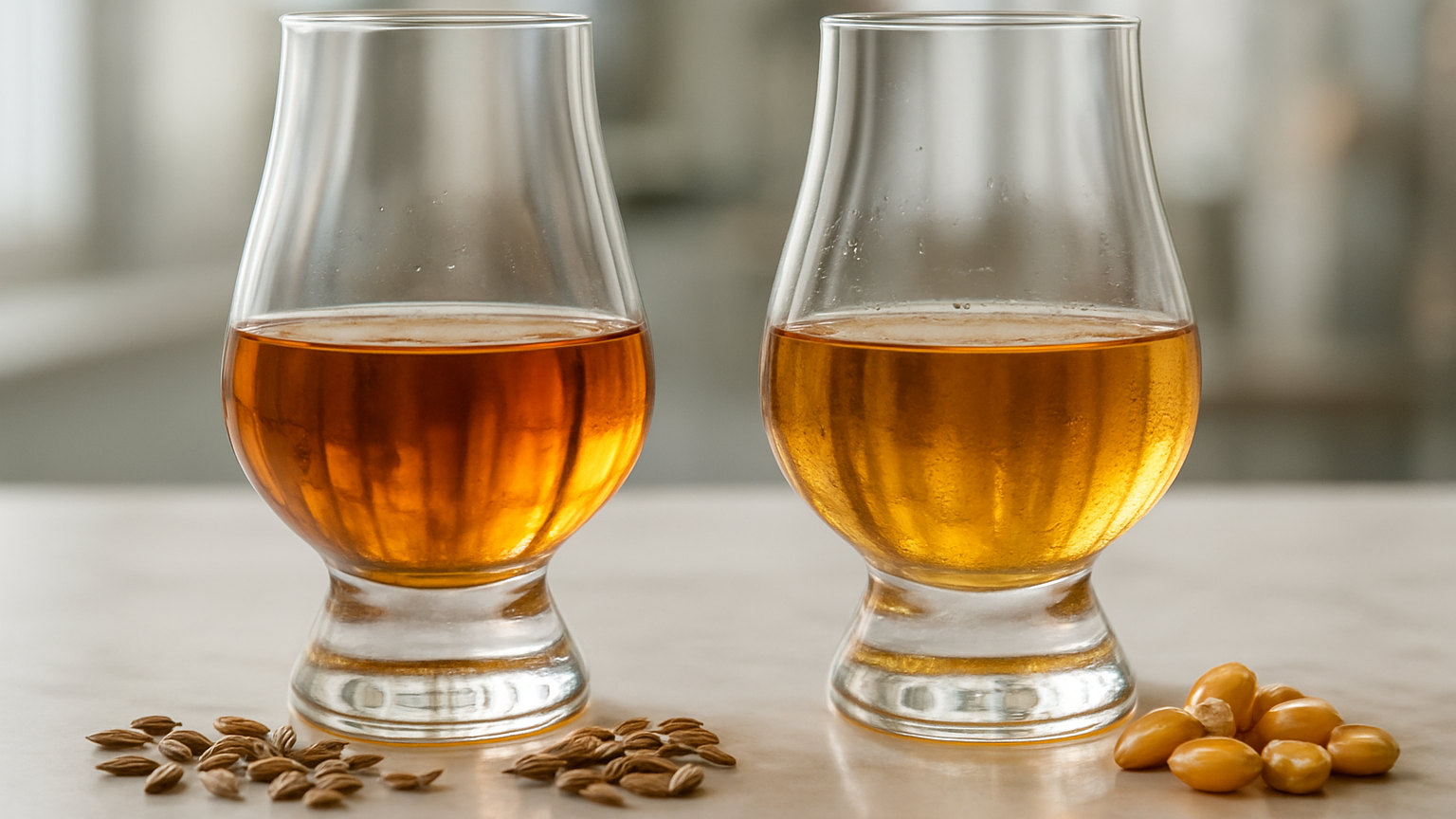
Rye and bourbon are made under nearly identical rules, in the same distilleries, often on the same equipment. The only substantive difference is the dominant grain, and it produces two spirits that behave quite differently in a glass and in a cocktail.
What is the legal requirement?
American rye whiskey must be at least 51 per cent rye in the mash bill, distilled to no more than 80 per cent, barrelled at no more than 62.5 per cent, and aged in new charred oak. Every other bourbon rule applies identically.
Straight rye must be aged at least two years. As with bourbon, anything under four years must carry an age statement.
What about Canadian rye?
A different thing entirely. Canadian whisky is often called rye by convention, and Canadian regulations do not require any particular proportion of rye grain. Some contains very little.
If you want the peppery character, check the label rather than the name. American straight rye is the reliable route.
How does it taste different?
Rye grain is dry, peppery and slightly herbal where corn is sweet and round. In the finished spirit that reads as:
- Black pepper and baking spice rather than vanilla and caramel.
- A drier finish with less residual sweetness.
- A sharper, more angular character.
- Sometimes a faint dill or mint note, which is distinctive to rye.
The barrel still contributes vanilla and oak to both, so the two overlap. Tasted side by side the difference is immediate.
What is high rye bourbon?
A bourbon with rye as a substantial secondary grain, typically 20 to 35 per cent, rather than the usual 10 to 15. It sits between the two, keeping bourbon sweetness with noticeably more spice.
It is a useful middle ground if you find straight rye too austere and standard bourbon too sweet.
Which cocktails suit rye?
- Manhattan. The classic case. Rye dryness contrasts with sweet vermouth.
- Sazerac. Traditionally rye, with absinthe and Peychaud bitters.
- Vieux Carré. Rye and cognac together.
- Old fashioned. Works well, and gives a drier drink than bourbon does.
Which suit bourbon?
- Whiskey sour. The sweetness suits lemon and sugar.
- Mint julep. Traditionally bourbon, and the vanilla suits mint.
- Old fashioned. The most forgiving version.
- Anything with coffee or chocolate. Vanilla and caramel bridge naturally.
How do you choose between them?
By what else is in the glass. If the drink already contains sugar or a sweet modifier, rye contrasts. If the drink is sour or bitter, bourbon rounds it out.
Which should you own if buying one?
Rye is more versatile in cocktails, since a bourbon drink usually works acceptably with rye and several rye drinks fall flat with bourbon. Bourbon is the better choice if anyone will be drinking it neat, since it is gentler.
Either at around 45 per cent will make every drink on both lists above. Below 40 per cent both become thin once diluted by ice.
Why did rye nearly disappear?
Prohibition closed the distilleries, and the ones that reopened afterwards found American taste had shifted towards lighter, sweeter spirits. Rye survived in small quantities for decades, largely as a cocktail ingredient nobody was ordering.
Its revival came with renewed interest in classic cocktails from the 2000s onwards, since a great many pre-Prohibition recipes specify rye and taste noticeably better with it.
How much rye is in a bottle labelled rye?
At least 51 per cent for American straight rye, and frequently far more. Some producers use 95 per cent rye, which gives an intensely peppery spirit, while others sit just above the legal threshold.
The label rarely states it. Tasting two side by side is the practical way to find where your preference sits.
How should you drink it neat?
In a narrowing glass, at room temperature, with a few drops of water available. Rye at 45 per cent or above rewards a little dilution, which softens the pepper and lets the underlying grain show.
A 35ml pour at 45 per cent is 1.6 units, which is worth knowing with a spirit that sips easily over an evening.


