
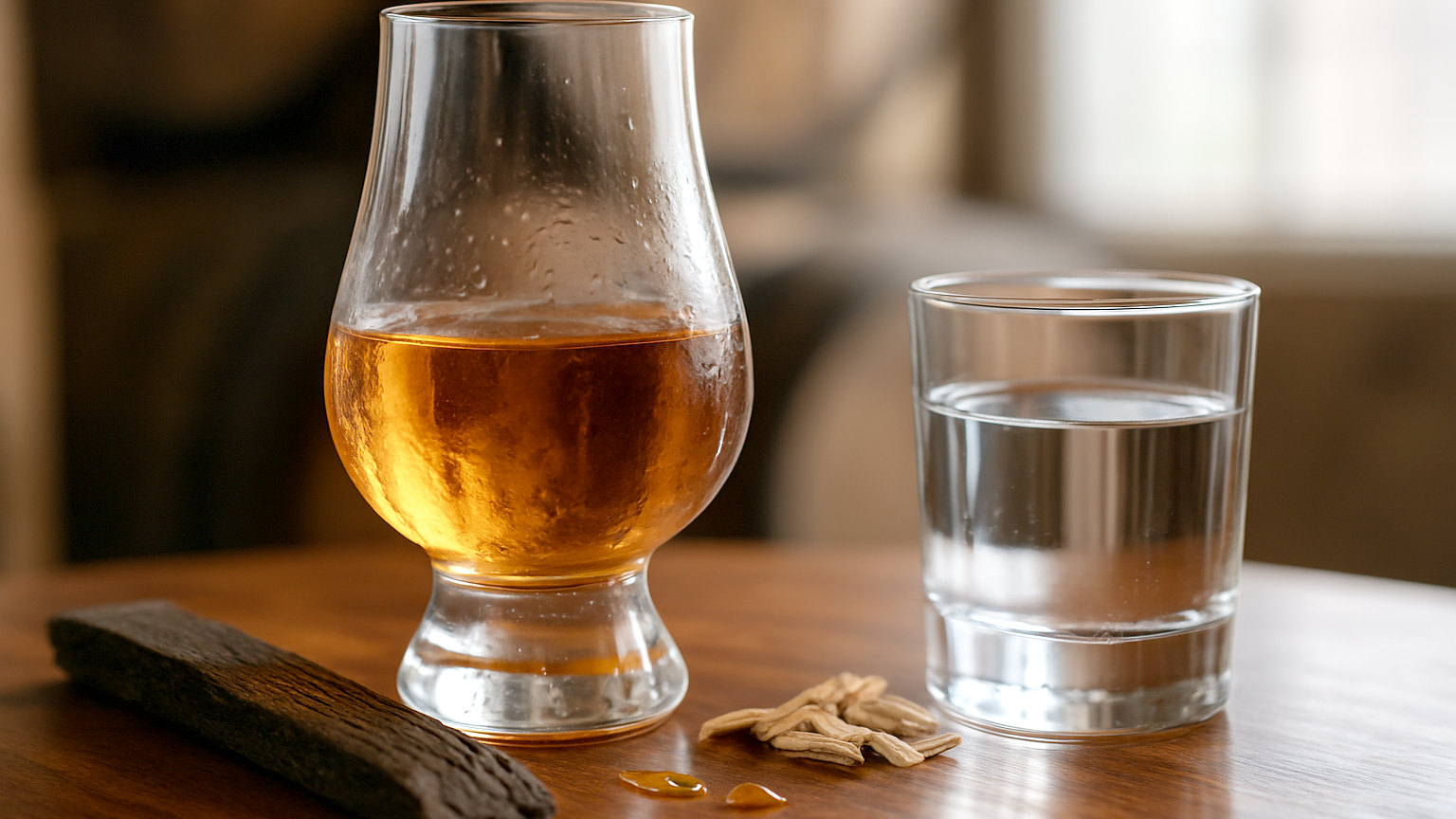
New make spirit off the still is clear, fiery and tastes broadly of cereal. Every colour, most of the aroma and much of the complexity in a finished whisky comes from time in a barrel, through three processes happening at once.
What are the three processes?
- Extraction. The spirit pulls compounds out of the wood: vanillin, tannins, caramelised sugars and oak lactones.
- Subtraction. The charred layer acts as activated charcoal, removing sulphur compounds and harsher elements.
- Interaction. Oxygen entering slowly through the wood drives oxidation, developing fruity and nutty notes over years.
Extraction is fastest and dominates the early years. Interaction is slow and is what distinguishes a genuinely old whisky from a young one that simply tastes woody.
Why does cask type matter?
Because the wood arrives carrying whatever was in it before, and scotch, Irish whiskey and most world whisky use casks that have held something else.
- Ex-bourbon. Vanilla, honey, coconut, light citrus. The most common.
- Ex-sherry. Dried fruit, raisin, nuts, deeper colour.
- Ex-port or wine. Red fruit, sometimes a pink tint.
- New charred oak. Required for bourbon. Aggressive vanilla and caramel.
A first-fill cask, used once before, gives up far more than a refill cask that has already been through several maturations.
What is finishing?
Transferring whisky into a different cask for the last few months or years. A whisky matured in ex-bourbon and finished in ex-sherry picks up a layer of dried fruit over an established base, and the practice is now widespread.
Why does size matter?
Because a smaller barrel has more wood surface relative to the volume of spirit, so extraction happens faster.
That is why small-cask whisky can taste heavily oaked at two years. It is also why it rarely tastes mature, since fast extraction does not accelerate the slow oxidative changes that give real depth. Faster is not the same as older.
Why does climate change everything?
Kentucky warehouses swing from freezing to over 40 degrees across a year. The spirit expands into the wood in heat and contracts out of it in cold, driving extraction hard.
Scotland is cool and stable, so the same processes take far longer. A four-year-old bourbon and a twelve-year-old scotch can show comparable wood influence for this reason, and neither is being rushed or delayed relative to its own climate.
Whisky made in India, Taiwan and Australia matures faster still, which is why age statements from those countries look low and the whisky does not taste young.
Does whisky improve indefinitely?
No. Every cask has a point beyond which tannin dominates and the whisky becomes drying and bitter. A cask left too long is over-oaked rather than better.
Part of a distiller’s skill is deciding when a particular barrel is ready, which varies between barrels in the same warehouse.
Does it change in the bottle?
Barely. Once out of wood, whisky is essentially stable. A sealed bottle will taste much the same in twenty years, which is unlike wine and worth knowing before storing anything expectantly.
An opened bottle does change slowly through oxidation, over a year or more, and generally not for the better once past half empty.
How many times can a cask be reused?
Three or four fills for scotch maturation, after which it gives up very little and is described as exhausted. Casks can be rejuvenated by scraping out the inner layer and re-charring, which restores some activity.
Since bourbon must use new oak, the American industry supplies most of the world with once-used casks, which is a genuine dependency in the scotch and Irish industries.
Where in the warehouse does it sit?
It matters more than most people expect. Casks near the top of a warehouse experience higher temperatures and mature faster; those at the bottom are cooler and slower.
Some producers rotate barrels to even this out and others use the variation deliberately, selecting from particular floors for particular expressions.


