
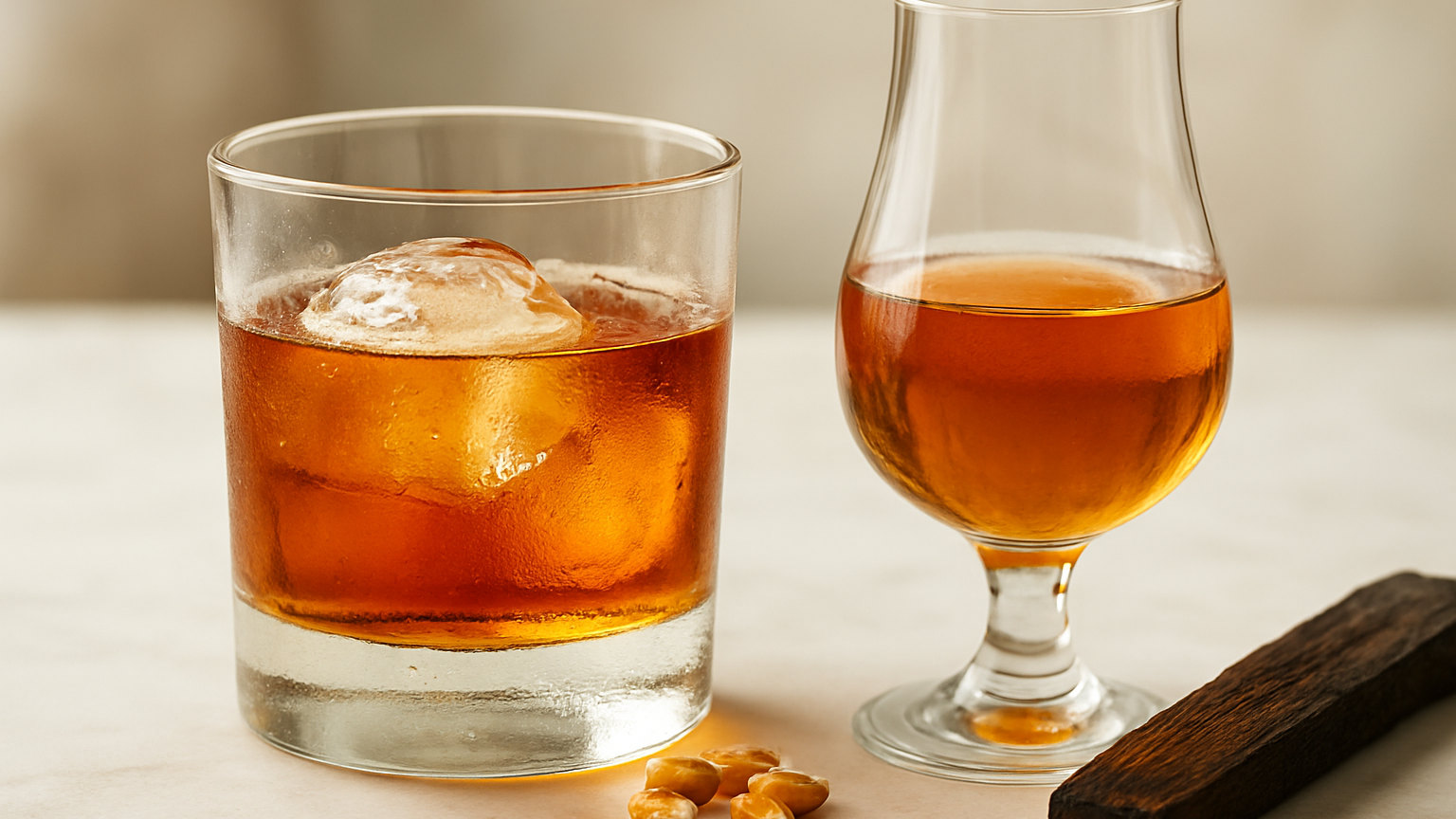
Whiskey is a broad category covering any spirit distilled from grain and aged in wood. Bourbon is a specific type with a legal definition, which is unusual in spirits and genuinely useful, because it means anything labelled bourbon must meet the same requirements.
What must bourbon do?
- Made in the United States. Not only Kentucky, despite the association.
- At least 51 per cent corn in the grain bill.
- Distilled to no more than 80 per cent alcohol.
- Barrelled at no more than 62.5 per cent.
- Aged in new, charred oak containers.
- Bottled at 40 per cent or above.
- No added colouring or flavouring.
There is no minimum age for bourbon generally. Straight bourbon must be aged at least two years, and anything under four years must state its age on the label.
Which rule matters most for flavour?
New charred oak, by a considerable distance. Every barrel is used once for bourbon and then sold on, which is why so much scotch, rum and tequila is aged in ex-bourbon casks.
A fresh barrel gives up far more than a used one. That is where bourbon gets its vanilla, caramel, coconut and baking spice, and why a four-year-old bourbon can taste more oaky than a twelve-year-old scotch.
Why char the barrel?
Charring breaks down wood sugars into vanillin and caramel compounds, and creates a layer of activated charcoal that filters out harsher elements. Barrels are graded by char level, and a heavier char generally means more colour and more sweetness.
What does the corn contribute?
Sweetness and body. Corn is the sweetest common brewing and distilling grain, which is why bourbon reads as rounder and softer than rye or scotch even before the barrel is considered.
The remainder of the mash bill is usually rye or wheat, plus malted barley for enzymes. Wheated bourbons, using wheat instead of rye, are noticeably softer and gentler.
What is the difference from Tennessee whiskey?
Tennessee whiskey meets every bourbon requirement and adds one: the Lincoln County Process, filtering the new spirit through sugar maple charcoal before barrelling. That removes some harsher compounds and gives a slightly softer character.
It could legally be called bourbon and is generally labelled otherwise for regional identity.
What about the spelling?
Whiskey with an e is standard in the United States and Ireland. Whisky without is standard in Scotland, Japan, Canada and most other producing countries.
It is a convention rather than a rule, and a few American distilleries use the Scottish spelling deliberately. It carries no implication about quality or method.
How does bourbon taste against other whiskies?
- Bourbon: sweet, vanilla, caramel, corn, oak.
- Rye: drier, peppery, spicy.
- Scotch: varies enormously, often malty, sometimes smoky.
- Irish: lighter, softer, frequently triple distilled.
Those are broad tendencies rather than rules, and they are a reasonable guide when choosing a bottle for a particular cocktail.
Is bourbon good for mixing?
Very. The sweetness and vanilla suit drinks with sugar and bitters, which is why the old fashioned and the whiskey sour are usually made with it. In a Manhattan, rye is generally the better choice, because its dryness contrasts with the sweet vermouth rather than doubling up on it.
Does it have to come from Kentucky?
No. Bourbon can legally be made anywhere in the United States, and distilleries in New York, Texas, Colorado and elsewhere produce it. Around 95 per cent is made in Kentucky, which is where the association comes from rather than any legal requirement.
Kentucky does have genuine advantages: limestone-filtered water low in iron, and a climate that swings hard between seasons, which drives spirit in and out of the wood and accelerates maturation.
What should you look for when buying?
Strength above all. Many standard bourbons sit at exactly 40 per cent, and something at 45 to 50 per cent holds up far better in a cocktail once ice has done its work.
Straight bourbon on the label guarantees at least two years and no added colouring or flavouring, which rules out the vaguest end of the market.


