
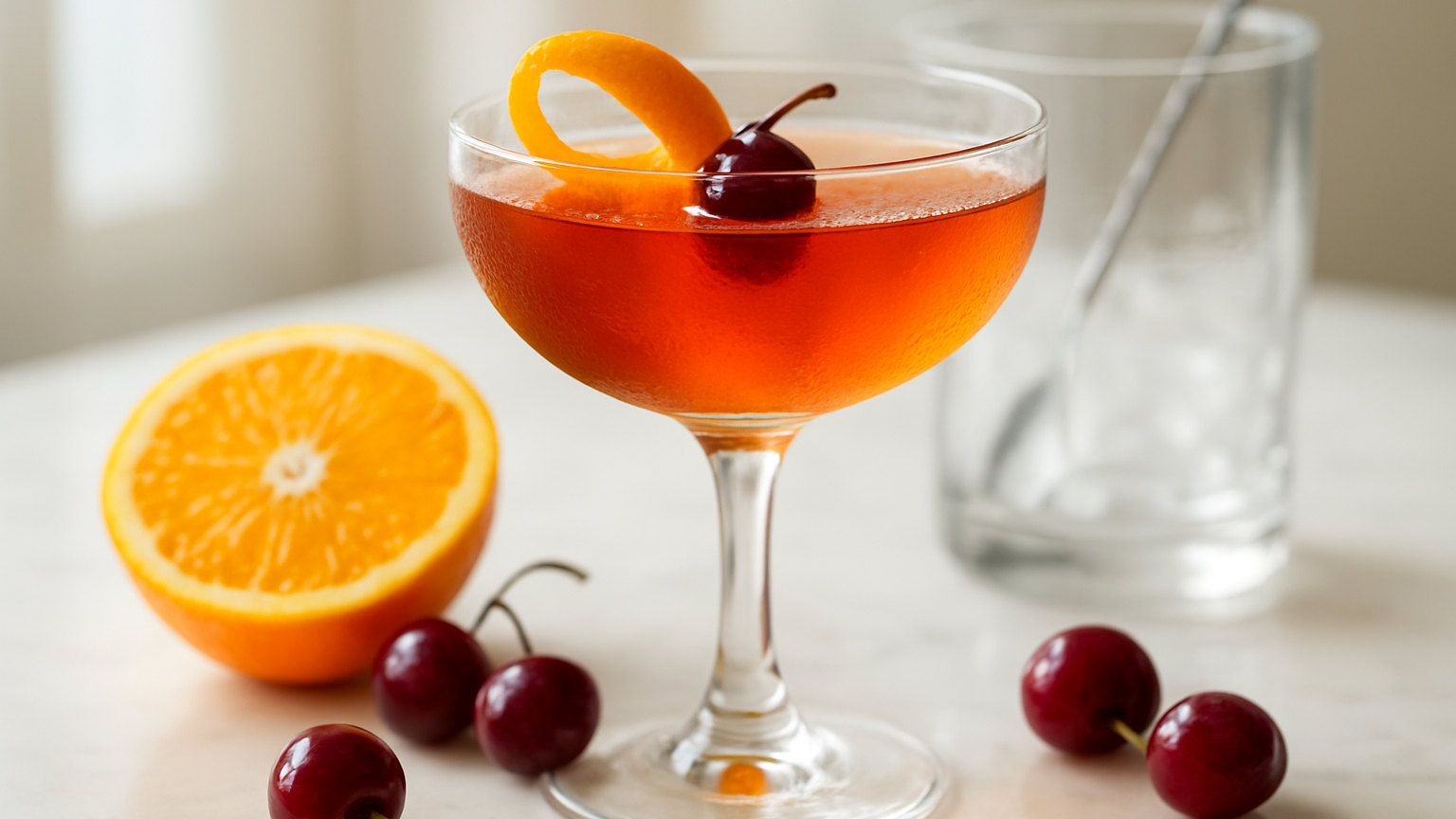
The blood and sand is one of very few classic cocktails using Scotch, and one of even fewer combining Scotch with fruit juice. The combination looks unpromising on paper and is genuinely good.
What is the recipe?
- 25ml blended Scotch whisky
- 25ml cherry liqueur
- 25ml sweet red vermouth
- 25ml fresh orange juice
Shake hard with ice for 12 to 15 seconds. Double strain into a chilled coupe. Garnish with an expressed orange peel or a cherry.
Why equal parts?
Because each component is doing a distinct job and none should dominate. Scotch brings malt, cherry brings sweetness and depth, vermouth brings herbs, orange brings acidity and lift.
Some bartenders reduce the cherry liqueur to 20ml and increase the Scotch to 30ml, which makes a drier and more whisky-forward version. It is worth trying once you know the original.
Why does fresh orange juice matter?
Because it is a quarter of the drink and cartoned juice is flatter, sweeter and less acidic. In an equal-parts drink there is nowhere for that to hide.
Blood orange, when in season, makes an excellent version and suits the name.
Should it be shaken?
Yes, because it contains fruit juice. Shaking combines and aerates it properly, and a stirred version tastes flat and separated.
Which cherry liqueur should you use?
A proper cherry brandy or cherry liqueur rather than a sweet syrup. The difference is substantial, since it is a quarter of the drink.
Maraschino is a different thing entirely, being drier and more almond-like, and it makes a quite different drink.
Which Scotch?
A decent blend. The other three ingredients are all assertive, so a delicate single malt is wasted and a peated one overwhelms the fruit.
Why does the vermouth need to be fresh?
Because it is wine and it oxidises within weeks of opening. Keep it in the fridge and buy small bottles.
Between the vermouth and the orange juice, this is a drink with two perishable ingredients, so both need to be in reasonable condition.
How strong is it?
Around 2 units, which is modest for a shaken cocktail. Only half the volume is spirit and liqueur, and the vermouth is low in strength.
Where does the name come from?
A 1922 film, and the drink appeared in print shortly afterwards. The colour is a deep reddish orange, which suits it.
Can you batch it?
Mix the Scotch, cherry liqueur and vermouth ahead and keep it cold. Add fresh orange juice and shake per serve, since juice dulls within hours and separates on standing.
What glass should you use?
A chilled coupe. It is served up without ice, and the deep orange colour looks better in a stemmed glass than a tumbler.
What ruins it?
Cartoned orange juice and a cheap cherry syrup in place of a proper liqueur. Both are a quarter of the drink each.
Is it worth making?
Yes, and it divides opinion. Scotch with orange juice sounds unpromising and the equal-parts balance makes it work, which is why it has survived a century.
Anyone who dislikes it usually made it with cartoned juice or a cheap cherry syrup.
Can you adjust the balance?
Reducing the cherry liqueur to 20ml and raising the Scotch to 30ml gives a drier, more whisky-forward version that many modern bartenders prefer.
Try the equal-parts original first, since it is the version the drink is known by.
How do you know if the balance is right?
The Scotch should be identifiable underneath rather than hidden. If it tastes only of cherry and orange, increase the whisky and reduce the liqueur.
Is fresh orange juice essential?
It makes the difference between a good drink and a flat one. A quarter of the volume is orange juice, and cartoned juice is duller, sweeter and less acidic.
Squeeze it on the day, since it dulls within a few hours.
Why is it not better known?
Because Scotch and orange juice sounds unpromising, and because the equal-parts format looks lazy on paper. Both impressions are wrong, and it remains one of the more rewarding classics to discover.


