
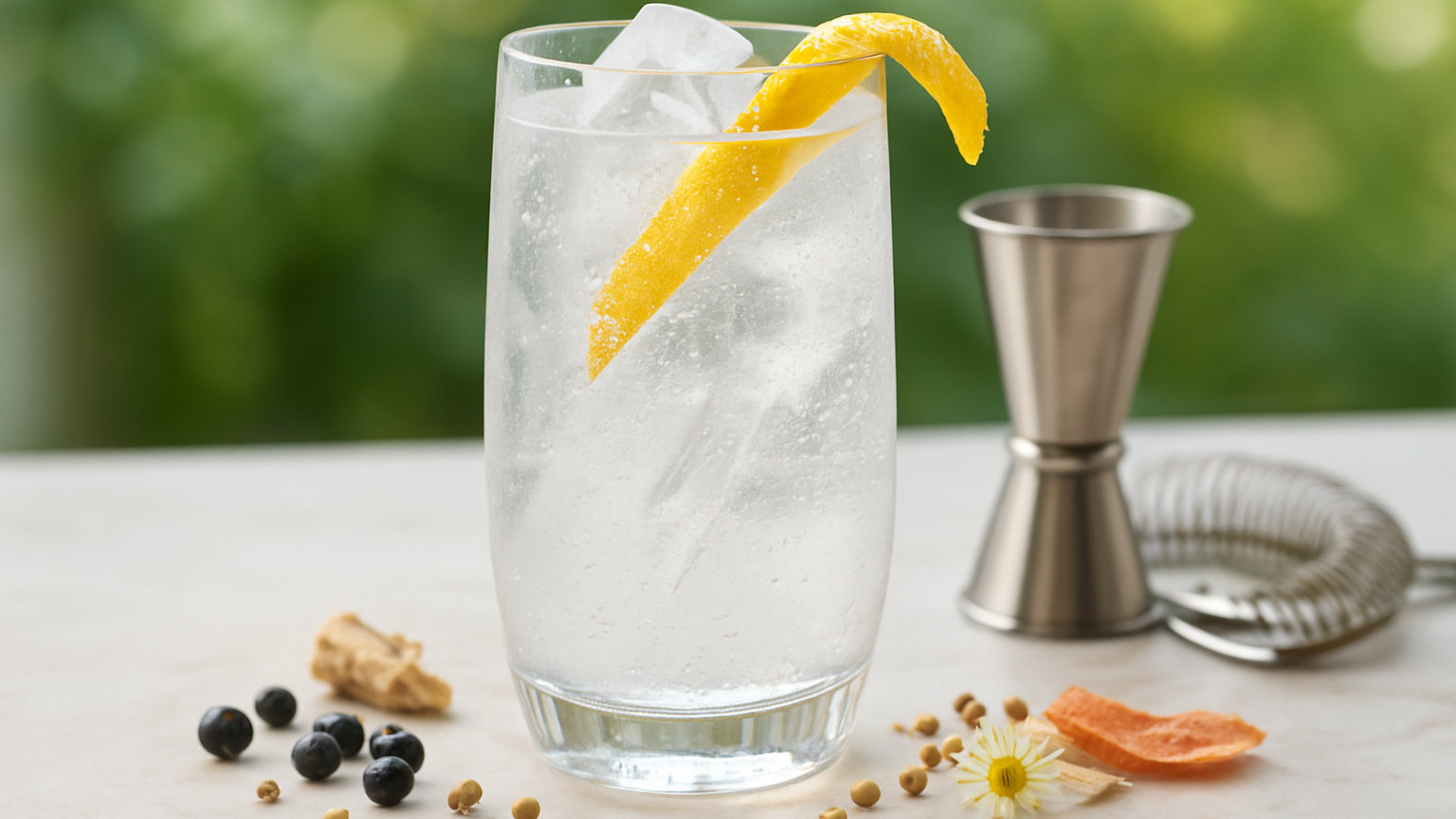
A gin recipe often lists a dozen or more botanicals, which suggests enormous variation between brands. In practice most gins are built on the same four, and the long list is largely refinement around a common core.
What are the core four?
- Juniper. Legally required to predominate. Piney, resinous, slightly peppery, with a citrus edge.
- Coriander seed. The second most common by far. Lemony, spicy, warm. Nothing like fresh coriander leaf.
- Angelica root. Earthy and dry. Acts as a fixative, binding the other aromas and giving structure.
- Orris root. From iris rhizomes. Faintly floral and violet, and also a fixative.
Those four appear in the great majority of London dry gins and account for most of what the style tastes like.
What does a fixative do?
Holds volatile aromas together so they release evenly rather than the lightest evaporating first. Angelica and orris contribute relatively little flavour of their own and make everything else last longer in the glass.
What else is commonly used?
- Citrus peel. Lemon, orange, grapefruit. Brightness and lift.
- Cassia and cinnamon. Warm, sweet spice.
- Liquorice root. Sweetness and body without sugar.
- Cardamom. Aromatic and slightly camphorous.
- Almond. Softness and a marzipan note.
- Cubeb and grains of paradise. Pepper without heat.
Anyone with a nut allergy should note that almond appears in a fair number of gin recipes and is not always obvious from the front label.
What goes into contemporary gins?
Almost anything. Cucumber, rose, elderflower, tea, seaweed, pine, lavender, hibiscus and local foraged plants have all been used seriously.
These generally sit on top of a conventional base rather than replacing it, since juniper must still predominate. What changes is how far forward the unusual element is pushed.
How are they added?
Three main approaches, often combined:
- Steeping. Botanicals macerate in the spirit before distillation, giving a fuller, heavier extraction.
- Vapour infusion. Botanicals sit in a basket above the liquid and the vapour passes through, giving a lighter, more delicate result.
- Separate distillation. Each botanical distilled alone, then blended. More control, more work.
Delicate material such as flowers and cucumber is usually vapour infused, since long contact with hot spirit destroys it.
Does the number of botanicals matter?
Not much. A gin with six well-chosen botanicals can be more distinctive than one with twenty-four, where individual contributions blur into a general aromatic haze.
Large numbers appear on labels because they read as craft. Restraint is harder and frequently produces a better drink.
Can you tell them apart in the glass?
With practice, several. Juniper, citrus and cardamom are relatively easy to identify. Angelica, orris and liquorice are much harder, since they work structurally rather than announcing themselves.
Tasting a gin neat at room temperature, then with a few drops of water, reveals considerably more than a gin and tonic does.
Where do the botanicals come from?
Almost all are bought in from specialist suppliers rather than grown by distillers. Juniper is largely wild harvested, mainly in eastern Europe and the Balkans, and quality varies by harvest.
That variation is a real production challenge. Distillers adjust recipes between batches to keep a consistent house style, which is skilled work that never appears on the label.
Can you make a botanical gin at home?
Yes, by steeping rather than distilling, which involves no licence. Juniper berries, coriander seed and a strip of citrus peel in a bottle of vodka for 24 to 48 hours produces a recognisable compound gin.
Taste it hourly rather than leaving it. Juniper extracts quickly and over-steeping turns it harsh and resinous.
Does the recipe stay secret?
Usually the list is published and the proportions are not, which is where the actual character lies. Two gins using identical botanicals in different ratios taste substantially different.
Distillation method is the other undisclosed variable, since steeping and vapour infusion extract quite differently from the same material.
Which are worth learning to spot?
Juniper, citrus peel, coriander seed and cardamom, in that order. Those four account for most of what distinguishes one conventional gin from another, and each is identifiable with a little practice.
Smelling the raw botanicals alongside the gin is the fastest way to learn. A jar of juniper berries costs very little and makes the connection immediately.


