
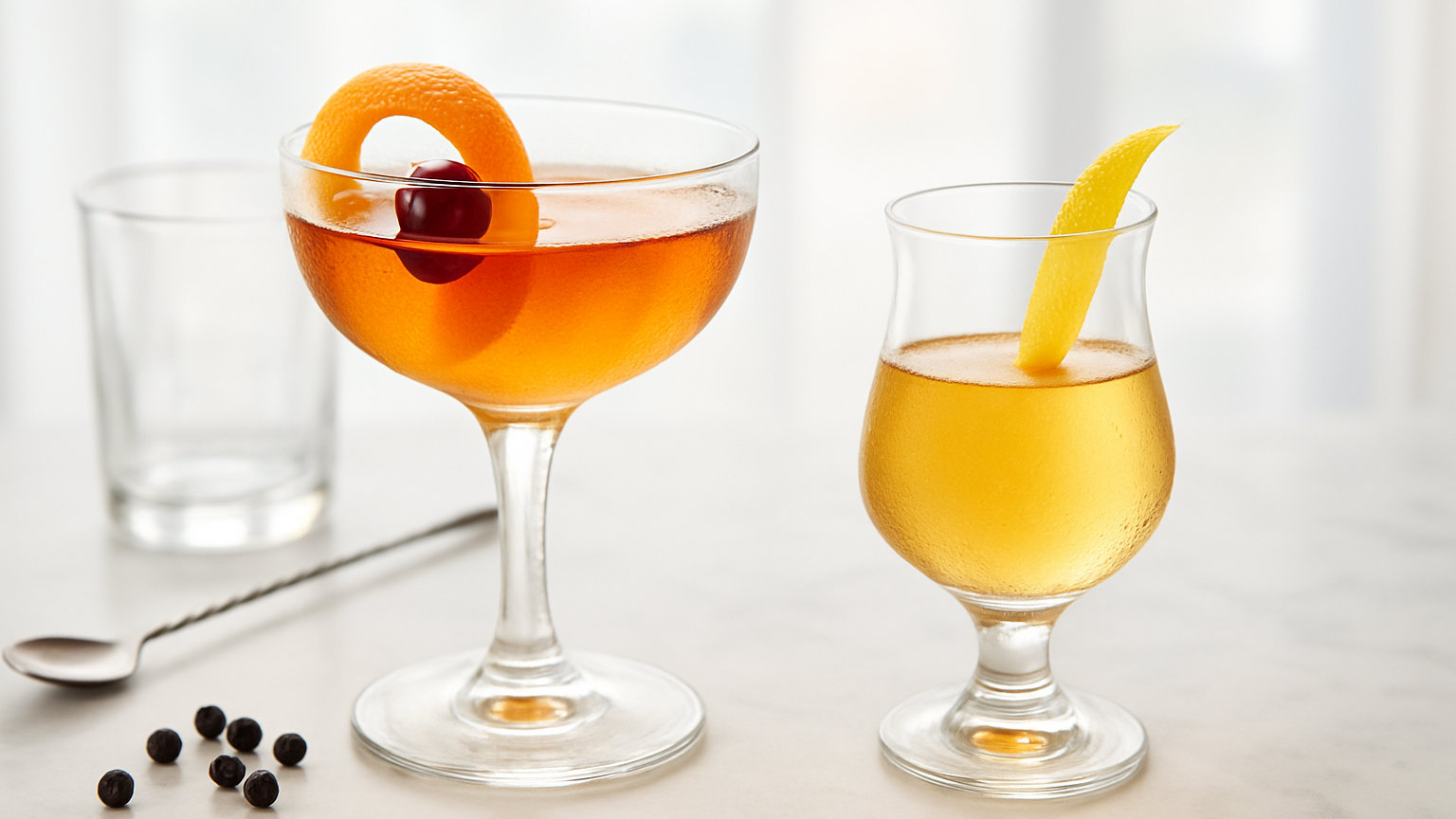
London dry is a relatively recent style. Several cocktails from the nineteenth century were written for gins that tasted quite different, and making those drinks with a modern dry gin produces something other than what the author intended.
What is old tom gin?
A sweetened gin, sitting between genever and London dry in style. It is fuller and rounder than a dry gin, with a noticeable but not cloying sweetness.
Historically the sweetening covered rough spirit. Modern versions are made properly and use sugar as a stylistic choice, giving a softer, more approachable gin.
There is no legal definition, so the category varies. Some are barely sweetened dry gins, others are richer and more botanical.
What is genever?
The Dutch and Belgian ancestor of gin, and a genuinely different spirit. It is made with malt wine, a distillate of malted grain, rather than pure neutral spirit.
That grain base gives it body, maltiness and a texture closer to a light whisky than to gin. Juniper is present and it is not the leading flavour in most examples.
It holds protected geographical status and can only be made in the Netherlands, Belgium and small parts of France and Germany.
What are the genever styles?
- Jonge. Young style, lighter, less malt wine. Not a reference to ageing.
- Oude. Old style, more malt wine, richer and maltier.
- Korenwijn. The richest, with the highest malt wine content, often barrel aged.
Jonge and oude describe recipe rather than age, which catches people out.
Which cocktails need them?
- Martinez. Old tom. With London dry the drink turns sharp and unbalanced.
- Tom collins. Named for old tom, and noticeably rounder made with it.
- Improved gin cocktail. Old tom or genever.
- Holland gin drinks in old manuals. Genever, where the malt is the point.
A great many pre-1900 gin recipes assume something sweeter and fuller than a modern dry gin, which is worth remembering when a historical recipe tastes harsh.
Can you substitute?
Approximately. Adding a small quantity of sugar syrup to London dry gets partway towards old tom, since the difference is largely sweetness and body.
Genever cannot be substituted meaningfully, because the malt wine base is the defining element. A drink calling for genever made with gin is a different drink.
How should you drink genever neat?
Cold, in a small tulip glass, often filled to the brim. The Dutch tradition is to lean down and take the first sip without lifting the glass, which is practical rather than ceremonial given how full it is poured.
It works well alongside beer, a pairing known as a kopstootje, and a small measure at around 35 to 40 per cent is 1.4 to 1.6 units.
Are they worth buying?
Old tom, if you make classic cocktails regularly. It unlocks several drinks properly and works in most places London dry does.
Genever is more of a specialist purchase, worth it if you are interested in where gin came from or enjoy malty spirits. Neither is a first bottle for a new home bar.
Why did these styles decline?
Column distillation made clean neutral spirit cheap and widely available from the mid nineteenth century onwards, which removed the need for sweetening to cover roughness.
London dry emerged from that shift and came to dominate. Old tom nearly disappeared and returned only with renewed interest in classic cocktails from the 2000s.
How do they taste against London dry?
Old tom is rounder, sweeter and softer, with juniper still clearly present. Genever is maltier, heavier and grain-led, with juniper well back.
Tasting all three side by side is the quickest way to understand how the category evolved, and it explains why old recipes call for measures that seem wrong with modern gin.
Are they easy to find?
Old tom is now stocked reasonably widely by specialist retailers, though rarely in supermarkets. Genever is harder outside the Netherlands and Belgium and is usually a specialist order.
Both are worth trying at a bar before buying a bottle, given neither is an everyday pour for most people.


