
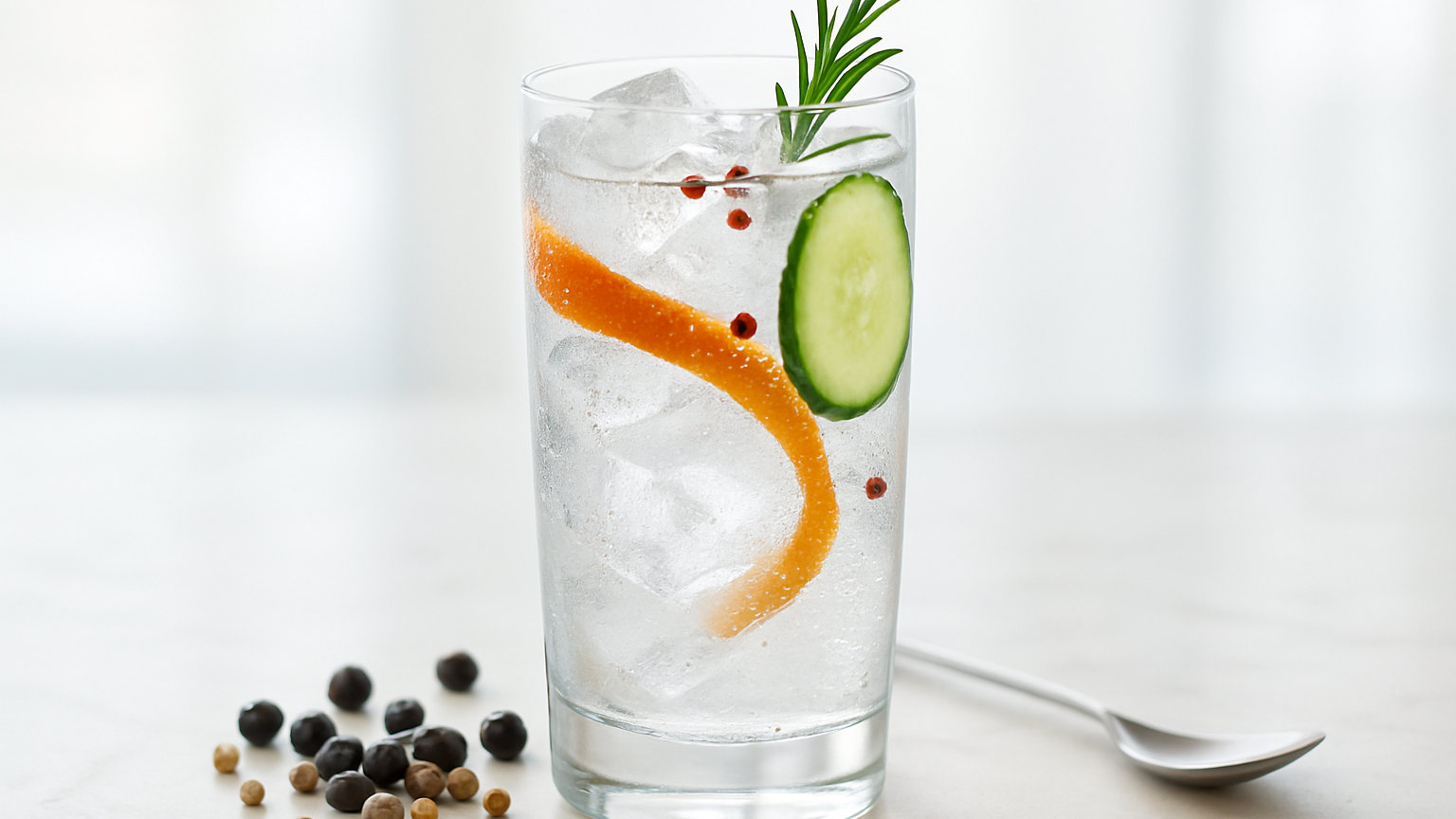
Contemporary gin, sometimes called new western or new American, is the loosest and fastest-growing part of the category. It is not a legal classification, and understanding what it actually describes is useful before buying a bottle for a specific drink.
What does it mean?
Gin where juniper remains legally predominant but sits behind another leading flavour, most often citrus, floral or herbal. The style emerged in the 1990s and 2000s and has expanded rapidly since.
There is no rule governing it. Any gin that reads as something other than juniper-forward is generally described this way.
How does it differ from London dry?
London dry is a production standard: everything distilled together, nothing added afterwards except water and a trace of sugar. Contemporary describes flavour balance rather than method.
The two overlap. A gin can be both London dry in method and contemporary in style, if it complies with the rules while leading with cucumber or grapefruit.
Where does it stop being gin?
At the point juniper is no longer predominant, which is a judgement rather than a measurement. Some products in this space are arguably flavoured vodka with juniper present, and the looseness of the word predominant is what permits it.
What are the common directions?
- Citrus led. Grapefruit, lemon, bergamot forward.
- Floral. Rose, elderflower, lavender, chamomile.
- Herbal. Rosemary, thyme, basil, olive.
- Vegetal. Cucumber and green notes.
- Savoury or coastal. Seaweed, samphire, pepper.
Which cocktails suit it?
Long drinks and anything citrus based, where the softer profile is an advantage.
- Gin and tonic. Excellent, and where most of these gins are designed to be used.
- Tom collins and fizzes. Work well.
- Gimlet. Depends on the gin, and floral styles suit it.
- Spritzes and highballs. Very good.
Which do not?
Drinks built on the assumption that gin will supply juniper backbone against a strong modifier.
- Negroni. Needs juniper to stand against Campari and vermouth. A soft floral gin disappears.
- Martinez and other bitter-driven classics. Same problem.
- Dry martini. Divides opinion. Some contemporary gins make an interesting martini, and many make a vague one.
The rule is that if the drink has a powerful bitter or fortified component, choose juniper forward. If the drink is long, citrus or delicate, contemporary works well.
Is it a worse gin?
No, and the debate is usually framed unhelpfully. These are gins built for a different purpose, and a great many people drink gin almost exclusively with tonic, which is precisely what they are designed for.
The problem arises when someone buys a floral contemporary gin expecting it to make a classic negroni, and concludes the gin is poor when it is simply the wrong tool.
What should a home bar hold?
One of each, if there is room. A juniper-forward London dry at 40 to 47 per cent for stirred and bitter drinks, and a contemporary gin for tonic and long drinks.
If it has to be one bottle, choose London dry. It makes an acceptable gin and tonic, and a contemporary gin makes a poor negroni.
How can you tell before buying?
Read the botanical list and the order it is given in. If juniper is listed first and the others are conventional, expect a classic profile. If the front label leads with rhubarb, grapefruit or rose, expect that to lead in the glass too.
Strength is another clue. Contemporary gins are more often bottled at 37.5 to 42 per cent, since the style is built for long drinks rather than stirred ones.
Is the category growing?
Rapidly, and it accounts for much of the expansion in gin over the past two decades. That growth has been driven largely by the gin and tonic rather than by classic cocktails.
It also explains why so many new gins disappoint in a negroni. They were never built for one.
What should you check on the bottle?
Whether juniper appears first in the botanical list, and what the front label leads with. Producers signal the style clearly, and reading past the design tells you most of what you need.


