
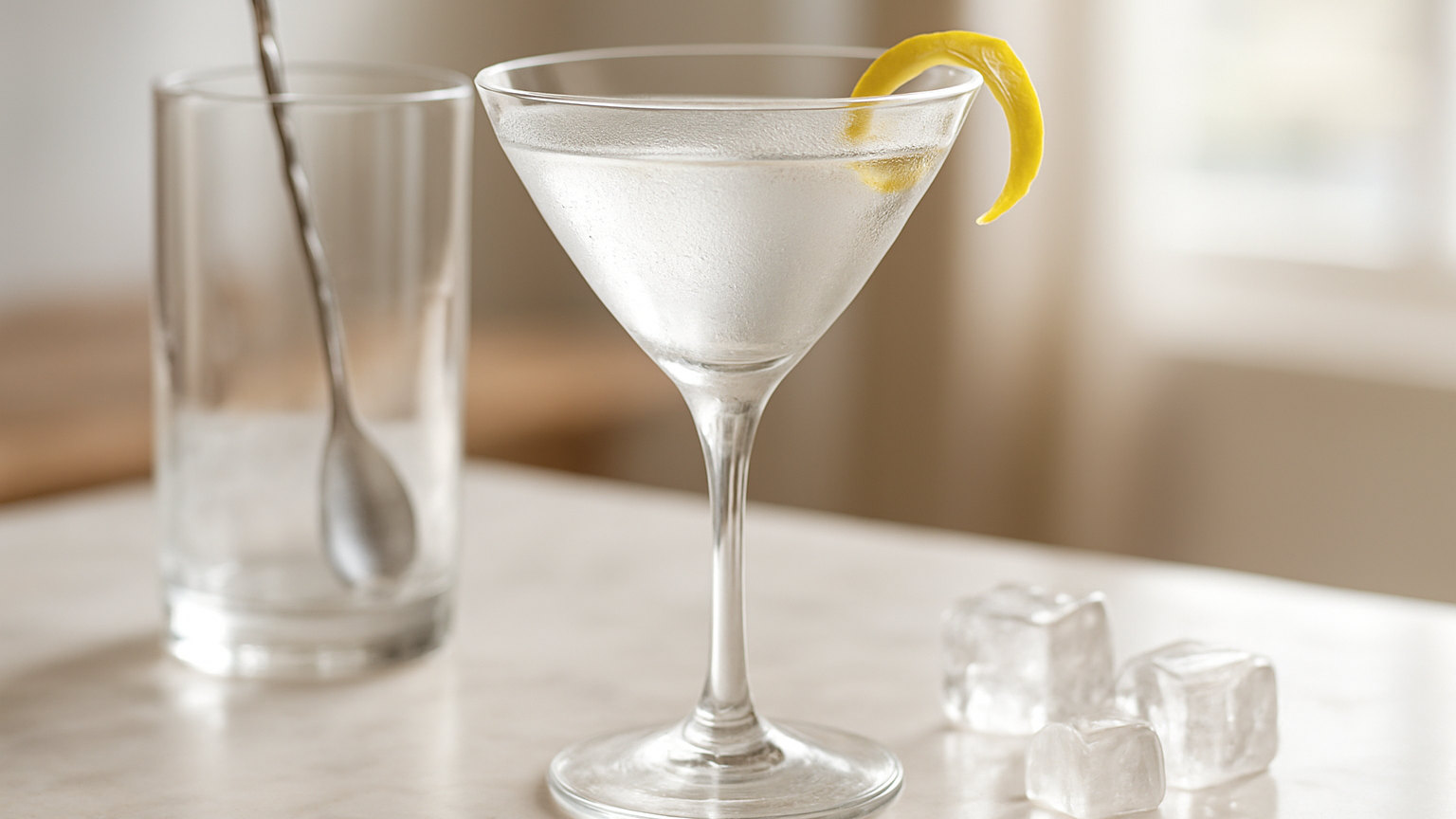
A vodka martini is a martini made with vodka rather than gin. It is a genuinely different drink rather than a substitution, and it puts more weight on the quality of the spirit than almost any other cocktail.
What is the recipe?
- 60ml vodka
- 10 to 15ml dry vermouth
- A lemon twist or olives
Stir with plenty of ice for 30 seconds. Strain into a frozen glass. Express a lemon peel over the surface, or garnish with olives.
How much vermouth?
- Wet, around 4:1. Softer and more aromatic.
- Standard, around 5:1. The usual balance.
- Dry, 10:1 or a rinse. Essentially cold vodka.
The drift towards extreme dryness happened over the twentieth century. A wetter version is worth trying, since the vermouth is doing more than most people assume.
Does the vodka matter?
More than in almost any other drink. There is no citrus, no sugar and no mixer, so any harshness in the vodka is fully exposed.
This is one of the few places where spending more on vodka is genuinely justified, unlike in a bloody mary or a mule where the mixer dominates completely.
Should it be shaken?
Stirring is the technically correct answer, since shaking aerates, clouds and over-dilutes a drink that should be clear and silky.
Shaken produces a colder, more diluted, slightly frothier drink. Plenty of people prefer it, and the trade is worth knowing rather than following either rule blindly.
What does shaking actually change?
Temperature drops further, dilution increases by roughly a third, tiny ice shards appear, and the texture becomes lighter. None of that is damage, it is simply a different drink.
Why freeze the glass?
Because a martini is served without ice and warms in the glass within minutes. A frozen glass buys several minutes at the temperature the drink is meant to be.
Five minutes in the freezer is enough if you have forgotten.
Lemon or olive?
Lemon peel expressed over the surface adds bright citrus oil and suits a clean vodka. Olives add salt and savoury depth and make it a different drink again.
A cocktail onion instead of an olive makes it a gibson, which is a small change with a distinct name.
How strong is it?
Around 2.8 units after dilution, in a small glass. That is comparable to a large glass of wine drunk in a fraction of the time, which is why two is a substantial evening.
What is a vesper?
Three parts gin, one part vodka and half a part of an aromatised wine aperitif, stirred with a lemon twist. It is stronger again, around 3.5 units, and it demonstrates what vodka contributes alongside gin.
Can you batch it?
Extremely well. Mix vodka and vermouth in the right ratio, add around 20 per cent water for the dilution, and keep the bottle in the freezer.
Pour straight into a chilled glass. No ice, no stirring, and it keeps for weeks.
What is a gibson?
The same drink garnished with a cocktail onion instead of an olive or a twist. The onion adds a savoury pickled note and the name changes, which is a small alteration with a distinct identity.
How cold should it be?
As cold as you can get it. A martini is at its best at around minus 1 to 2 degrees, which requires both proper stirring and a frozen glass.
Keeping the vodka in the freezer is another route, and it also reduces how much dilution the stirring needs.
What ruins it?
Stale vermouth, a warm glass and insufficient stirring. A martini that arrives lukewarm is beyond rescue, since there is nothing else in it to distract from the temperature.
Which vodka should you choose?
Something you would drink neat. A rye-based vodka gives a peppery edge and a wheat-based one is softer and cleaner, and both differences are perceptible here in a way they are not in a mule.
How does it compare to a gin martini?
Cleaner and simpler, with the vermouth and the garnish carrying most of the aromatic interest rather than the spirit. A gin martini has juniper and botanicals doing work that vodka does not attempt.
Neither is a substitute for the other, and anyone ordering a martini without specifying will usually be served gin.


