
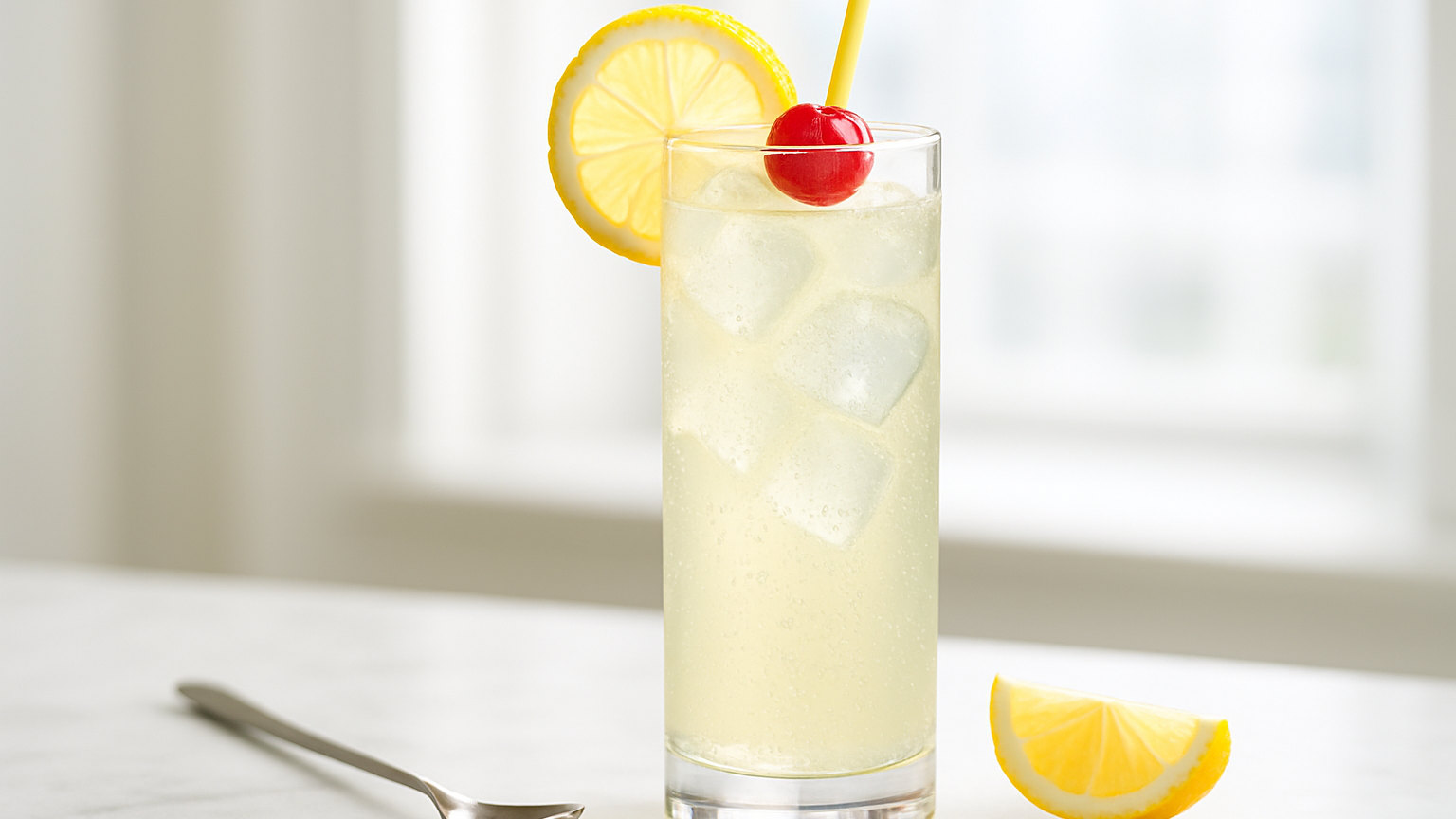
The tom collins is one of the oldest long drinks still in regular use, and it is essentially a gin sour topped with soda water. Simple, refreshing and low enough in strength to drink across an afternoon.
What is the recipe?
- 50ml gin
- 25ml fresh lemon juice
- 15ml sugar syrup
- Soda water to top, around 100ml
Shake the gin, lemon and syrup with ice. Strain into a tall glass filled with fresh ice. Top with soda and lift once gently. Garnish with a lemon slice and a cherry.
Where does the name come from?
Old tom gin, a sweetened style that sits between genever and London dry. The drink was built around it and the name stuck long after most versions moved to dry gin.
Made with a genuine old tom, the drink is rounder and needs less syrup. Made with London dry, which is the norm now, it is drier and sharper.
Should you reduce the syrup with old tom?
Yes, to around 10ml, since the gin brings its own sweetness. That is the main adjustment worth making if you have a bottle.
How does it differ from a gin fizz?
The two are close and the differences are real. A collins is built in a tall glass over ice and topped with soda. A fizz is shaken, strained into a smaller glass with no ice, and topped with a smaller quantity of soda.
A gin fizz also often contains egg white, which a collins never does. The fizz is shorter, frothier and drunk quickly; the collins is long and slow.
Why shake before topping?
Because the gin, lemon and syrup need combining and chilling, and none of that can happen once carbonated soda is in the glass.
Shake, strain, then top. Adding soda to the shaker is a mistake that costs all the carbonation.
Why fresh ice in the glass?
Because the ice used to shake has already begun melting and would over-dilute the finished drink. Strain onto fresh ice, filled to the top.
What ratio should you use?
Two parts gin, one part lemon, half to two thirds part syrup is the classic sour ratio. Adjust the syrup to taste rather than the lemon, since acidity is doing structural work.
How strong is it?
Around 2 units, and it is long enough to last, which makes it one of the more sustainable cocktails for a warm afternoon.
What are the variations?
- John collins. Whiskey instead of gin.
- Vodka collins. Self-explanatory.
- Rum collins. White rum.
- Elderflower collins. Elderflower liqueur replacing some syrup.
Can you batch it?
Mix the gin, lemon and syrup in advance and keep it cold. Pour over ice and top with soda per glass. Squeeze the lemon on the day.
What glass should you use?
A tall collins glass, which is narrower than a highball and named for the drink. Any tall glass works, and the narrow shape keeps the carbonation slightly longer.
Why is it such a good summer drink?
Long, cold, low in strength and built on citrus. At around 2 units in a full glass it is one of the more sustainable classics for a warm afternoon.
How much soda should you add?
Enough to fill the glass, usually around 100ml. Adding it slowly down the side of a tilted glass preserves the carbonation, and one gentle lift is all the mixing it needs.
What ruins it?
Bottled lemon juice, warm soda and adding the soda to the shaker. The last of those loses all the carbonation before the drink reaches the glass.
Does the gin matter?
Moderately. Lemon and soda soften everything, so a mid-range London dry is entirely sufficient and a very delicate gin will disappear.
How do you build it properly?
Shake the gin, lemon and syrup with ice, strain onto fresh ice in the tall glass, then top with soda poured slowly down the side. One lift to combine and no more.


