
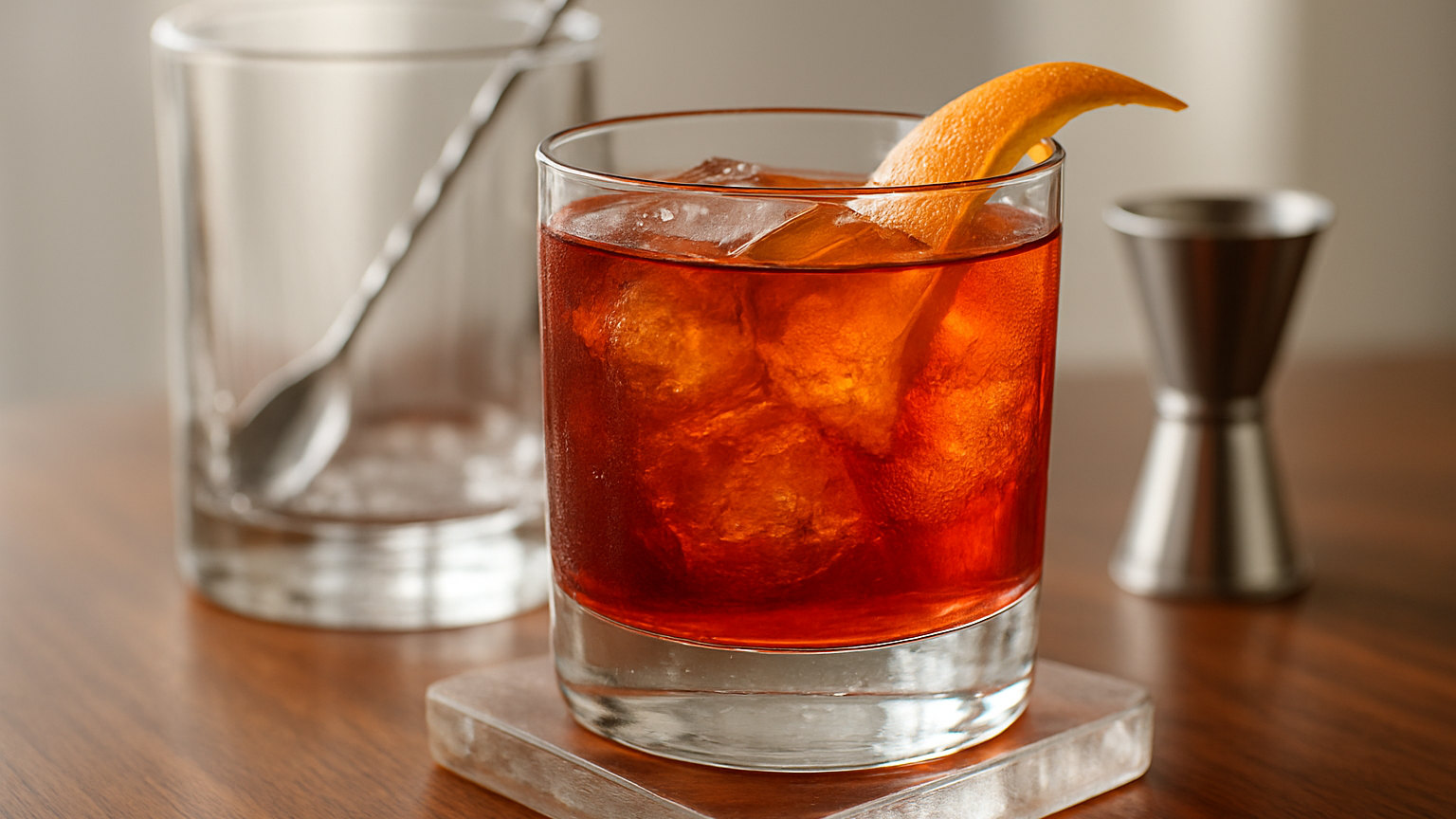
The negroni is equal parts gin, sweet vermouth and bitter aperitivo. Nothing is hidden, nothing is diluted by mixer, and every one of the three has to be decent.
What is the recipe?
- 30ml gin
- 30ml sweet red vermouth
- 30ml bitter red aperitivo liqueur
Stir with plenty of ice for 30 seconds. Strain over a large cube in a rocks glass. Express an orange peel over the surface and drop it in.
Why equal parts?
Because each component balances the others. The gin brings juniper and strength, the vermouth brings sweetness and body, the bitter brings structure and the long finish.
Shifting the ratio is entirely reasonable once you know the classic. Reducing the bitter to 20ml makes a gentler drink; increasing the gin makes a drier, stronger one.
Which gin should you use?
A juniper-forward London dry at 40 per cent or above. The bitter and the vermouth are both assertive, so a soft floral contemporary gin disappears entirely.
This is the clearest case in cocktails where a classic gin and a modern one are not interchangeable.
Does a stronger gin help?
Considerably. A navy strength gin at 57 per cent stands up to the modifiers rather than being buried, and it takes the dilution from stirring without going thin.
Should it be stirred or shaken?
Stirred. There is no citrus or egg to emulsify, and shaking aerates and clouds a drink that should be clear and silky.
Stir 30 seconds with plenty of ice until the mixing glass is properly cold. The dilution is part of the recipe rather than an accident.
Why does the vermouth matter so much?
Because it is a third of the drink and it is wine, so it oxidises after opening. A bottle that has sat at room temperature since Christmas will taste flat and stale.
Keep it in the fridge, buy small bottles, and replace it every month or two. A tired vermouth is the commonest reason a home negroni disappoints, and people usually blame the gin.
What are the main variations?
- Boulevardier. Bourbon instead of gin.
- Negroni sbagliato. Sparkling wine instead of gin. Much lighter.
- White negroni. Gentian liqueur and a lighter aperitif in place of the red bitter.
- Mezcal negroni. Mezcal instead of gin. Smoky and excellent.
- Americano. No gin, topped with soda. Around a third of the strength.
How strong is it?
Around 3 units, which is comparable to a large glass of wine in a small glass. The sbagliato is around 1.6 and the americano around 1.1, which makes both genuinely useful lighter alternatives.
Can you batch it?
Very well, and it is one of the best cocktails for it. Mix equal parts in a bottle, add around 20 per cent water to account for the stirring dilution, and keep it in the fridge.
Pour over ice and add the orange peel to serve. It keeps for weeks.
What glass should you use?
A rocks glass with a single large cube. A large cube melts slowly, so the drink stays at the right dilution rather than becoming progressively watery.
Why express the orange peel?
Because the oils sprayed over the surface reach you with every sip, and aroma is most of what you perceive as flavour. Squeeze the peel skin-side down over the glass, rub the rim, then drop it in.
How do you adjust it to taste?
Change one part at a time. More gin gives a drier, stronger drink; more vermouth gives a softer, sweeter one; less bitter makes it considerably more approachable for anyone new to the style.
A 40:30:20 build of gin, vermouth and bitter is a common starting point for people who find equal parts too bitter.
What ruins it?
Old vermouth, a soft contemporary gin and shaking instead of stirring. All three are common and all three are avoidable.
Is it meant to be bitter?
Yes, and that is the point of it. It is an aperitivo, designed to sharpen the appetite before eating rather than to be sweet or refreshing.


