
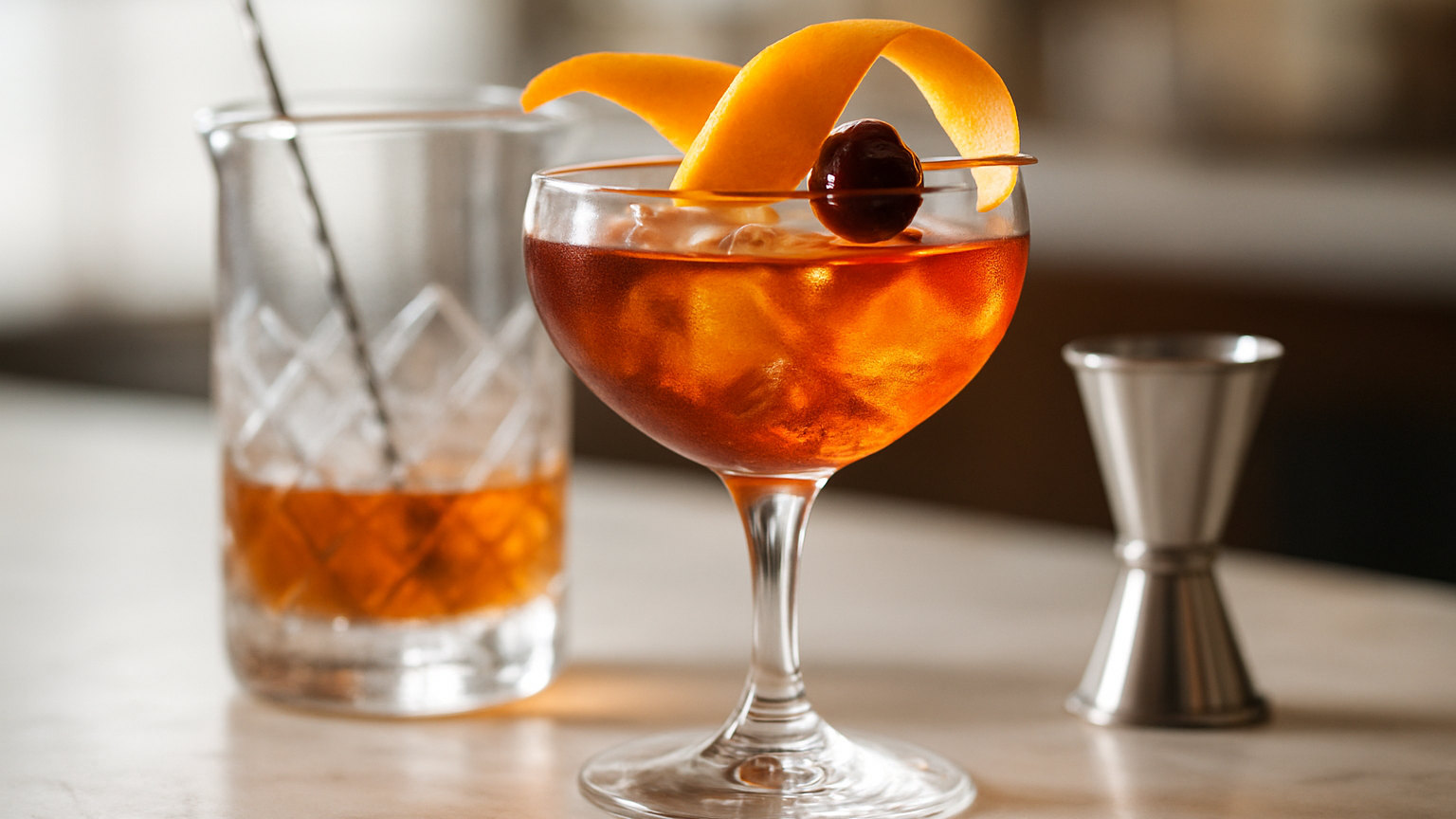
The martinez is gin, sweet vermouth, maraschino liqueur and orange bitters. It is generally accepted as the ancestor of the martini, and it is a considerably richer drink.
What is the recipe?
- 45ml old tom gin
- 30ml sweet red vermouth
- 5ml maraschino liqueur
- 2 dashes orange bitters
Stir with plenty of ice for 30 seconds. Strain into a chilled coupe. Garnish with a lemon twist.
What is old tom gin?
A lightly sweetened style of gin that sits between the malty genever and the dry London style. It was the standard gin of the nineteenth century.
It is available again after decades of absence. London dry works as a substitute and makes a sharper drink, in which case add 5ml of sugar syrup.
Does it have to be old tom?
No, and the drink is noticeably rounder with it. The sweetness is part of what distinguishes a martinez from a sweet martini.
How did the martini come from it?
By drying out over about fifty years. Replace the sweet vermouth with dry, drop the maraschino, reduce the vermouth proportion and you arrive at a martini.
The change tracks the general shift in taste from sweet to dry drinks across the late nineteenth and early twentieth centuries.
What ratio should you use?
Early recipes use equal parts gin and vermouth, or even more vermouth than gin. Modern versions run around 45:30 in favour of the gin.
Equal parts is worth trying, since it shows what the drink was originally like and it is sweeter than most people expect.
Why does the vermouth matter?
Because it is a third of the drink and it is wine, so it oxidises within weeks of opening. Keep it in the fridge and buy small bottles.
A stale vermouth is the commonest reason this disappoints, and the gin usually takes the blame.
How much maraschino?
Five millilitres. It is powerful and dominates easily, and its almond character is meant to sit behind the vermouth rather than in front of it.
Why stir rather than shake?
Because there is no citrus or egg. Shaking would cloud and aerate a drink that should arrive clear and silky, and over-dilute it.
How strong is it?
Around 2.4 units after dilution. The vermouth brings the strength down compared with a martini.
Should the garnish be lemon or a cherry?
Both appear. A lemon twist lifts it; a cherry reinforces the maraschino. A twist is the more common modern choice.
Can you batch it?
Very well. Mix everything, add around 20 per cent water for the stirring dilution, and keep it in the fridge for a few weeks.
What ruins it?
Stale vermouth and too much maraschino. Five millilitres is enough and ten will take over the whole drink.
Which vermouth should you use?
A good sweet red vermouth, since it is a third of the drink. A rich Italian style suits the maraschino better than a lighter one.
How long should you stir it?
Thirty seconds with plenty of ice. The drink needs around 20 to 25 per cent dilution to open up.
Should you use orange or aromatic bitters?
Orange, which is what most recipes specify and suits the maraschino. Aromatic bitters work and give a spicier, heavier drink.
What ratio should you settle on?
Forty-five millilitres of gin to 30ml of vermouth for a modern balance. Equal parts is the historical version and worth trying once to see how sweet the drink originally was.
Where does the name come from?
Disputed, as with most drinks of the period. A Californian town and a bartender of that name both feature in the various accounts, none well documented.
Is it worth making?
Yes, particularly if you find martinis austere. It is richer, sweeter and considerably more forgiving.
Can you use London dry gin?
Yes, and add 5ml of sugar syrup to make up for the sweetness old tom would have brought. The drink becomes sharper and more juniper-led.


