
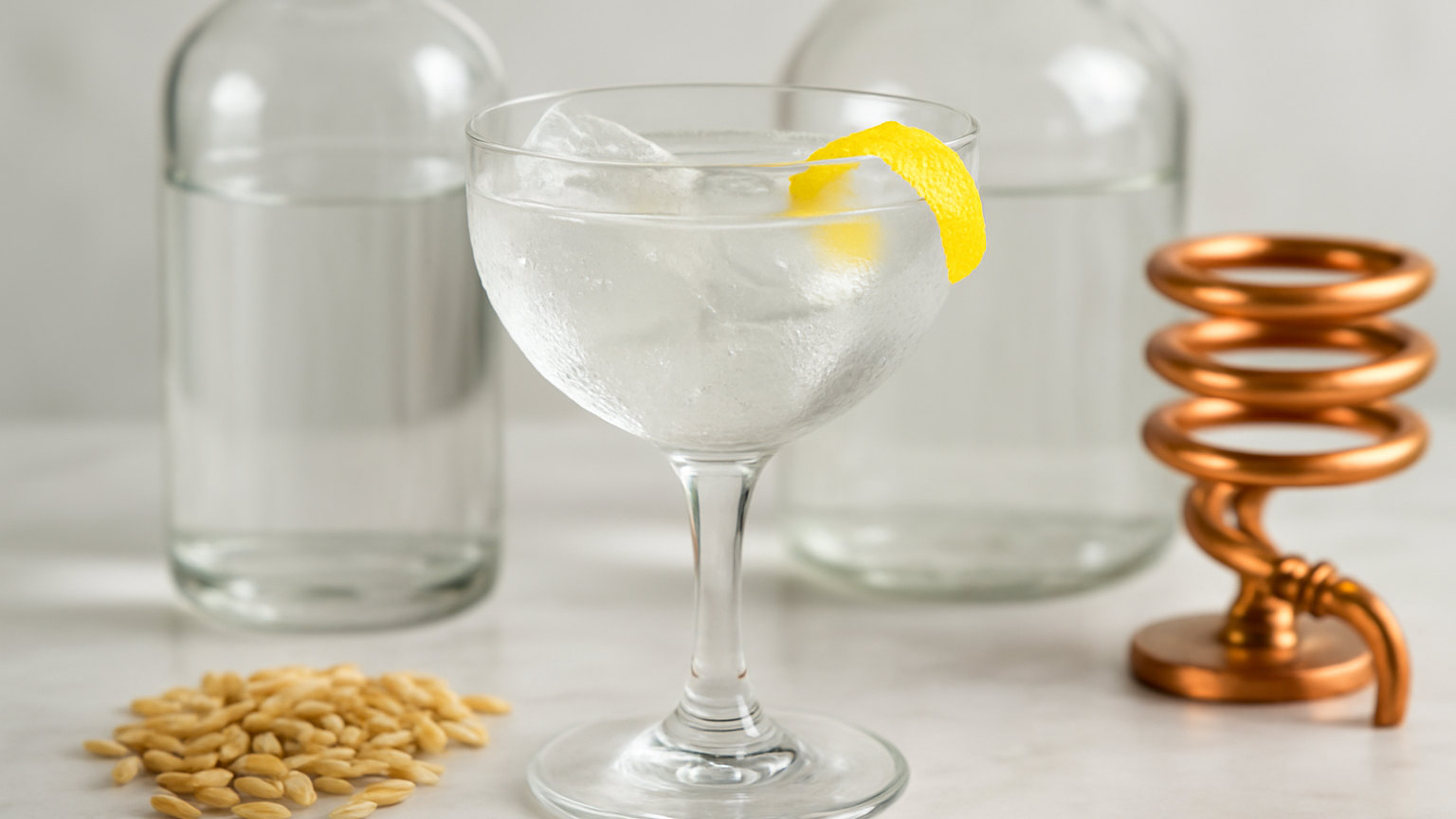
Most spirits are made by capturing flavour. Vodka is made by removing it, and understanding how that works explains both why vodkas are so similar and why they are not identical.
What is the raw material?
Anything fermentable. Wheat, rye, barley, potato, corn, grape, molasses and even whey have all been used commercially.
In the UK and EU, vodka must be made from agricultural raw materials. The base need not be declared on the label, though producers using rye, potato or grape usually mention it because it distinguishes them.
How is it fermented?
Much like beer, at a basic level. Starches are broken down to fermentable sugars, yeast converts those to alcohol, and the result is a low-strength wash of around 8 to 12 per cent.
Grain requires mashing and enzyme action to convert starch. Potato requires cooking first. Grape and molasses are simpler, since the sugar is already available.
What does the column still do?
A column still contains a series of plates, each acting as a separate distillation stage. Vapour rising through the column condenses and re-evaporates repeatedly, and each cycle raises the alcohol concentration and strips out heavier compounds.
A tall rectification column can reach above 96 per cent in a single continuous pass, which is why claims about the number of distillations mean little. What matters is the number of theoretical stages, and one column contains many.
What are congeners?
The compounds other than ethanol and water: higher alcohols, esters, aldehydes and acids. They carry flavour and aroma, and they are what vodka production is designed to minimise.
Whisky and rum keep them deliberately. Vodka removes almost all, which is the fundamental difference between the categories.
How are cuts made?
The distillate is divided into heads, hearts and tails. Heads contain volatile compounds including acetone and methanol; tails contain heavy oils and fusel alcohols. Only the hearts are kept.
Cut points are a judgement, and a wider cut retains more character while a narrower one gives a cleaner but lower-yielding spirit. This is one of the genuine decisions a vodka producer makes.
What does filtration achieve?
Activated charcoal adsorbs residual compounds that survived distillation, softening any remaining harshness. It is effective and standard.
Filtration through silver, diamonds, quartz or lava rock is marketing rather than chemistry. None of those materials does anything charcoal does not, and heavy filtration can strip texture that gives a vodka its character.
Why does the base still show?
Because removal is never total. Trace compounds survive at concentrations below the level that would register as flavour and above the level that registers as texture.
That is why a rye vodka can read as peppery and a potato vodka as creamy, despite both being distilled to the same purity. The effect is subtle and it is real.
What happens before bottling?
Dilution with water to bottling strength, usually 40 per cent. The water is a larger proportion of the finished product than most people realise, which is why producers treat it seriously and why water quality genuinely affects the result.
Can it be made at home?
Not legally in the UK, where distilling spirits without a licence is an offence regardless of quantity or purpose. Fermenting is legal; distilling is not.
Infusing bought vodka with fruit, herbs or spices involves no distillation and is entirely legal, which is where home experimentation belongs.
Why do producers use different base materials?
Cost, availability and the character they want. Grain is cheapest at scale; potato yields less alcohol per tonne and gives more texture; grape is expensive and light.
Since the differences survive only faintly, base material is as much a marketing position as a technical decision.
What separates a good producer from an average one?
Cut points, water quality and restraint in filtration. None of those appears on the label, which is part of why the category is so difficult to judge from the shelf.
Tasting two side by side at room temperature tells you more than any amount of label reading.


