
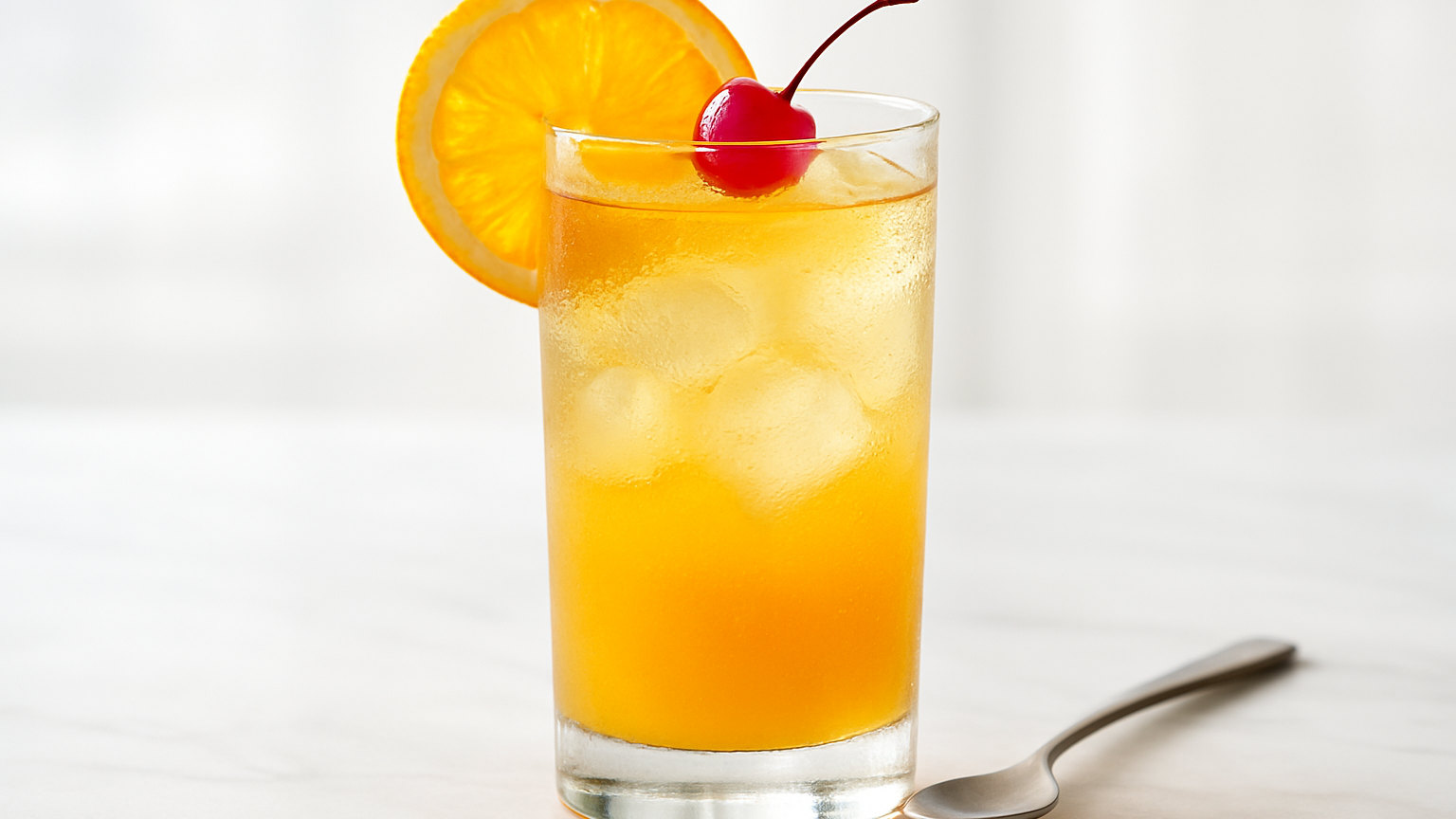
A Harvey Wallbanger is vodka and orange juice with a golden herbal liqueur floated on top. Take the float away and it is a screwdriver, which is why the float has to be done properly.
What is the recipe?
- 45ml vodka
- 120ml fresh orange juice
- 15ml golden vanilla herbal liqueur
Fill a tall glass with ice. Add the vodka and orange juice and stir. Float the herbal liqueur gently over the back of a bar spoon so it sits on the surface.
What does the liqueur add?
Vanilla, anise and a herbal sweetness that is quite unlike anything else in a fruit drink. It sits on top so you get it first, before the orange juice underneath.
Stirring it in gives a uniform drink that tastes noticeably flatter. The layer is the point.
How do you float it?
Hold a bar spoon just above the surface, curved side up, and pour slowly over the back of it. The spoon spreads the flow so the liqueur settles rather than plunging.
It floats because it is less dense than the juice below.
Why does fresh orange juice matter?
Because it is most of the drink. Cartoned juice is pasteurised and often from concentrate, which leaves it flat, sweeter and less acidic.
With a sweet liqueur on top, the acidity in fresh juice is doing real work.
How does it differ from a screwdriver?
Only the float. A screwdriver is vodka and orange juice, and this is the same drink with 15ml of herbal liqueur added on top.
It is a small change and it makes a substantial difference.
What is the liqueur?
An Italian golden liqueur at around 30 per cent, flavoured with vanilla, anise and a range of herbs. It comes in a very tall bottle that is hard to store.
There is no close substitute, and a vanilla liqueur gets some of the way there without the anise.
How strong is it?
Around 2.2 units. The juice makes it long and the sweetness disguises the vodka almost entirely.
Where does the name come from?
A marketing story from the 1970s about a surfer called Harvey who drank several and walked into a wall. It was almost certainly invented to sell the liqueur, and it worked.
What glass should you use?
A tall glass packed with ice, so the float is visible and the drink stays cold.
Can you batch it?
Mix the vodka and orange juice ahead and keep it cold. Float the liqueur per glass, since it will not stay layered in a jug.
What ruins it?
Stirring the liqueur in. The float is the only thing separating this from a screwdriver, so losing it loses the drink.
How many oranges do you need?
Around two or three per drink, depending on size. Roll them firmly on the worktop before cutting, which increases the yield noticeably.
What ratio should you settle on?
Forty-five millilitres of vodka, 120ml of juice and 15ml of liqueur floated. Raising the float much above 15ml makes the drink taste strongly of anise.
Should you add lemon?
A squeeze of around 10ml gives the drink acidity that orange juice alone lacks. It is not traditional and it improves the balance.
Why did it become so popular?
Heavy marketing in the 1970s by the liqueur producer, backed by an invented origin story. It faded when the campaign stopped and it is a perfectly good drink regardless.
What glass should you use?
A tall glass packed with ice, so the float is visible against the orange juice and the drink stays cold.
How do you store the liqueur?
It comes in an unusually tall bottle that will not fit most cupboards. It keeps well at room temperature and lasts indefinitely at 15ml a drink.
Is it worth making?
Yes, with fresh juice. The float genuinely changes the drink, and it is a good way to use a bottle that otherwise sits unopened.


