
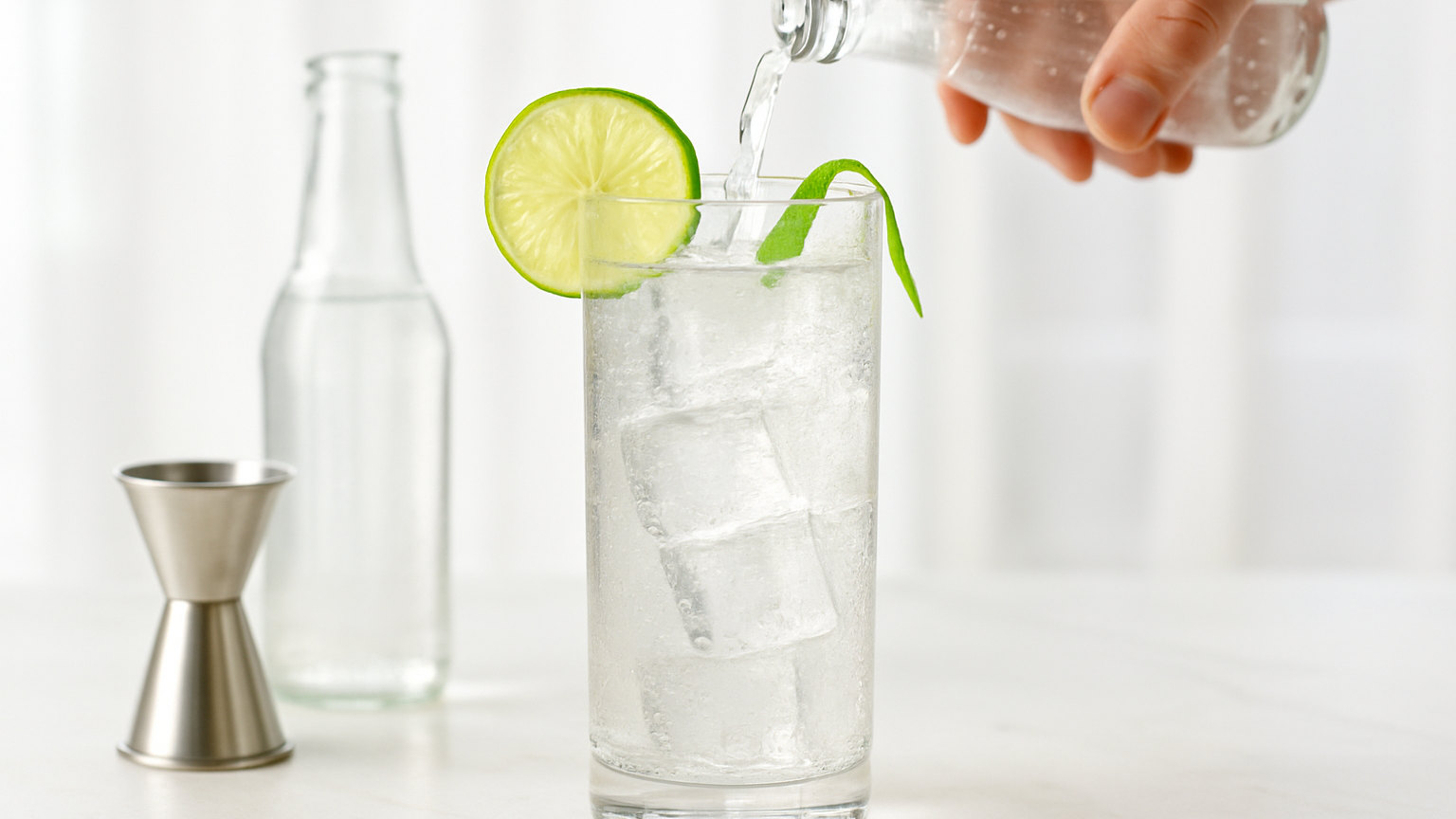
The gin and tonic is the simplest drink in the book and the easiest to make badly. Ratio matters, and the two things that ruin it more often are insufficient ice and a careless pour.
What ratio should you use?
- 1:2. Strong and gin forward. Suits a delicate or contemporary gin.
- 1:3. The standard, and the best starting point.
- 1:4. Long and refreshing. Suits a navy strength or a very assertive gin.
Fifty millilitres of gin with 150ml of tonic is the reliable default. That is 2 units at 40 per cent, and it fills a highball or a large balloon glass comfortably once ice is accounted for.
Why does more ice make a better drink?
Because ice melts to reach equilibrium, and a glass packed with ice reaches it faster and then stops. A glass with three cubes has to melt most of them to cool the liquid, which means far more dilution.
Fill the glass. It sounds like it would water the drink down and it does the opposite, and it keeps the drink cold to the last mouthful rather than tepid halfway through.
Does ice quality matter?
Somewhat. Larger, denser cubes melt more slowly than small hollow ones from a domestic tray. Freezer ice also absorbs odours, so ice that has sat for months next to fish will contribute that.
What glass should you use?
A highball or a large balloon. The balloon, associated with the Spanish style, holds more ice and concentrates aroma at the rim, which genuinely changes what you smell as you drink.
A short tumbler is the poorest choice, since it holds little ice and warms quickly.
What is the Spanish style?
A large balloon glass, packed with ice, a generous measure, a carefully chosen tonic and an elaborate garnish matched to the gin’s botanicals.
It is not merely presentation. The wide bowl delivers considerably more aroma than a straight glass, and the volume of ice keeps the drink cold through a long serve.
How should you build it?
- Fill the glass to the top with ice.
- Pour the gin over the ice.
- Tilt the glass and pour cold tonic slowly down the side.
- Lift once gently from the bottom with a bar spoon. Do not stir hard.
- Add the garnish last, expressing citrus peel over the surface if using.
Hard stirring knocks the carbonation out immediately, which is the commonest single mistake. One gentle lift is enough to combine.
Does order matter?
Ice first, always. Pouring gin into an empty glass and adding ice afterwards means the spirit warms the ice unnecessarily and the tonic goes in last against a warmer liquid.
How does gin strength change the ratio?
A navy strength gin at 57 per cent will take 1:4 comfortably and still taste of gin. A 37.5 per cent gin at 1:4 tastes of tonic.
Adjust the tonic rather than the gin measure, since increasing the spirit changes both the flavour and the units. A 50ml pour at 57 per cent is 2.9 units, against 2 at 40 per cent, which is a substantial difference across an evening.
What if it tastes flat?
Usually stirring, warm tonic or a large bottle opened earlier. All three are fixable and none is the fault of the gin.
Does the tonic need to be cold?
Very much so. Warm tonic hitting ice loses carbonation immediately, and a flat gin and tonic is the commonest failure in the drink.
Keep tonic in the fridge rather than the cupboard, and buy small bottles so none of it sits open. Both changes cost almost nothing and matter more than the gin does.
How many is a sensible evening?
Two at 50ml of 40 per cent gin is 4 units, which is a reasonable evening for most adults. Free pouring instead of measuring typically adds a third again without anyone noticing.
A jigger costs very little and improves both the consistency of the drink and the accuracy of the count.


