
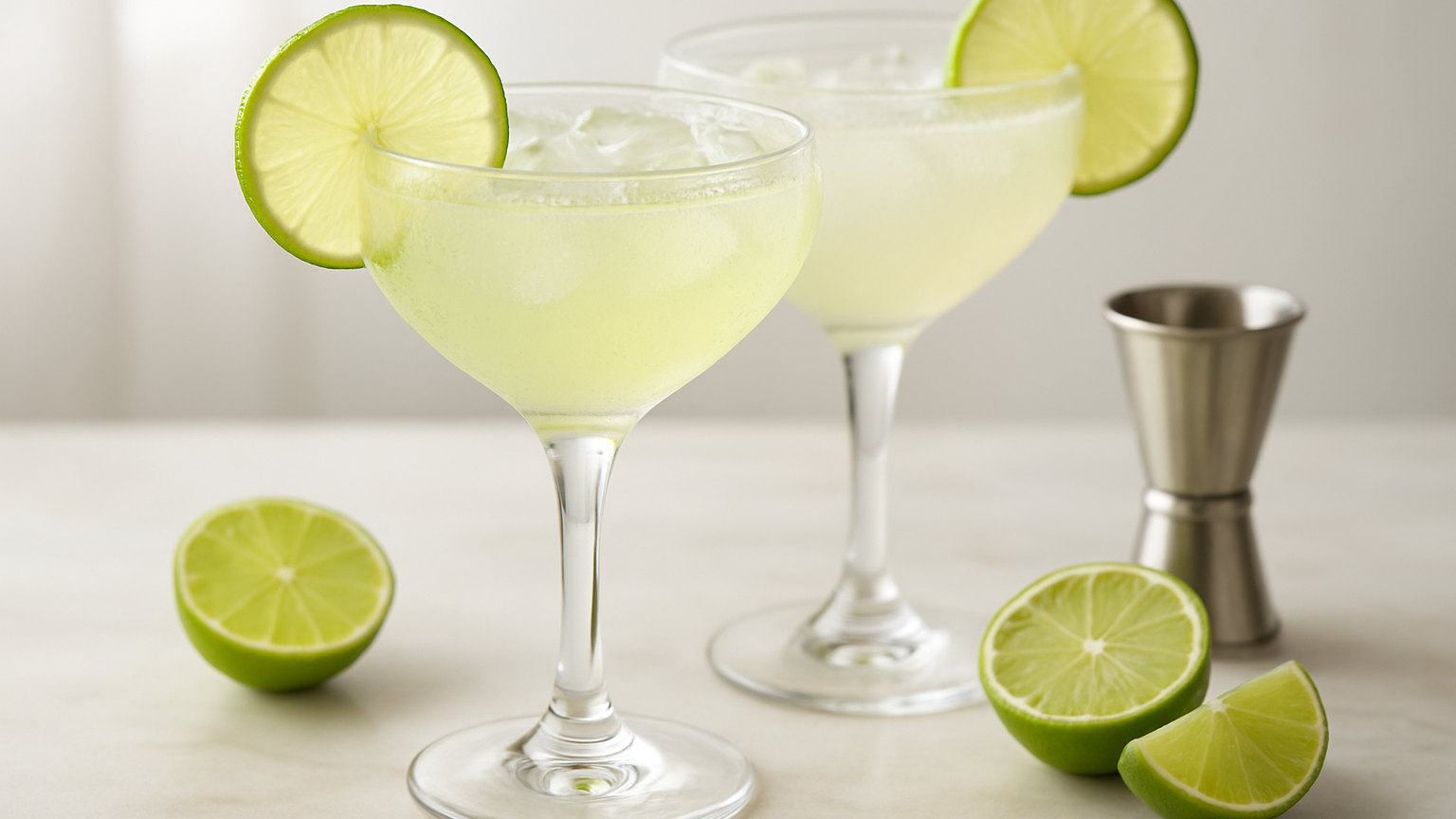
A gimlet is gin and lime. Whether that means lime cordial or fresh lime with sugar is the longest-running argument attached to any simple cocktail, and both answers are defensible.
What is the cordial version?
- 60ml gin
- 25ml lime cordial
Stir with ice for 20 seconds and strain into a chilled coupe, or shake for a colder, cloudier drink. Garnish with a lime wheel.
What is the fresh version?
- 60ml gin
- 25ml fresh lime juice
- 15ml sugar syrup
Shake hard with ice for 12 seconds and double strain into a chilled coupe.
Which is correct?
Historically, the cordial. The drink comes from the Royal Navy, where lime cordial was carried to prevent scurvy and fresh limes were not available at sea.
Modern bars mostly use fresh lime, which tastes brighter and cleaner. Both are legitimate and they are noticeably different drinks rather than variations.
How do they differ?
Cordial gives a rounder, slightly cooked lime flavour with a distinctive sweetness. Fresh lime is sharper and more aromatic.
Can you make lime cordial?
Yes, and a homemade one is far better than most bought versions. Combine lime juice, sugar and the zest, with a little citric acid to stabilise it, and keep it refrigerated.
It keeps two to three weeks and tastes of actual lime rather than lime flavouring.
Should it be shaken or stirred?
The cordial version can be stirred, since there is no fresh juice in it. The fresh version should be shaken, since citrus needs the aeration.
Shaking the cordial version is also common and gives a colder, slightly cloudy drink.
Which gin should you use?
A London dry with real juniper. Lime is assertive and it needs something to push against.
Can you make it with vodka?
Yes, and it is a common order. Cleaner and simpler, and the gin version has more going on.
How strong is it?
Around 2.4 units. It is a short, spirit-heavy drink and the lime disguises it well.
What ratio should you use?
Roughly two and a half parts gin to one part lime. Older recipes go as far as equal parts, which is very sweet and sour by modern standards.
Can you batch it?
The cordial version batches perfectly. Mix, add around 15 per cent water and keep it in the freezer.
What glass should you use?
A chilled coupe. Some serve it over ice in a rocks glass, which dilutes as you go and suits the cordial version well.
What ruins it?
A cheap lime cordial made largely of sugar and flavouring. In a two-ingredient drink there is nothing to cover it.
Why did the Navy carry lime cordial?
To prevent scurvy on long voyages, since fresh citrus does not keep at sea. A preserved cordial did, which is how lime became associated with British sailors.
Mixing it with gin was a practical way of making the ration palatable.
How much lime do you need for the fresh version?
Around 25ml, so one lime per drink. Roll it on the worktop before cutting to increase the yield.
Which version should you make first?
The cordial one, since it is the historical drink and shows what the argument is about. Then make the fresh version alongside it and decide.
What glass and temperature?
A coupe from the freezer. It is a short spirit-heavy drink served up, so it warms quickly.
How do you make lime cordial?
Combine lime juice with an equal weight of sugar and the zest of the limes, warm gently until dissolved, then strain. A little citric acid helps it keep.
It lasts two to three weeks refrigerated and tastes of actual lime rather than flavouring.
Is it a good introduction to gin?
Yes, particularly the fresh version. Three ingredients with nothing to hide behind shows what a gin tastes like more clearly than almost any other drink.
Should it be garnished?
A lime wheel or a wedge dropped in. Nothing more is needed in a two-ingredient drink.


