
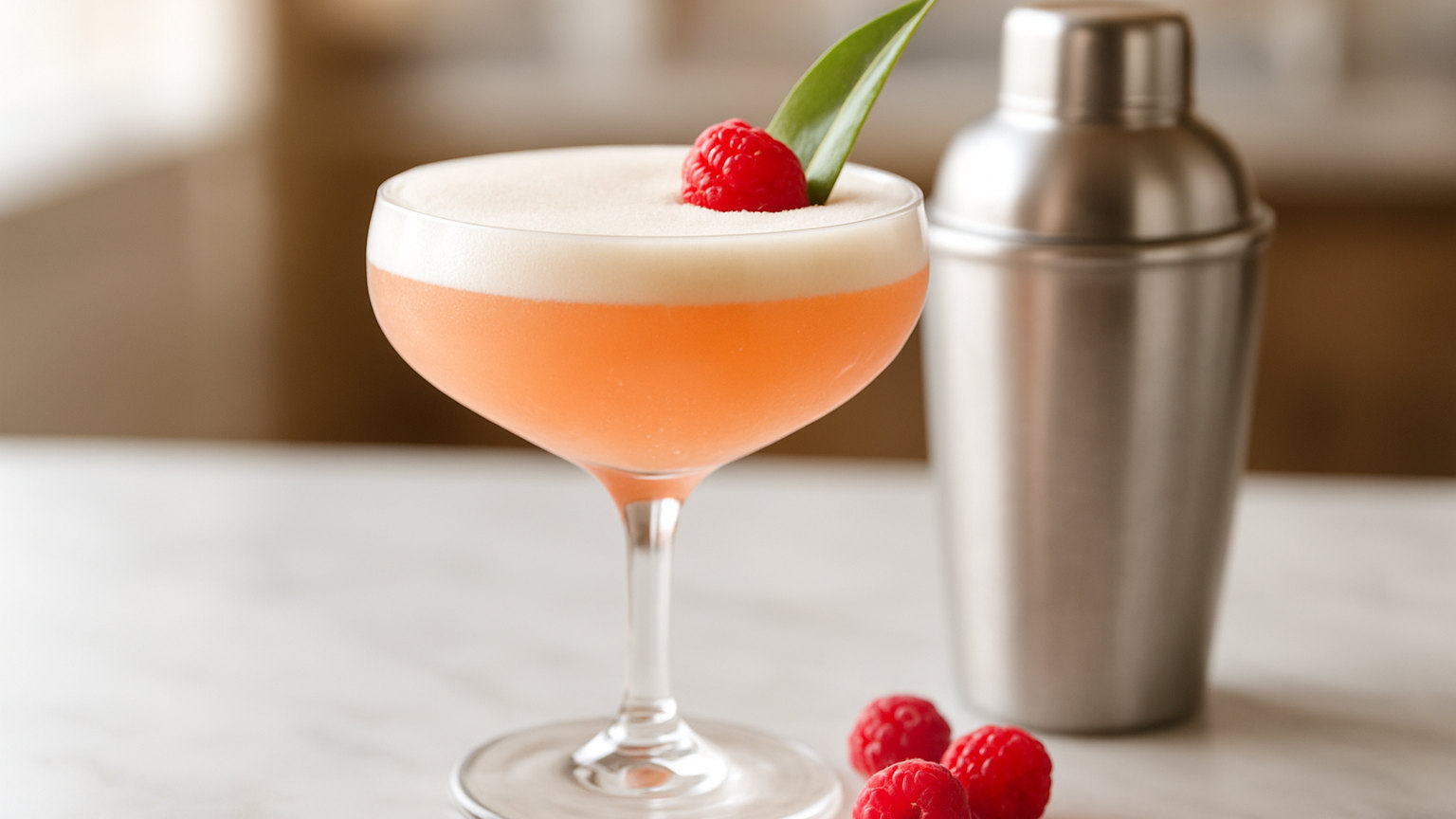
The french martini is not a martini in any technical sense, containing neither gin nor vermouth. It is a shaken vodka drink from the 1980s, and it earns its place through the foam that pineapple juice produces.
What is the recipe?
- 50ml vodka
- 15ml black raspberry liqueur
- 40ml pineapple juice
Shake hard with ice for 15 seconds. Double strain into a chilled coupe. Garnish with a raspberry or a lemon twist.
Where does the foam come from?
Pineapple juice contains proteins and other compounds that foam readily when aerated. Shaking hard produces a pale head with no egg white involved at all.
Fresh pineapple juice foams considerably better than long-life juice from a carton. If you have a choice, fresh is worth it here more than in most drinks.
How long does the foam last?
Three to five minutes, longer than an espresso martini. It is still a drink to serve immediately.
Why shake so hard?
Because aeration is what makes the drink. A gentle shake produces a flat pink liquid; fifteen seconds of hard shaking produces the texture the drink is known for.
Use hard ice cubes rather than small hollow ones, which shatter and over-dilute before the foam has developed.
Which liqueur should you use?
A black raspberry liqueur is traditional. A good crème de framboise or crème de mûre works, and both are sweeter, so reduce the measure slightly.
Whatever you use, 15ml is enough. It is intensely sweet and more turns the drink cloying.
How does it differ from a pornstar martini?
Different fruit and different structure. A pornstar martini uses passion fruit and lime and comes with a shot of prosecco; a french martini uses raspberry and pineapple and comes on its own.
The pornstar is sharper, the french is rounder and sweeter. Both rely on fruit foam rather than egg white.
How sweet should it be?
Rounded rather than sugary. The liqueur brings a great deal of sugar and pineapple juice brings more, so nothing else should be added.
If it tastes cloying, add 5ml of lemon juice. It is not traditional and it fixes the balance immediately.
How strong is it?
Around 2.2 units. It drinks very easily, since the fruit disguises the vodka almost entirely, which is worth noting across an evening.
Should it be double strained?
Yes. Ice shards break the foam and leave it patchy, and a fine sieve held under the shaker takes two seconds.
Can you batch it?
Mix the vodka and liqueur ahead and keep it cold. Add pineapple juice and shake per serve, since the foam cannot be batched and pineapple juice separates on standing.
What glass should you use?
A chilled coupe. Served without ice, so the glass needs to be cold and the drink needs to be finished before the foam collapses.
Where does the name come from?
The French raspberry liqueur it was built around, rather than any connection to a classic martini. It appeared in New York in the 1980s.
Should you use fresh pineapple juice?
If you can. Fresh juice foams considerably better than long-life, which has been heat treated and lost some of the proteins responsible.
Shaking a carton hard before measuring helps a little, since the solids that aid foaming settle on standing.
What ruins it?
A weak shake, which leaves no foam, and too much liqueur, which makes it cloying. Fifteen millilitres is enough and more is a common mistake.
Is it a good introduction to cocktails?
Yes. It is sweet, fruity and forgiving, with no bitterness and no strong spirit character, which makes it approachable for anyone who does not usually drink spirits.
What ratio works best?
Roughly 10:3:8 of vodka, liqueur and pineapple juice. Increasing the pineapple gives more foam and a lighter drink; increasing the liqueur makes it sweeter rather than fruitier.
How does it compare to other fruit martinis?
It sits between the sweetness of a chocolate or apple martini and the sharpness of a pornstar or cosmopolitan. The pineapple gives it body and foam that most fruit-flavoured vodka drinks lack.
That texture is what keeps it in the repertoire when many drinks from the same period have fallen away.


