
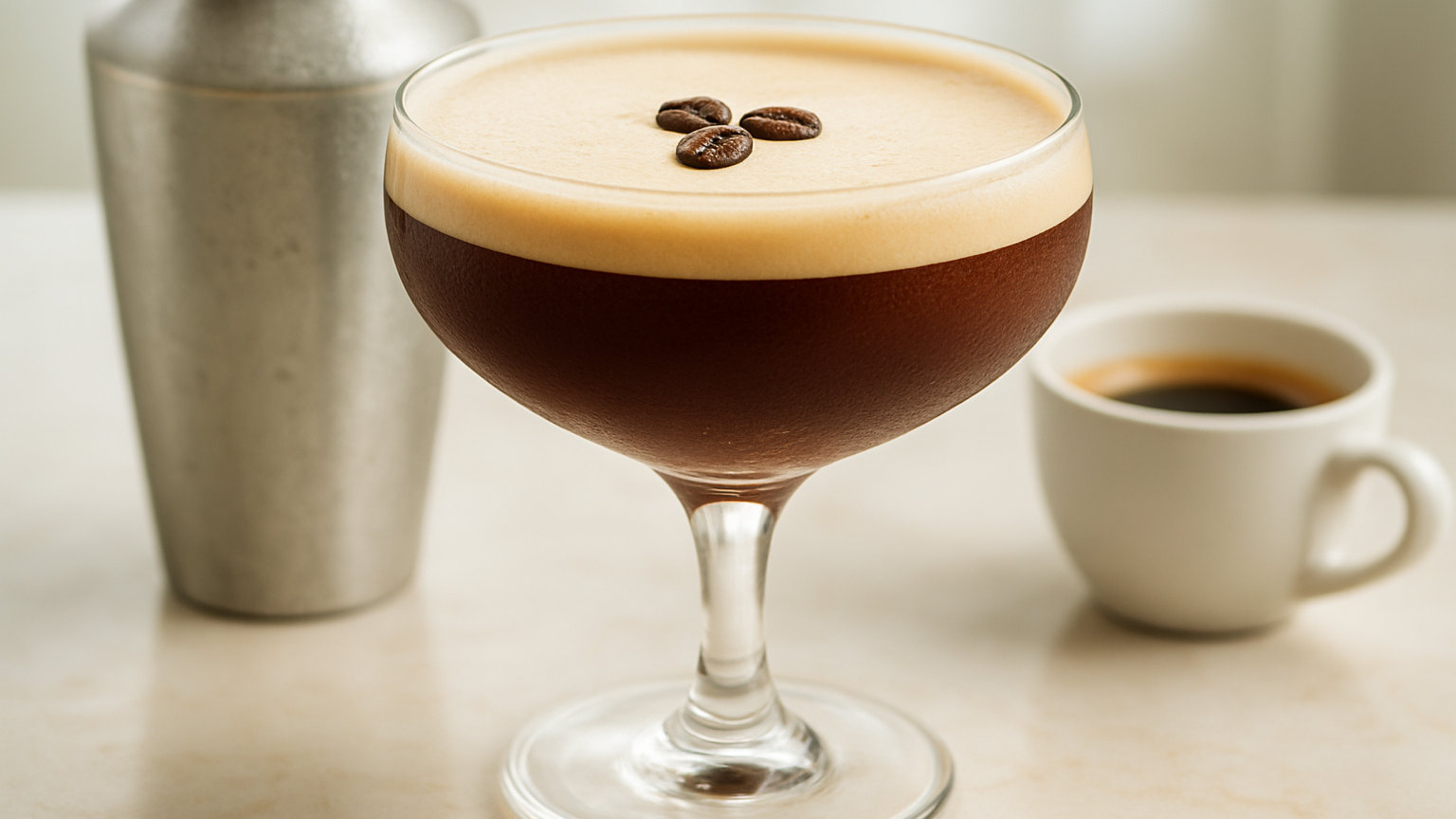
The espresso martini has one signature feature and one common failure. The pale foam on top is what people order it for, and it appears only under specific conditions that bottled coffee cannot meet.
What is the recipe?
- 50ml vodka
- 30ml fresh hot espresso
- 20ml coffee liqueur
- 5ml sugar syrup, to taste
Shake hard with plenty of ice for a full 15 seconds. Double strain into a chilled coupe. Garnish with three coffee beans.
Why does the foam form?
Because espresso crema is an emulsion of oils, dissolved carbon dioxide and proteins, and shaking aerates it into a stable foam. Fresh espresso has that crema; cooled or bottled coffee has lost it.
That is why the drink works with a shot pulled seconds earlier and produces almost nothing with cold brew or filter coffee.
How long does the foam last?
Two to three minutes before it starts collapsing. It is a drink to serve immediately rather than to build in advance, which is worth knowing when making several.
What if you have no espresso machine?
A moka pot is the best substitute, since it produces a concentrated hot coffee with some crema. A very strong aeropress works reasonably.
Filter coffee and cold brew will make a pleasant drink with no foam at all. If foam matters, concentration and heat are what you need.
How sweet should it be?
Depends entirely on the coffee liqueur, which vary enormously in sugar. A sweet commercial liqueur usually needs no additional syrup; a drier or homemade one needs 5 to 10ml.
Taste before shaking. The espresso itself contributes bitterness that shifts the balance considerably.
Why shake so hard?
Because aeration is the point. A gentle shake chills the drink and produces very little foam, and 15 seconds of hard shaking with large cubes is what builds the texture.
Use hard ice rather than small hollow cubes, which shatter and over-dilute before the foam has formed.
Should it be double strained?
Yes. Ice shards on the surface break the foam and leave it patchy. A fine sieve held under the shaker takes two seconds and makes the difference visible.
How strong is it?
Around 2.5 units with 50ml of 40 per cent vodka plus the liqueur. It also carries roughly 60 to 80mg of caffeine from the espresso, which is a full coffee late in an evening.
Anyone sensitive to caffeine or drinking it after dinner should know that. Decaf espresso works perfectly well, since the crema and the concentration are what the drink needs rather than the stimulant.
Can you batch it?
Partly. Pre-mix the vodka, liqueur and syrup and keep it cold. The espresso must be pulled fresh and shaken per serve, since batching it kills the foam entirely.
For a group, that reduces each drink to pulling a shot, adding the pre-mix and shaking.
What goes wrong most often?
Cold coffee, a weak shake and too much sugar. All three produce a flat, sweet, brown drink that bears little relation to a properly made one.
What glass should you use?
A chilled coupe or a small martini glass. The drink is served without ice and warms quickly, so a glass straight from the freezer buys several minutes of the foam holding its shape.
Why three coffee beans?
Tradition rather than function, said to represent health, wealth and happiness. They also release a little aroma as you drink, which is a genuine if small contribution.
Which vodka should you use?
Mid-range is ample. Coffee and liqueur dominate completely, so an expensive vodka contributes nothing you will notice and the money is better spent on the coffee.
What is the origin of the drink?
London, in the 1980s, created by Dick Bradsell after a customer asked for something that would wake her up. It was originally called a vodka espresso and the name shifted later.
What ruins the foam?
Cold coffee, a short shake and wet ice. All three prevent the crema emulsifying properly, and the result is a flat brown drink with a thin ring rather than a solid pale cap.
Should it be sweetened at all?
Only if the liqueur is dry. The espresso brings bitterness that needs balancing, and the right amount is whatever makes it taste of coffee rather than of sugar.


