
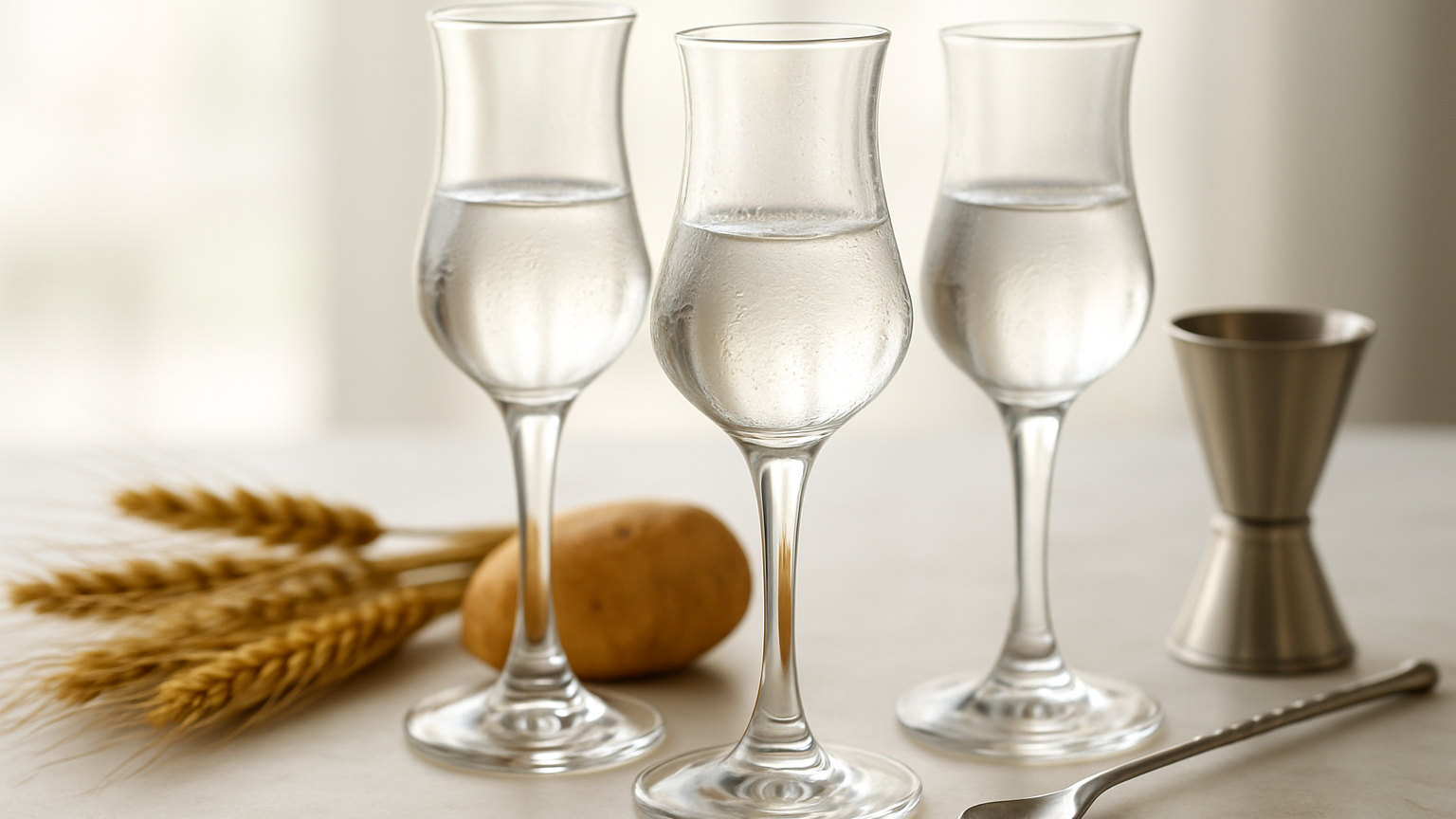
Vodka is routinely described as flavourless, and the regulations once said as much. That description is inaccurate, and the difference between flavourless and subtle explains a great deal about how the category is misunderstood.
What did the definition say?
United States regulations formerly defined vodka as neutral spirit treated to be without distinctive character, aroma, taste or colour. That wording was removed in 2020.
The change acknowledged what producers and tasters had long argued: vodkas differ perceptibly, and requiring the opposite made the definition inconsistent with reality.
UK and EU rules never went that far, requiring only that the characteristics of the raw materials be selectively reduced.
What can you actually taste?
- Texture. The most important element. Vodka ranges from thin and sharp to viscous and creamy.
- Sweetness. A faint impression, from trace compounds rather than sugar.
- Pepper and spice. Common in rye-based vodka.
- Grain or bread notes. Wheat-based, particularly.
- Burn. How aggressive the alcohol feels, which varies considerably.
Mouthfeel does most of the work. It is a real, physical property and it is what people usually mean when they describe a vodka as smooth.
Why is it so subtle?
Because distillation to above 96 per cent removes congeners by design, and congeners carry flavour. What remains sits at concentrations near the threshold of perception.
That places vodka in an awkward position: differences exist, and they are small enough that expectation and packaging influence judgement heavily.
What do blind tastings show?
That people can distinguish vodkas from one another more reliably than they can rank them by price. The differences register; the hierarchy the market implies frequently does not.
How should you taste it?
At room temperature, not frozen. Cold suppresses volatile aromatics and increases viscosity, which is why freezer vodka tastes smoother and less of anything.
Use a small narrowing glass, nose gently without inhaling hard, take a small sip and let it coat the mouth. The first sip always burns and tells you little, so take a second.
Comparing two side by side reveals far more than assessing one alone.
Should you keep it in the freezer?
It depends what you want. Freezing thickens the texture and mutes any harshness, which suits a very cheap vodka or a vodka martini served ice cold.
It also mutes everything you paid extra for. If you have bought a vodka for its character, drink it at room temperature or lightly chilled.
Does flavoured vodka count?
Separately. Flavoured vodka has something added after distillation, whether natural infusion or artificial flavouring, and the quality gap between the two approaches is large.
A vodka infused with real citrus peel or pepper is a genuine ingredient. Many sweetened flavoured vodkas are closer to liqueurs and are usually bottled below 40 per cent, which changes how they behave in a drink.
What is the fair conclusion?
Vodka has flavour, and less of it than any other spirit. That is the point of the category rather than a failing, and it is why vodka works in drinks where a more assertive spirit would take over.
How does it compare to other spirits?
Whisky, rum and brandy retain congeners deliberately, which is why they taste of so much more. Gin adds flavour after distillation. Vodka does neither, which leaves texture and trace compounds to carry everything.
Judging vodka by the standards of whisky misses the point of the category, rather than exposing a weakness in it.
Does it change once opened?
Very slowly. With so few congeners present there is little to oxidise, so an opened bottle stays much the same for years if kept sealed and out of light.
That makes it one of the safer bottles to buy if you drink it rarely.
What should you look for when buying?
The base material, the strength, and whether the price reflects the liquid or the bottle. Those three tell you more than any of the filtration or distillation claims on the label.


