
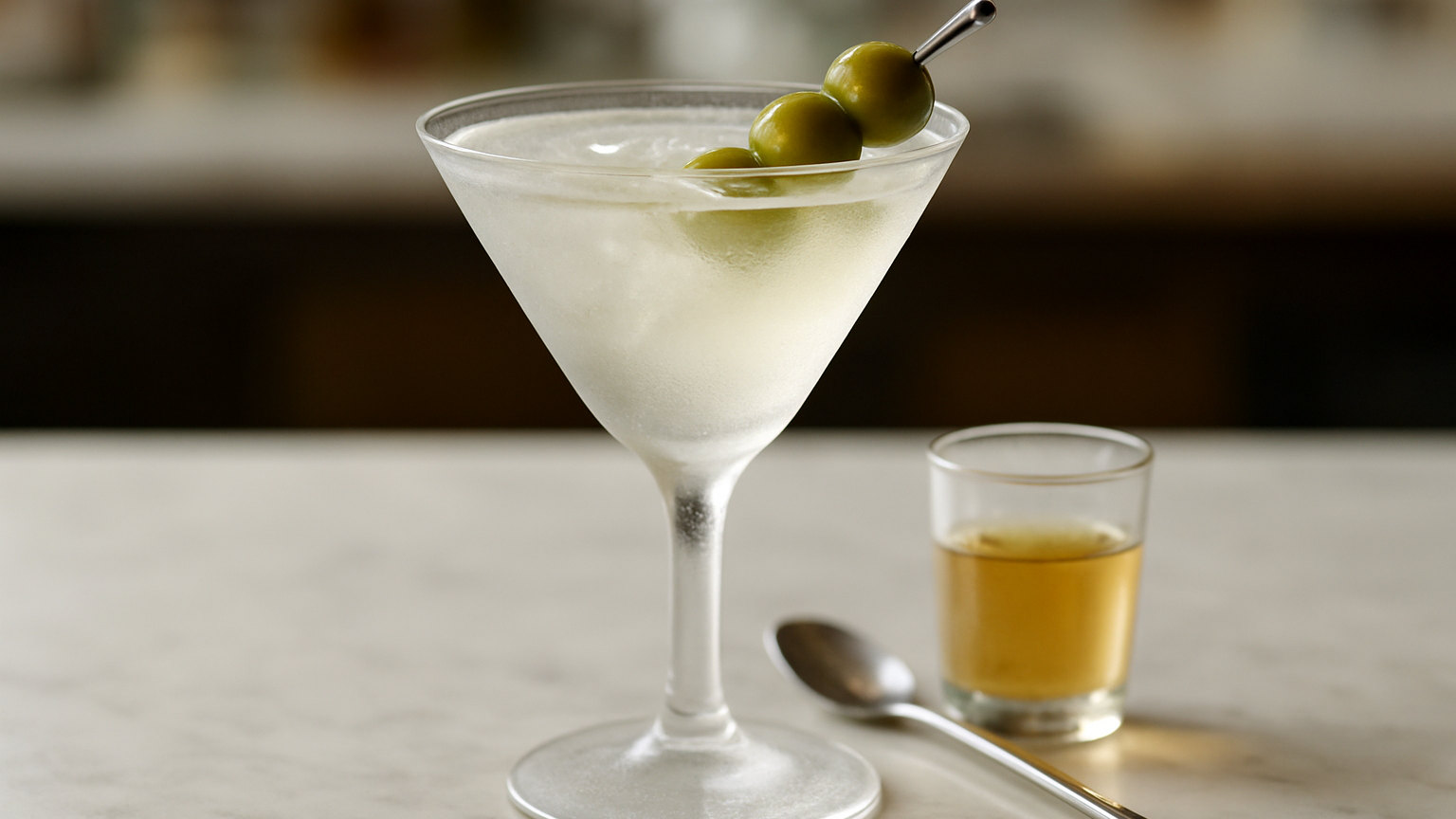
A dirty martini is a classic martini with olive brine added. The brine changes the drink substantially, adding salt and savoury depth while muting the aromatics, which is a legitimate variation rather than a corruption.
What is the recipe?
- 60ml gin or vodka
- 10ml dry vermouth
- 10ml olive brine
- Three olives to garnish
Stir with plenty of ice for 30 seconds. Strain into a chilled coupe or martini glass. Garnish with olives on a stick.
How much brine should you use?
- 5ml. Barely dirty. A savoury hint.
- 10ml. Standard. Clearly savoury, still a martini.
- 15 to 20ml. Extra dirty. Salt-forward and cloudy.
Start at 10ml and adjust. Brine varies enormously in salt between brands, so the same measure gives different results from different jars.
Gin or vodka?
Both work and they make different drinks. Gin gives a more complex result where juniper meets the salt; vodka gives a cleaner, more purely savoury one.
If using gin, choose a robust London dry. Brine mutes delicate botanicals, so a subtle contemporary gin is largely wasted here.
Why does the vermouth still matter?
Because it is wine and it oxidises after opening, going flat and stale within weeks at room temperature.
Keep it in the fridge and buy small bottles. Tired vermouth is the commonest reason a home martini disappoints, and the brine will not cover it.
Should it be stirred or shaken?
Stirred. Shaking aerates and clouds the drink and over-dilutes it, and there is no citrus or egg here needing emulsification.
Stir 30 seconds with plenty of ice until the mixing glass is properly cold.
Does it go cloudy anyway?
Slightly, from the brine, and that is normal. A very dirty martini is visibly hazy and it should not look like it has been shaken.
What olives should you use?
Firm green olives in brine rather than in oil, since oil will float on the drink. Manzanilla or similar work well.
Stuffed olives change the drink: blue cheese adds richness, garlic adds pungency, anchovy adds more salt. All are legitimate and none is traditional.
How strong is it?
Around 2.8 units with 60ml of 40 per cent spirit. It is a strong drink in a small glass, which is worth remembering before ordering a second.
Should the glass be frozen?
Yes. A martini is served without ice and warms quickly, so a glass from the freezer buys several minutes. Five minutes in the freezer is enough if you have forgotten.
Can you batch it?
Well. Mix gin, vermouth and brine in the correct proportions, add around 20 per cent water for the stirring dilution, and keep the bottle in the freezer.
Pour straight from the freezer into a chilled glass. It keeps for weeks and needs no ice at all.
Can you use the brine from any olives?
From olives in brine, yes. Olives packed in oil are no use, since there is no brine to speak of and any oil that gets in will float unpleasantly on the surface.
Some people keep a jar specifically for the brine, which is a reasonable habit if you make these often.
How dirty is too dirty?
Past about 20ml the drink becomes salt-forward and the spirit disappears, at which point it is closer to a cold savoury broth than a martini.
If you want it very savoury, a splash of olive brine in a vodka martini gives more control than doubling the measure.
What ruins it?
Stale vermouth and brine from a jar that has been open for months. Both are wine or brine-based and both go off quietly without anyone noticing.
How many should you drink?
At close to 3 units each in a small glass, two is a substantial evening. It arrives looking modest, which is exactly why it catches people out.
Should the olives go in the drink or on a stick?
On a stick, resting across the glass or standing in it. Loose olives sitting in the bottom release oil and brine steadily, so the drink gets progressively saltier as you work through it.


