
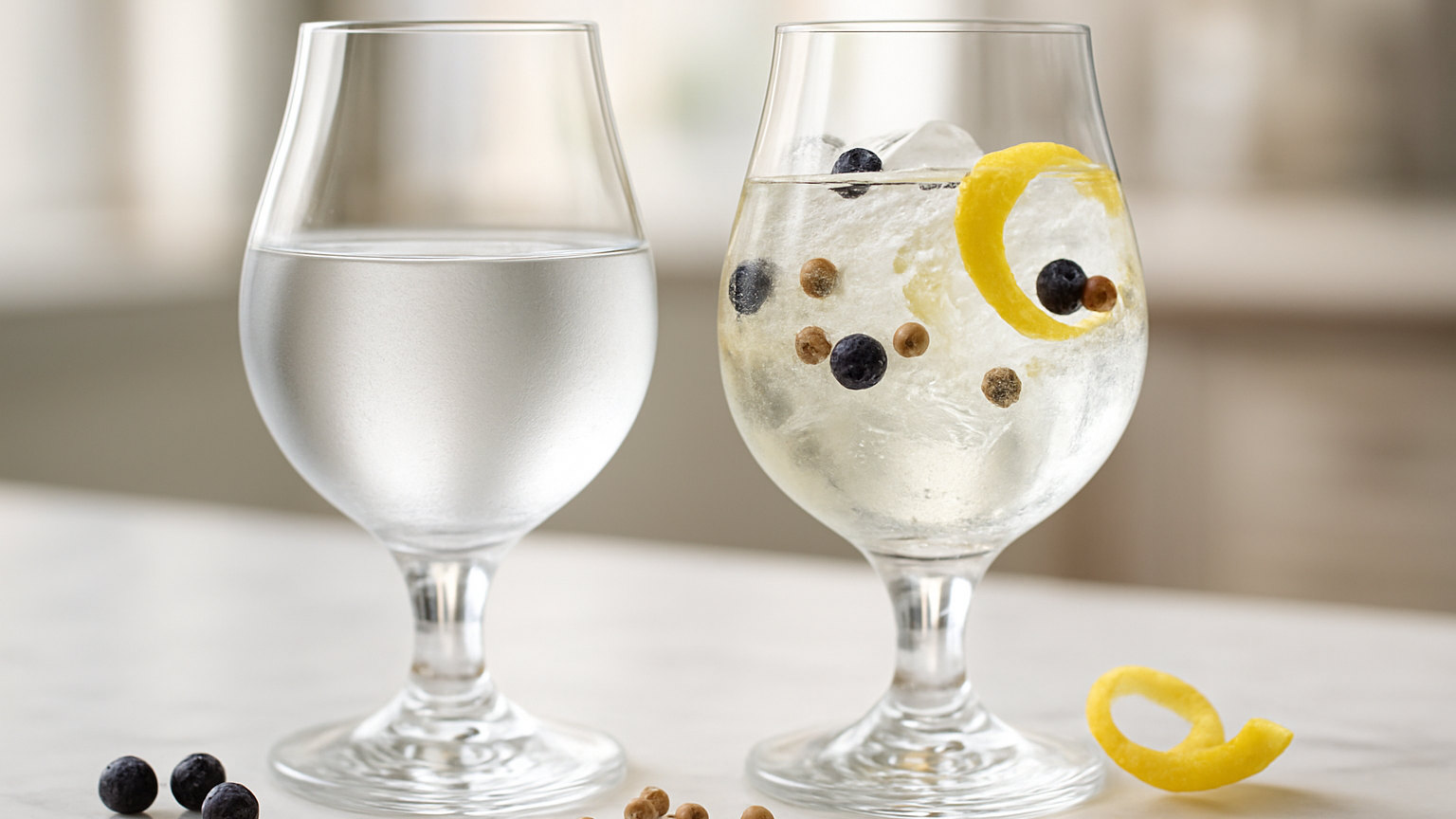
Vodka and gin start in the same place and diverge at one step. Understanding that step explains most of what separates them, and it explains why a great many gins taste more similar to each other than the shelf suggests.
Where do they both start?
Neutral spirit, distilled to a very high strength from grain, potato, molasses, grape or whatever else is available. At above 95 per cent alcohol, almost everything that carried flavour from the original ingredient has been stripped out.
That neutral spirit is the base for both. Vodka is diluted to bottling strength and sold. Gin is redistilled or infused with botanicals first.
What defines gin legally?
Juniper must be the predominant flavour. That is the requirement, and it is looser than most people expect.
- Gin. Neutral spirit flavoured with juniper, minimum 37.5 per cent in the UK and EU.
- Distilled gin. Botanicals redistilled with the spirit rather than added afterwards.
- London dry. The strictest category, with all flavour added during distillation.
Predominant is not quantified, which is why contemporary gins where juniper sits well back still qualify.
What defines vodka legally?
Very little, deliberately. UK and EU rules require neutral spirit of agricultural origin, minimum 37.5 per cent, treated so as to selectively reduce the characteristics of the raw materials. The United States requires 40 per cent.
The American definition formerly specified vodka be without distinctive character, aroma or taste. That wording was removed in 2020, acknowledging what tasters had long argued: vodkas do differ.
Can gin be made without redistilling?
Yes. Compound gin, sometimes called bathtub gin, is made by steeping botanicals in spirit rather than redistilling. It can be perfectly good and it produces a different, often oilier result with some colour.
It cannot be called London dry, which requires distillation.
How do they taste different?
Gin tastes of juniper first, which is piney, resinous and slightly citrus, and then of whatever else the producer used. Vodka tastes of texture, warmth and faint sweetness more than of anything identifiable.
Good vodka is not flavourless. It carries mouthfeel, a grain or cream note, sometimes pepper, and a clean finish. It is subtle rather than absent.
Which suits which drink?
- Gin. Martini, negroni, gin and tonic, tom collins, gimlet, aviation.
- Vodka. Bloody mary, espresso martini, moscow mule, vesper, anything where other ingredients lead.
The general principle is that gin contributes flavour and vodka contributes strength and texture. A drink built around fresh juice, coffee or tomato usually wants vodka, since gin botanicals fight rather than support.
Can you substitute one for the other?
Sometimes, and it changes the drink rather than ruining it. A vodka martini and a gin martini are different drinks with the same name. A vodka negroni loses the juniper that balances the bitterness and is noticeably flatter.
Substituting gin into a vodka drink is riskier, since botanicals clash with several flavours that vodka sits under happily.
Which should you buy first?
Gin, if you are building a bar for cocktails, since it makes more classic drinks. Vodka, if you mostly drink long drinks with juice or mixers.
Either at around 40 to 45 per cent will do everything. A single 50ml measure at 40 per cent is 2 units, which is worth pouring by measure rather than by eye.
Does the base ingredient matter for either?
More for vodka than for gin, and subtly in both cases. A rye-based vodka reads as peppery and a potato-based one as creamy, because trace compounds survive distillation.
In gin, the botanicals dominate so completely that the base is largely irrelevant. That is why gin producers rarely mention it and vodka producers frequently do.
Which is easier to make at home?
Neither, legally. Distilling spirits at home without a licence is illegal in the UK regardless of scale or purpose.
Compound gin is a different matter entirely, since steeping botanicals in bought vodka involves no distillation. That is a straightforward and legal way to make something gin-like at home.


