
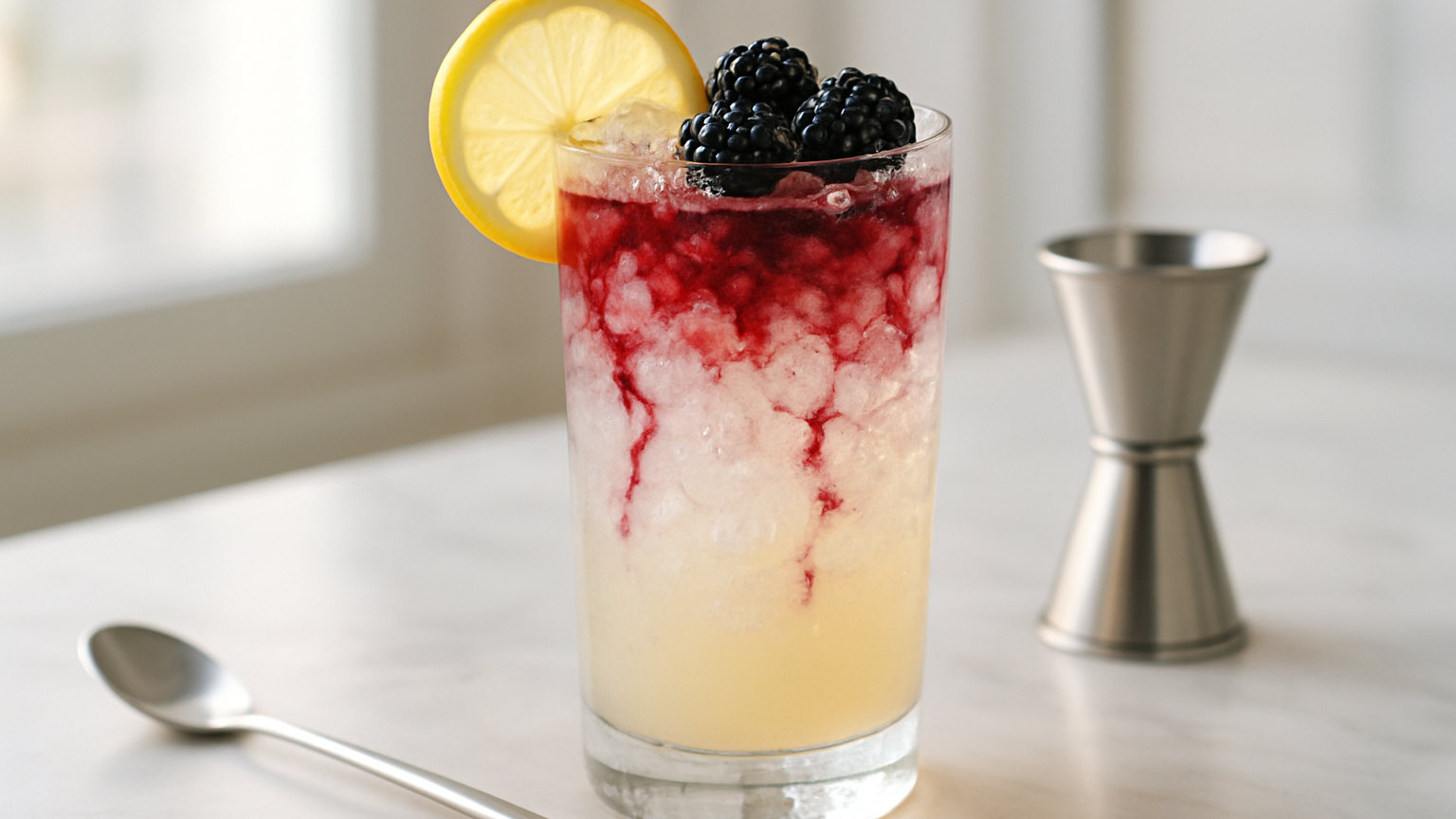
The bramble is one of the few modern classics to enter the standard repertoire, created in London in the 1980s. It is a gin sour served over crushed ice with blackberry liqueur poured over the top.
What is the recipe?
- 50ml gin
- 25ml fresh lemon juice
- 12ml sugar syrup
- 15ml crème de mûre, blackberry liqueur
Shake the gin, lemon and syrup with ice. Strain into a rocks glass filled with crushed ice. Drizzle the blackberry liqueur over the top so it bleeds down through the ice. Garnish with a blackberry and a lemon slice.
Why crushed ice?
Because it is what allows the drizzle to work. The liqueur runs down through the crushed ice slowly, creating the streaked appearance and meaning the first sips are tart and the last are sweeter.
Over cubes, the liqueur sinks straight to the bottom and the effect is lost. Crushed ice also dilutes as you drink, which suits a strong sour base.
How do you crush ice without a machine?
Wrap cubes in a clean tea towel and hit them with a rolling pin. It takes a minute and works perfectly well.
Why drizzle rather than mix?
Because the drink is designed to change as you go. Stirring the liqueur through gives a uniformly sweet drink and loses the gradient entirely.
Pour it slowly over the top in a thin stream and leave it alone.
What if you have no crème de mûre?
Crème de cassis is the closest common substitute and slightly sharper. A blackberry or raspberry liqueur works. A homemade blackberry infusion sweetened with syrup does the job well.
Failing that, muddle three blackberries into the shaker and add a little extra syrup. It is a different drink and a good one.
How sweet should it be?
Tart, with sweetness arriving as you drink. The base should taste slightly sharp before the liqueur goes on, since the liqueur brings a great deal of sugar.
Twelve millilitres of syrup is right for most gins. Reduce it if your blackberry liqueur is particularly sweet.
Which gin should you use?
A London dry works well and so does a contemporary one, since the fruit and citrus dominate. This is one of the more forgiving gin drinks.
How strong is it?
Around 2.4 units. The crushed ice dilutes as it melts, so it becomes gentler over the course of the drink rather than stronger.
Can you batch it?
Mix the gin, lemon and syrup ahead and keep it cold. Build over crushed ice and drizzle per serve, since the drizzle cannot be batched.
Crushed ice is also best made shortly before serving, as it clumps together in the freezer.
What glass should you use?
A rocks glass packed with crushed ice. The crushed ice is not optional here, since it is what makes the drizzle work and what dilutes the drink as you go.
Who created it?
Dick Bradsell, in London in the 1980s, who also created the espresso martini. It was designed as a British drink using British fruit, which is why blackberry rather than anything imported.
How much liqueur should you drizzle?
Fifteen millilitres, poured slowly in a thin stream over the top of the crushed ice. Pouring it fast sends it straight to the bottom and loses the streaked effect entirely.
What ruins it?
Cubed ice instead of crushed, and stirring the liqueur through. Both remove the gradient that gives the drink its character.
Is it a summer or winter drink?
Either. The crushed ice suits warm weather and the blackberry suits autumn, which is one reason it has stayed in the repertoire.
What if you have no crushed ice?
Cubes will work and the drink loses its defining feature. If you must use them, stir the liqueur through rather than drizzling, and accept it as a different and simpler drink.
How does it compare to a gin sour?
It is a gin sour with two additions: crushed ice instead of a strained serve, and the blackberry liqueur poured over the top. Everything else is the same 2:1 ratio of gin to lemon with syrup to balance.
That makes it a useful drink to learn, since understanding it means understanding the sour template that sits behind a great many cocktails.


