
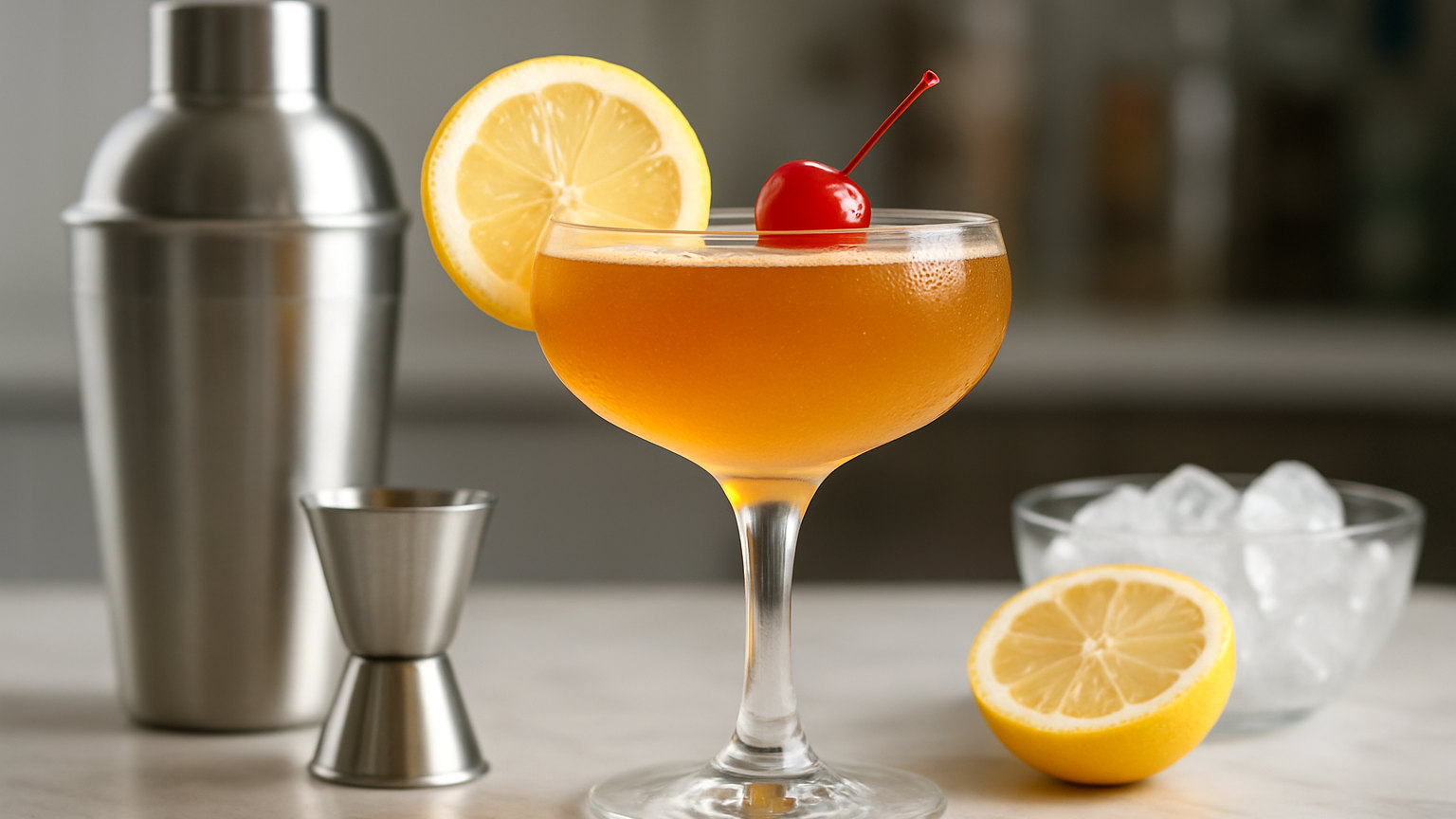
Brandy sits in a lot of cupboards, bought for a recipe or received as a gift, and gets opened once a year. That is a waste, because it mixes well and covers a group of drinks that no other spirit does. Its combination of fruit and oak sits somewhere between whiskey and rum, and it suits both long drinks and shaken cocktails.
What is the simplest way to drink it?
Brandy and soda, at 50ml to 150ml over a full glass of ice with a lemon twist. It is a genuinely good highball and almost nobody makes it.
Brandy and ginger ale is the other easy one, at the same ratio with a lime wedge. The ginger spice picks up the oak and the drink is more interesting than the equivalent made with whisky, because the grape fruitiness gives it somewhere to go.
How do you make a sidecar?
Fifty millilitres of brandy, 20ml of orange liqueur and 20ml of fresh lemon juice, shaken hard with ice and strained into a chilled coupe. A sugar rim on half the glass is traditional and optional.
It is a sour with an orange liqueur modifier, which means it follows the same template as a margarita and a whiskey sour. If it tastes sharp, add 5ml of simple syrup rather than more liqueur, since the liqueur brings its own flavour as well as sweetness.
What about a plain brandy sour?
Sixty millilitres of brandy, 25ml of lemon juice and 20ml of simple syrup, shaken and strained. Add 15ml of egg white or aquafaba for texture and two dashes of Angostura on the foam. It is closer to a whiskey sour than most people expect and rather more elegant.
What is the difference between cognac and brandy?
Cognac is a brandy from a specific region of France made under strict rules. All cognac is brandy; most brandy is not cognac. Armagnac is a different French region and generally a bolder, more rustic style.
Beyond those, Spanish brandy tends to be sweeter and rounder, and there are grape brandies from most wine-producing countries. For mixing, an inexpensive Spanish brandy or a basic cognac both work well and there is little reason to reach for anything expensive.
Which grade should you buy?
The labelling is worth knowing:
- VS: aged at least two years. The mixing choice.
- VSOP: aged at least four years. Rounder, and works both mixed and neat.
- XO: aged at least ten years. For drinking neat, and largely wasted in a cocktail.
A VS or VSOP covers everything in this article. Spending more buys complexity that lemon juice and orange liqueur will flatten.
Does apple brandy count?
It is a different spirit and worth owning separately. Calvados from Normandy and applejack from the United States are both apple based, drier and more orchard-scented than grape brandy.
They make an excellent sour with lemon, and they work particularly well with ginger beer and with cloudy apple juice. In autumn they are arguably the more useful bottle.
When is brandy the right choice over whiskey?
When you want fruit rather than grain. In a sour, brandy gives a rounder, softer drink with a stone fruit note where bourbon gives vanilla and rye gives pepper.
It also suits hot drinks better than most spirits. Fifty millilitres of brandy in hot water with lemon, honey and a clove is a traditional serve, and the warmth opens up the fruit character considerably.
Which classics use brandy?
- Sidecar: brandy, orange liqueur and lemon, shaken.
- Brandy Alexander: brandy, crème de cacao and cream in equal parts, with nutmeg grated over.
- Vieux Carré: brandy, rye, sweet vermouth and two bitters, stirred.
- Sangaree: brandy over ice topped with soda, sugar and grated nutmeg.
How should you store an open bottle?
Upright, sealed, away from sunlight and heat. Brandy does not spoil, so there is no urgency, but a bottle left with only a small amount in it will flatten over a year or two as it oxidises.
The bottle in the back of the cupboard bought for a Christmas pudding three years ago is almost certainly still fine to drink. It is worth opening properly rather than leaving for another recipe.


