
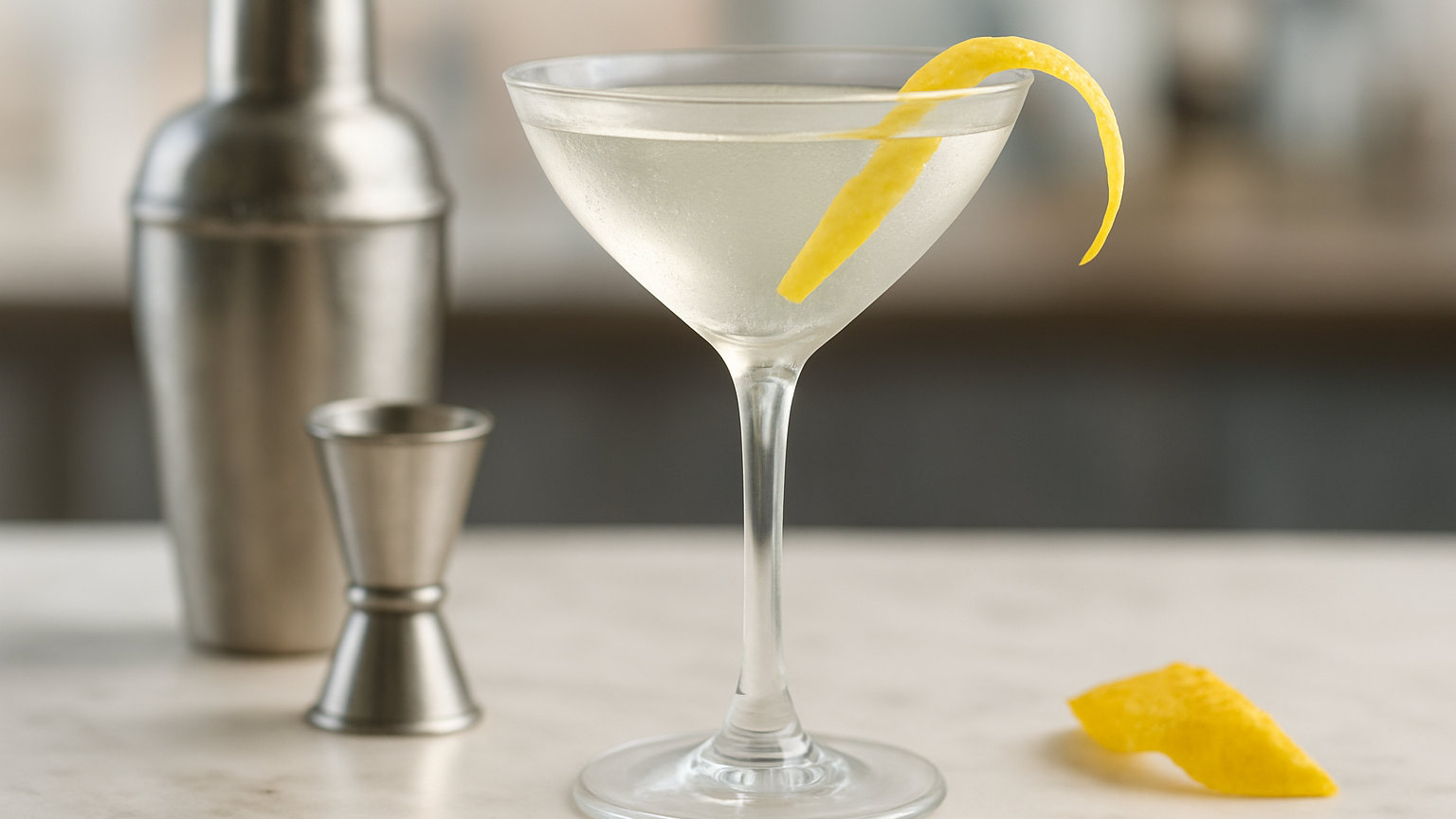
The vesper is gin, vodka and an aromatised aperitif wine, with a lemon twist. It was invented for a 1953 novel rather than by a bartender, which is unusual and is why the original recipe needs adjusting.
What is the recipe?
- 60ml gin
- 20ml vodka
- 10ml aromatised aperitif wine
- A wide lemon twist
Stir with plenty of ice for 30 seconds. Strain into a frozen coupe. Express a large lemon peel over the surface and drop it in.
Why gin and vodka together?
Because they do different things. Gin brings juniper and botanicals; vodka adds weight and a cleaner texture without contributing flavour.
The result is a martini with the gin softened slightly and the body increased. Whether that improves on a straight gin martini is a matter of taste, and the difference is real.
Is it a good drink?
Yes, and it is stronger and blunter than a well-made gin martini. It is worth making once to understand what vodka contributes, which is easier to hear in this context than alone.
What is the aperitif wine?
The original specified a French aromatised wine aperitif that was later reformulated, so the modern product is not the same as the one the recipe was written for.
Any dry aromatised aperitif wine works. A dry vermouth also works and makes a leaner, more conventional drink.
Should it be shaken or stirred?
The novel says shaken. Technically it should be stirred, since there is no citrus or egg and shaking clouds and over-dilutes it.
Shaken it is colder, more diluted and slightly frothier, which some prefer. Both are defensible and stirring gives the better texture.
How strong is it?
Around 3.5 units after dilution, which is higher than a standard martini at 2.8 and comparable to a large glass of wine drunk in a small coupe.
Eighty millilitres of full-strength spirit plus fortified wine is a substantial measure. Two is a considerable evening.
Why the lemon twist?
Because the drink is heavy and the citrus oil lifts it. A large peel expressed over the surface is specified in the original and it is doing real work rather than decorating.
Use a wide strip and squeeze it skin-side down over the glass before dropping it in.
Why freeze the glass?
Because it is served without ice and warms quickly. A glass from the freezer buys several minutes at the temperature the drink should be.
Five minutes in the freezer is enough if you have forgotten.
Which gin should you use?
A robust London dry at 45 per cent or above. The original called for a stronger gin than most modern bottlings, which is part of why it reads as so assertive.
Can you batch it?
Extremely well. Mix the three in proportion, add around 20 per cent water for the dilution, and keep the bottle in the freezer. Pour straight into a chilled glass.
What ruins it?
A weak gin and a warm glass. At this strength there is nothing to hide behind, and a lukewarm vesper is beyond rescue.
How does it compare to a standard martini?
Stronger and blunter. A gin martini is around 2.8 units with vermouth softening it; a vesper is around 3.5 with a smaller proportion of aperitif wine and vodka adding weight.
It is worth making once to hear what vodka contributes alongside gin, which is difficult to isolate any other way.
Should you follow the original proportions?
Roughly. The original called for three parts gin, one part vodka and half a part of the aperitif wine, with a gin considerably stronger than most modern bottlings.
Those proportions still work, and using a 45 per cent gin gets closer to what the recipe assumed.
Does the vodka need to be good?
More than in most drinks, since there is nothing to hide behind. It is a smaller proportion than the gin and it still shows.
What ratio should you settle on?
Around 60:20:10 of gin, vodka and aperitif wine. Reducing the vodka moves it towards a standard martini; increasing the aperitif wine softens it.


