
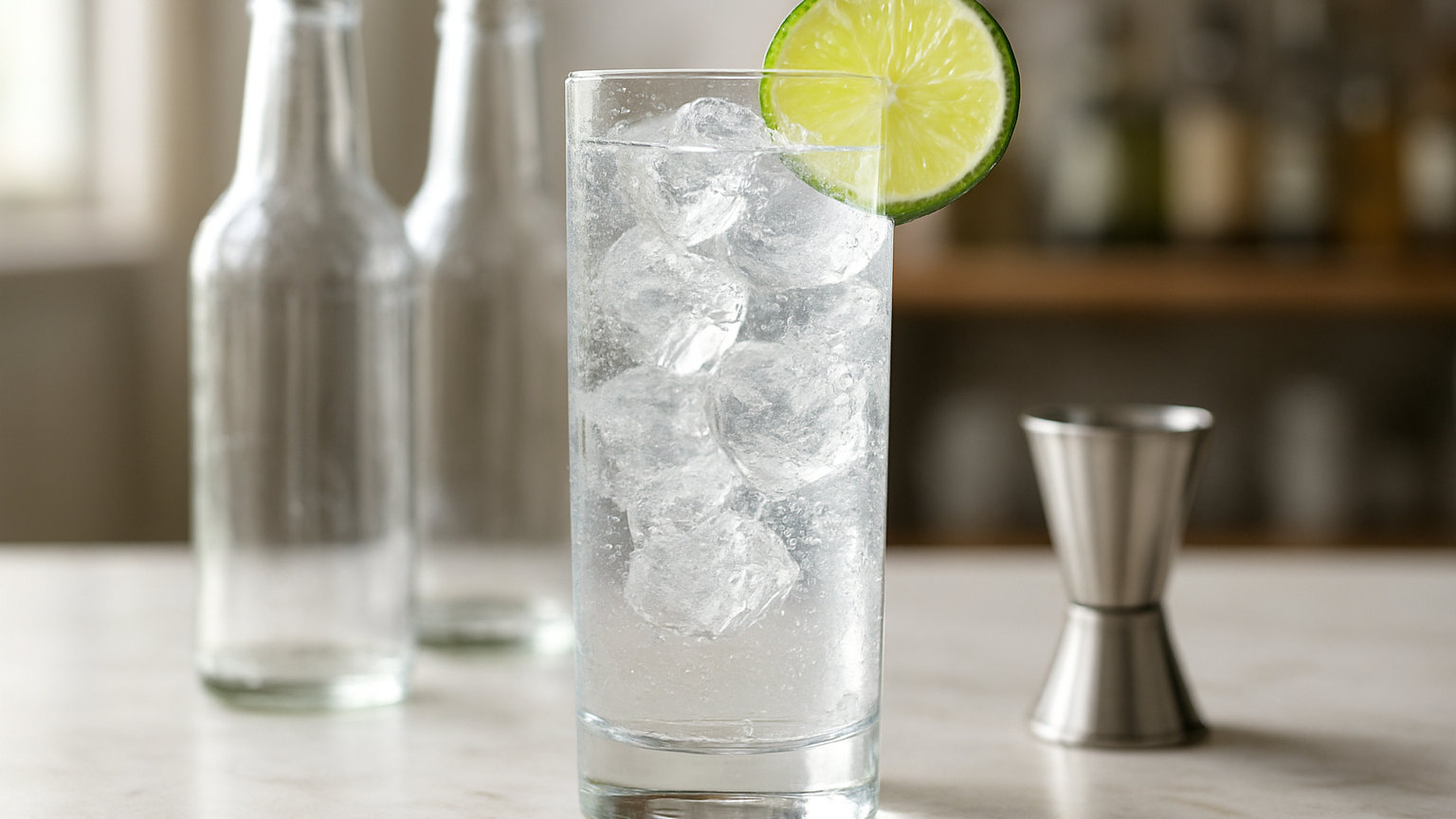
A two-ingredient drink is the hardest kind to make badly and the hardest kind to make well. There is no third element to cover a mistake, so the ratio, the temperature and the freshness of the mixer are all that decide the outcome. That is also why they are worth taking seriously rather than treating as what you make when you cannot be bothered.
Which spirit and mixer pairings hold up?
- Gin and tonic: 50ml to 150ml. The quinine bitterness is doing real work.
- Whisky and soda: 50ml to 150ml. The purest test of a whisky in a long format.
- Rum and ginger beer: 60ml to 120ml. Spice against molasses.
- Campari and soda: 50ml to 100ml. Bitter, low in alcohol and genuinely refreshing.
- Sherry and tonic: 75ml to 100ml. Around 6 per cent in the glass and much better than it sounds.
The pattern is that the mixer needs character of its own. Anything paired with lemonade tends to disappoint, because sweetness alone does not create balance.
Which two-spirit combinations work?
A handful, and they are among the oldest drinks there are:
- Sweet vermouth and Campari: equal parts over ice with an orange slice. Essentially a negroni without the gin, and much lower in alcohol.
- Gin and dry vermouth: a martini, at anything from six to one down to two to one.
- Sherry and vermouth: equal parts, chilled. Light, savoury and around 15 per cent.
All three are stirred rather than shaken, since none contains citrus juice or egg.
Why do these need stirring?
Shaking aerates a drink and leaves it cloudy with tiny ice fragments. In a clear spirit-only drink that changes the texture from silky to slightly rough and it looks wrong in the glass. Stirring chills and dilutes while keeping the drink heavy and clear.
What ratio should you start from?
For spirit and a carbonated mixer, one to three. For spirit and a still mixer such as juice, one to two. For two spirits, it depends entirely on their relative strength and sweetness, and equal parts is the usual starting point.
Measure rather than pour by eye. In a two-ingredient drink a 10ml error is a much larger proportion of the whole than it would be in a cocktail with five components, and it shows.
Why does ice matter more here?
Because there is nothing else to occupy your attention. Fill the glass completely rather than using three cubes, and use ice straight from a cold freezer rather than ice that has been standing.
A full glass of cold ice dilutes less than a half-empty one, because a larger mass warms more slowly. Most people underfill from a fear of watery drinks and produce exactly that.
When is a two-ingredient drink the better choice?
When you want to drink slowly. Long two-ingredient drinks sit between 5 and 10 per cent alcohol by volume in the glass, against 20 to 30 for a shaken cocktail served up. That is a meaningful difference across an evening, and it is the practical reason the highball format is so widely used.
They are also the sensible choice when serving several people, since there is nothing to shake and each drink takes under a minute to build.
What single upgrade improves all of them?
Buying mixers in small bottles or cans. A litre of tonic or soda loses most of its carbonation within two days of opening, and in a drink that is three quarters mixer there is nowhere for that to hide. It costs slightly more per litre and improves the result more than changing the spirit would.
Which pairings are worth avoiding?
- Anything with lemonade: sweetness alone gives no contrast, so the drink reads as flat.
- Vodka and water: nothing is happening, by design.
- Aged rum and cola: caramel on caramel. Perfectly drinkable and entirely one-note.
- Peated whisky and a delicate mixer: the smoke simply flattens it.
The common fault is reinforcement rather than contrast. A mixer that echoes what the spirit already does leaves nothing for your palate to move between.


