
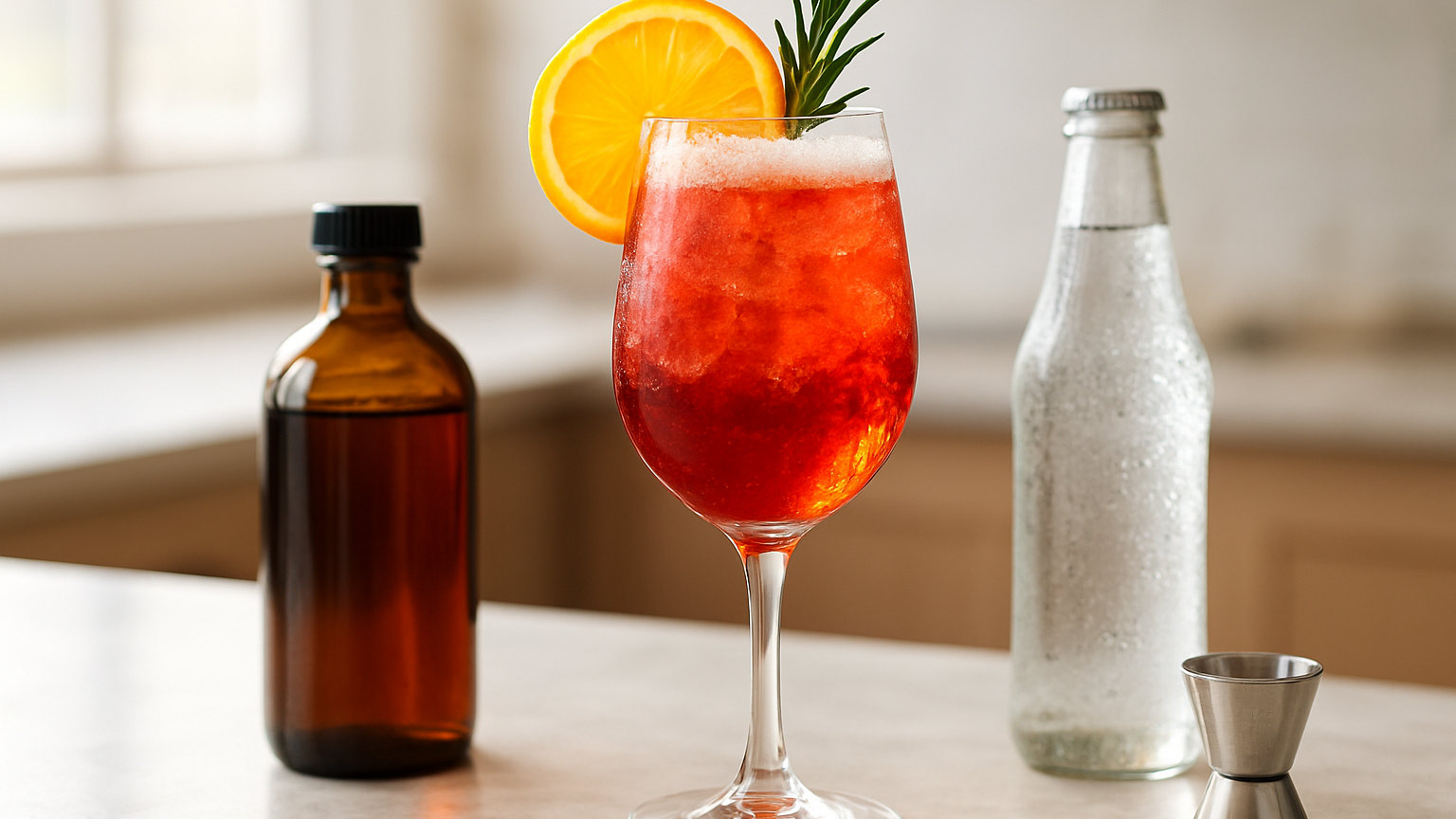
A spritz is three parts sparkling wine, two parts bitter aperitif and one part soda, over ice with an orange slice. Once you know that ratio you are not tied to any particular bottle, and the format works with a great many things beyond the orange aperitif everyone associates it with.
What are the measures?
In a large wine glass filled with ice:
- 90ml dry sparkling wine
- 60ml bitter aperitif
- 30ml soda water
- An orange slice or a lemon twist
That gives a drink of around 180ml before ice, sitting between 8 and 11 per cent alcohol depending on the aperitif. It is a genuinely low-strength drink by cocktail standards, which is why it suits a long afternoon.
Why does the pouring order matter?
Because carbonation escapes when liquid is poured onto liquid from a height, and a spritz has two carbonated components to protect.
Fill the glass with ice first, then add the aperitif, then pour the sparkling wine slowly down the inside of the tilted glass, then the soda. Give it one gentle lift from the bottom with a bar spoon rather than stirring.
Adding the aperitif last, on top of the wine, means stirring hard to combine, and that knocks most of the gas out immediately.
Should the wine be dry or sweet?
Dry, and this is the most common mistake. A sweet sparkling wine combined with an already sweet aperitif gives a cloying drink. A brut prosecco or any dry sparkling wine gives the acidity the drink needs to stay refreshing.
Which bases work besides the obvious one?
- Campari: considerably more bitter and drier. A serious drink.
- Sweet vermouth: herbal and softer, and much cheaper.
- Amaro: darker and more medicinal, excellent after a meal.
- Elderflower liqueur: floral and sweet. Use less, around 40ml.
- Sloe gin: fruity and British. Works surprisingly well.
The requirement is that the base has bitterness, acidity or herbal depth of its own. A base that is only sweet gives a drink with nothing holding it together.
Can you use a spirit rather than an aperitif?
Yes, with an adjustment. Spirits are around 40 per cent against an aperitif at 11 to 25, so use less: 30ml of gin, 90ml of sparkling wine and 60ml of soda gives a similar strength.
Gin works particularly well, since juniper stands up to the wine. Add 10ml of simple syrup and 15ml of lemon juice and you are close to a French 75 served long, which is a good drink by any measure.
How do you make it for a group?
Do not batch it as a whole. Both the wine and the soda lose their carbonation within minutes in an open jug, and a pre-mixed sparkling punch is flat by the time the second glass is poured.
Instead, chill everything thoroughly, set the bottles out with a measure, and let people build their own. It takes twenty seconds per glass and there is nothing to shake. Cold ingredients also hold carbonation far better than room temperature ones, so the fridge does most of the work.
When should you drink one?
It is an aperitivo, built to be drunk before eating rather than after. The bitterness stimulates appetite and the low strength means it does not overwhelm a meal that follows.
It also works well with salty food alongside it, and the traditional accompaniment of olives, crisps and salted nuts is not decorative. Salt suppresses bitterness, which makes the drink taste rounder, and the two genuinely improve each other.
How do you fix one that tastes wrong?
- Too sweet: the sparkling wine is not dry enough. Switch to brut and add 10ml more soda.
- Too bitter: reduce the aperitif to 45ml rather than adding sugar.
- Flat: warm ingredients, or it was stirred rather than lifted.
- Watery: too little ice, so it melted fast. Fill the glass completely.
The watery fault is the most common and the least intuitive. A glass packed with ice dilutes less than a half-filled one, because a larger mass of ice warms more slowly.


