
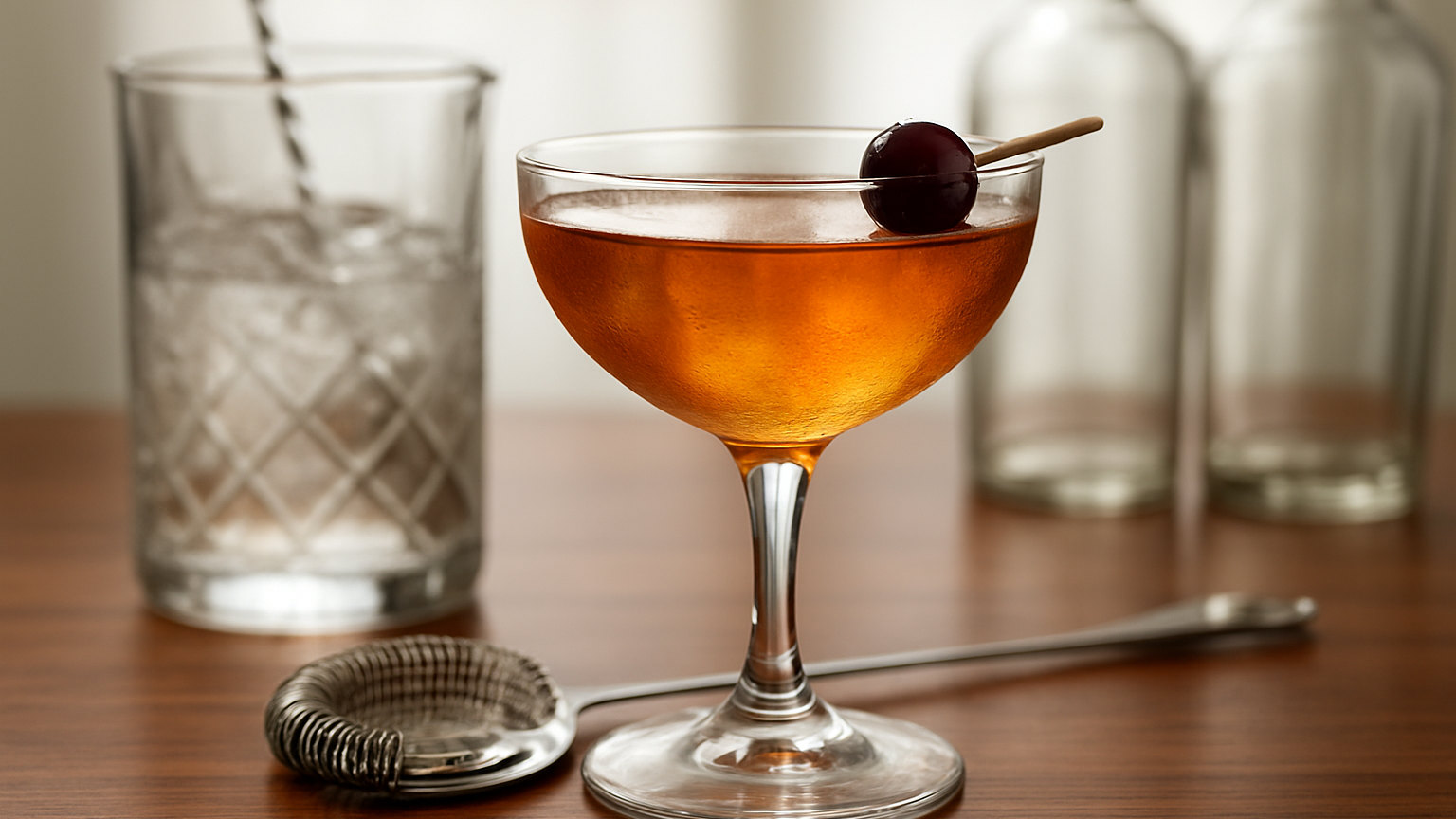
Fresh citrus is the ingredient most likely to be missing when you actually want a drink, and its absence removes every sour, every collins and every margarita at a stroke. What remains is the spirit-forward, stirred half of the cocktail world, which needs nothing perishable and is arguably the more interesting half anyway.
Which classics need no citrus at all?
- Old fashioned: spirit, sugar, bitters. Peel is optional.
- Manhattan: rye, sweet vermouth, bitters.
- Negroni: gin, Campari, sweet vermouth in equal parts.
- Martini: gin and dry vermouth, olive rather than twist.
- Boulevardier: bourbon in place of the gin in a negroni.
- Rusty nail: scotch and a honeyed whisky liqueur, two to one.
Every one of these is stirred, served over ice or straight up, and built entirely from shelf-stable ingredients apart from the vermouth.
What replaces the acidity citrus was providing?
Three things, working differently:
- Bitters. Not acidic, but they provide the contrast and complexity that stops a sweet drink being flat.
- Vermouth and amari. Wine-based and genuinely acidic, as well as bitter and herbal.
- Carbonation. Carbonic acid gives a perception of sharpness that lifts a drink noticeably.
A drink built on any two of these will not feel like it is missing something. A drink built on sugar and spirit alone will.
Does bottled lemon juice work as a substitute?
Poorly, and it is the one shortcut that shows immediately. Pasteurisation changes the aroma completely and leaves a flat, slightly metallic note that sits on top of everything else. If there is no fresh citrus, a stirred drink is a much better answer than a sour made with the bottled version.
What can you make with only a spirit and bitters?
Sixty millilitres of any aged spirit, a teaspoon of sugar or 7.5ml of syrup, and two to three dashes of Angostura, stirred with plenty of ice for thirty seconds. That is an old fashioned and it works with bourbon, rye, aged rum, brandy, tequila or mezcal.
Each version is a distinctly different drink, which makes it the single most useful thing to know when the cupboard is bare. A bottle of bitters costs very little and lasts for years.
Which store cupboard sweeteners work?
Simple syrup is the default and takes two minutes: equal weights of sugar and hot water, stirred until dissolved, then refrigerated for up to a month.
Beyond that, demerara syrup gives a molasses depth that suits rum and whiskey. Honey thinned with an equal amount of warm water works in scotch drinks. Maple syrup used sparingly suits bourbon. Marmalade, stirred hard into a shaken drink, brings both sweetness and a genuine bitter orange note, which is the closest store cupboard equivalent to citrus.
How do you keep vermouth usable?
This is the one perishable item in the list and the one most likely to let a drink down. Vermouth is fortified wine and it oxidises once opened, tasting stewed and sour within a month at room temperature.
Keep it in the fridge from the moment it is opened and aim to finish it within six to eight weeks. Buy the smaller bottles rather than the large ones. A tired vermouth will ruin a Manhattan more thoroughly than a cheap whiskey would.
What about long drinks?
Any spirit with soda, tonic or ginger beer works without citrus, though the drink is noticeably plainer without a twist. A few dashes of bitters into a highball is a useful substitute and adds aroma the missing peel would have provided.
Campari and soda deserves a specific mention. Fifty millilitres of Campari topped with 100ml of soda over plenty of ice is bitter, refreshing, around 7 per cent in the glass and needs nothing fresh at all.
What is worth keeping in the cupboard?
Angostura bitters, sugar, a bottle of Campari or an amaro, and a small bottle of vermouth in the fridge. Between them those four cover every drink in this article, none of the first three ever goes off, and the total cost is less than one bottle of decent spirit.
That is a more useful investment than a fourth spirit, because it multiplies what the bottles you already own can do.


