
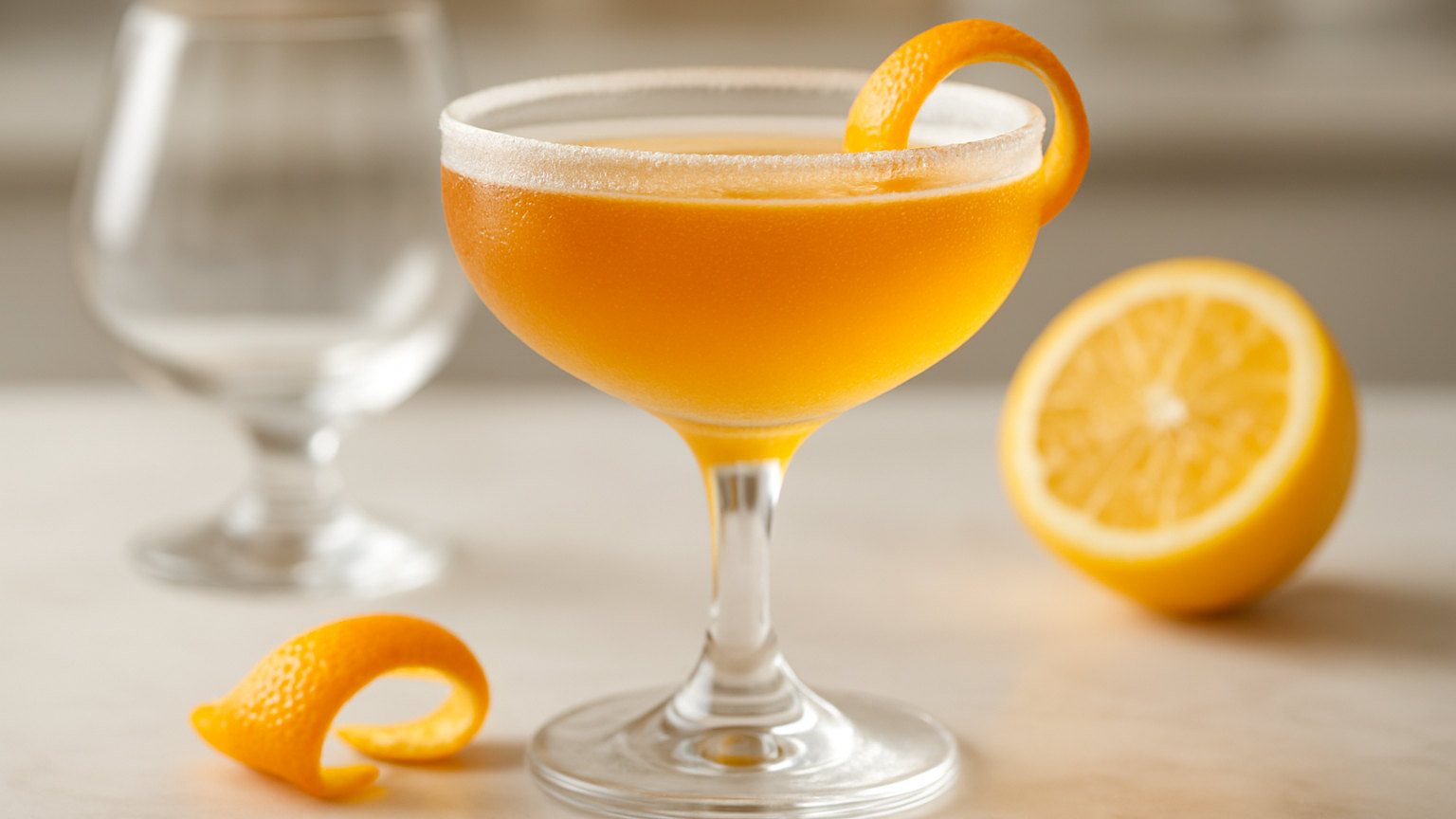
The sidecar is cognac, orange liqueur and lemon juice. It is one of the great classic sours and the proportions have been disputed since it first appeared in the 1920s.
What is the recipe?
- 50ml cognac
- 25ml orange liqueur
- 20ml fresh lemon juice
Shake hard with ice for 12 to 15 seconds. Double strain into a chilled coupe. Sugar the rim if you like, and garnish with a lemon twist.
What ratio should you use?
- 2:1:1. The French school. Equal liqueur and lemon, drier.
- Equal parts. The English school. Sweeter and softer.
- 5:2:2 or similar. The modern preference, cognac-forward.
Equal parts is noticeably sweet by current standards. Start around 50:25:20 and adjust the liqueur down if it tastes syrupy.
Should you sugar the rim?
It is traditional and divisive. A sugared rim softens the first sip and can make the drink cloying by the end, since sugar dissolves into the cocktail as you go.
Sugar half the rim so the drinker can choose. Rub a lemon wedge around the outside only, then roll the outside through caster sugar on a plate.
Why only the outside?
Because sugar on the inside falls into the drink and makes it progressively sweeter. This is the same principle as salting a margarita rim.
Which cognac should you use?
A decent VS or VSOP. The lemon and liqueur cover a good deal, so an expensive XO is largely wasted and a very cheap brandy shows through as harshness.
Armagnac makes a drier, more rustic version and works well.
Which orange liqueur?
A drier curaçao style at 38 to 40 per cent gives the best balance. A cheaper triple sec at 20 to 25 per cent is sweeter and thinner, so reduce the measure and increase the lemon.
That variation is why the same recipe tastes so different between bars.
Why does fresh lemon matter?
Because it is one of three ingredients. Bottled juice is flat and slightly bitter, and there is nothing here to hide it behind.
Squeeze it on the day, since it dulls within a few hours.
How strong is it?
Around 2.6 units after dilution. It is a strong drink in a small glass, which is easy to underestimate given how smooth it is.
Where does the name come from?
Disputed, and the usual story involves an officer arriving at a Paris bar in a motorcycle sidecar. Both Paris and London claim the drink.
Can you batch it?
Mix the cognac and liqueur ahead and keep it cold. Add fresh lemon and shake per serve, since citrus dulls quickly.
What glass should you use?
A chilled coupe. It is served without ice, so a glass from the freezer buys several minutes at the temperature the drink should be.
What ruins it?
Bottled lemon juice and equal parts proportions. The first tastes flat and the second makes it syrupy.
Should it be shaken or stirred?
Shaken, since it contains citrus. Shaking combines and aerates it properly, and a stirred sidecar tastes flat and separated.
How much lemon comes from one fruit?
Around 30 to 40ml, so roughly half a lemon per drink. Rolling it firmly on the worktop before cutting increases the yield noticeably.
Where does it sit in the cocktail family?
Between the brandy crusta that preceded it and the margarita that followed. All three are built on spirit, orange liqueur and citrus, with the crusta the most elaborate and the margarita the simplest.
Understanding one means understanding all three, since the template barely changes.
How cold should it be?
As cold as you can get it. A sidecar is served without ice and warms within minutes, so shake hard with plenty of large cubes and use a glass from the freezer.
Does the garnish matter?
A lemon twist expressed over the surface adds citrus oil that the juice alone does not provide. It takes two seconds and it is worth doing.


