
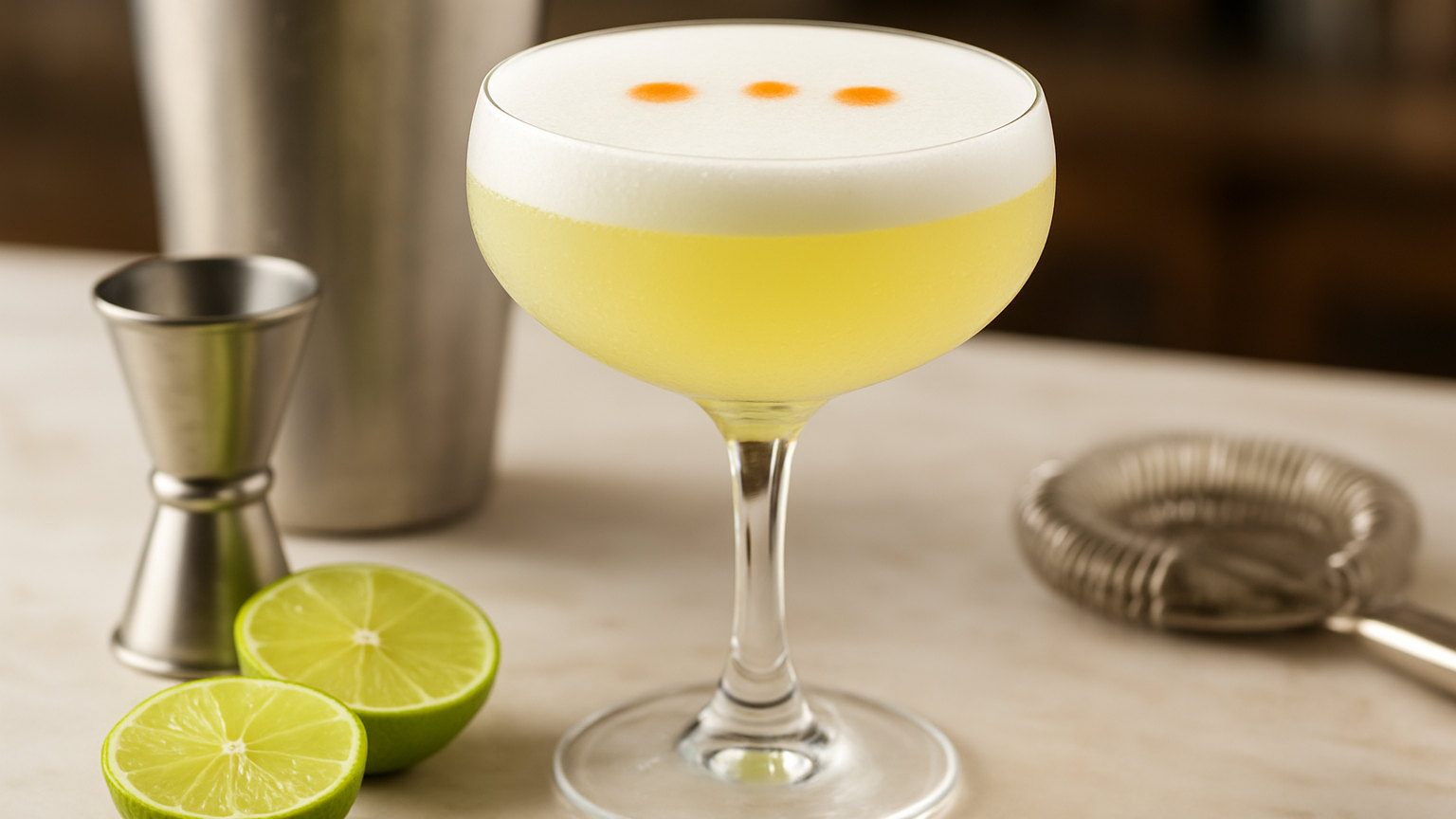
A pisco sour is pisco, lime, sugar and egg white, finished with bitters dashed onto the foam. It is the national drink of both Peru and Chile, and both countries claim it.
What is the recipe?
- 60ml pisco
- 25ml fresh lime juice
- 20ml sugar syrup
- 1 egg white
- 3 dashes aromatic bitters, on the foam
Dry shake without ice for 15 seconds, then shake hard with ice for 15 more. Double strain into a chilled coupe. Dash the bitters onto the foam.
What is pisco?
A grape brandy from Peru and Chile, distilled from wine and unaged in the Peruvian tradition. It is typically 38 to 48 per cent and tastes floral, grapey and slightly herbaceous.
Peruvian pisco must be unaged and undiluted after distillation. Chilean pisco may be aged and diluted, which makes the two noticeably different.
Which should you use?
Peruvian for the classic version, since its floral intensity is what the drink was built around. Chilean works and gives a softer result.
What is a dry shake?
Shaking without ice first, which lets the egg white proteins denature and form a stable foam. Adding ice immediately chills the mixture and the foam never develops properly.
Fifteen seconds dry, then fifteen with ice. The difference is obvious.
What is the raw egg safety point?
Raw egg carries a small risk of salmonella. In the UK, eggs bearing the British Lion mark are produced under a vaccination scheme, and the Food Standards Agency advises these are safe for vulnerable groups.
Use Lion-marked eggs, keep them refrigerated, and offer aquafaba as an alternative. Around 20ml of chickpea water foams comparably and makes the drink vegan.
Why do the bitters go on the foam?
Because they sit on the surface rather than mixing in, so you smell them with every sip. The aroma reaches you before the drink does, which changes how the whole thing tastes.
Three dashes is standard. Drawing them through with a cocktail stick is decorative and common.
Why so much sugar?
Because pisco is high in acidity and lime is sharp, so 20ml is doing real work. It is more than a standard sour and the balance requires it.
Taste before straining and adjust if your limes are particularly sharp.
How strong is it?
Around 2.6 units. The foam and the sweetness make it drink far more easily than a full measure of 40 per cent spirit suggests.
Can you batch it?
Mix the pisco, lime and syrup ahead and keep it cold. Egg white and shaking happen per serve, since the foam will not survive batching.
What glass should you use?
A chilled coupe or a small tumbler. Either works and the coupe shows the foam and the bitters better.
Why is it claimed by two countries?
Because pisco is produced in both Peru and Chile, under different regulations, and both have a long tradition of the drink. Peru has a national day for it and the dispute is unlikely to be settled.
What ruins it?
Skipping the dry shake, which leaves no foam, and bottled lime juice, which tastes flat against a floral spirit.
How does it compare to other sours?
It uses more sugar than most, at 20ml against the usual 15, because pisco is high in acidity and the lime is sharp. That extra sweetness is part of the specification rather than a fault.
Can you make it without egg?
Yes, and it becomes a straightforward pisco and lime sour. Perfectly good, and it loses the foam that gives the drink its identity and holds the bitters.
Aquafaba is the better route if you want the texture without the egg.
How much lime do you need?
Around 25 to 30ml from one lime, so roughly one per drink. Roll it firmly on the worktop before cutting, which breaks the membranes and increases the yield noticeably.
Can you batch the base?
Yes. Mix the pisco, lime and syrup in proportion and keep it cold, then add egg white and shake per serve. It reduces each drink to a pour, an egg white and two shakes.


