
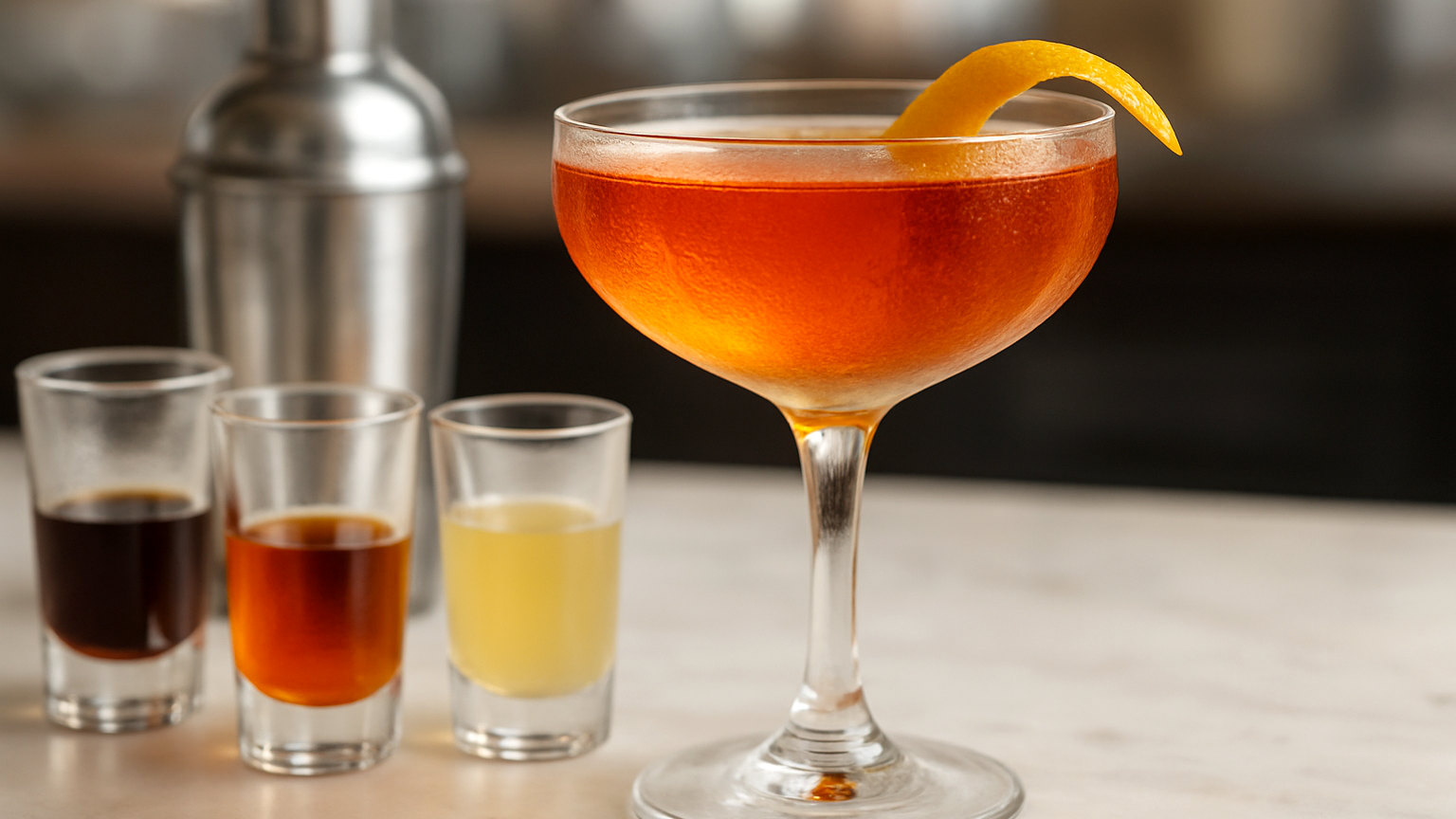
The paper plane is equal parts bourbon, amaro, orange bitter aperitivo and lemon juice. It was created in New York around 2007 and has become one of the few genuinely modern standards.
What is the recipe?
- 22ml bourbon
- 22ml amaro
- 22ml orange bitter aperitivo liqueur
- 22ml fresh lemon juice
Shake hard with ice for 12 to 15 seconds. Double strain into a chilled coupe. No garnish is needed.
Why equal parts?
Because each component balances the others precisely. Bourbon brings body and sweetness, amaro brings bitterness and herbs, the orange aperitivo brings fruit and light bitterness, lemon brings acidity.
It is also the reason the drink spread so quickly. Four equal measures is easy to remember and difficult to get wrong.
Should you adjust it?
Some bartenders raise the bourbon to 30ml for a stronger, less bitter drink. That is a reasonable adjustment and equal parts is how the drink is known.
Which amaro should you use?
A moderately bitter one with dark fruit and cola notes is what the original specifies. Amari vary enormously, so the choice changes the drink substantially.
A very bitter or very medicinal amaro will unbalance it. Something in the middle of the range is right.
What is amaro?
An Italian bitter herbal liqueur, typically 16 to 40 per cent, made by infusing herbs, roots and citrus peel in spirit and sweetening the result.
The category is enormous and ranges from gently bitter to genuinely challenging. Checking the strength matters, since the range affects the unit count considerably.
Which bourbon?
Something with body at 45 per cent or above. It is only a quarter of the drink and it is competing with two assertive liqueurs, so a thin 40 per cent bourbon disappears.
Why does it work so well?
Because bitterness and acidity arrive together and support each other. The lemon sharpens the two bitter liqueurs and stops them becoming heavy, which is what makes the drink refreshing rather than challenging.
How strong is it?
Around 2.2 units, depending on the amaro. Only a quarter is full-strength spirit and the liqueurs are lower, so it is more modest than four measures suggests.
Where does the name come from?
The M.I.A. song that was popular when it was created. The related drink Naked and Famous follows a similar equal-parts structure with different components.
Can you batch it?
Mix the bourbon, amaro and aperitivo ahead in equal parts and keep it cold. Add fresh lemon and shake per serve, since lemon dulls within hours.
That reduces each drink to one pour, one squeeze and a shake.
What glass should you use?
A chilled coupe. It is served up without ice, so the glass needs to be properly cold.
What ruins it?
An amaro at the extreme end of the bitter range, and bottled lemon juice. The first unbalances it and the second tastes flat against three assertive components.
Why did it spread so fast?
Because equal parts is easy to remember, the ingredients are widely available and the drink is immediately likeable. Very few modern cocktails meet all three conditions.
How much lemon comes from one fruit?
Around 30 to 40ml, so one lemon covers a drink with a little to spare. Squeeze it on the day, since it dulls within a few hours.
Should the drink be double strained?
Yes. It is served up in a coupe and ice shards on the surface look poor and dilute it as they melt. A fine sieve under the shaker takes two seconds.
What glass and temperature?
A coupe from the freezer. It is served up without ice, so it warms within minutes and a cold glass is doing real work.
Does the aperitivo choice matter?
Yes. An orange bitter aperitivo at 11 per cent gives a lighter drink than a red bitter at 25, and the two taste noticeably different. The orange version is what the recipe specifies.


