
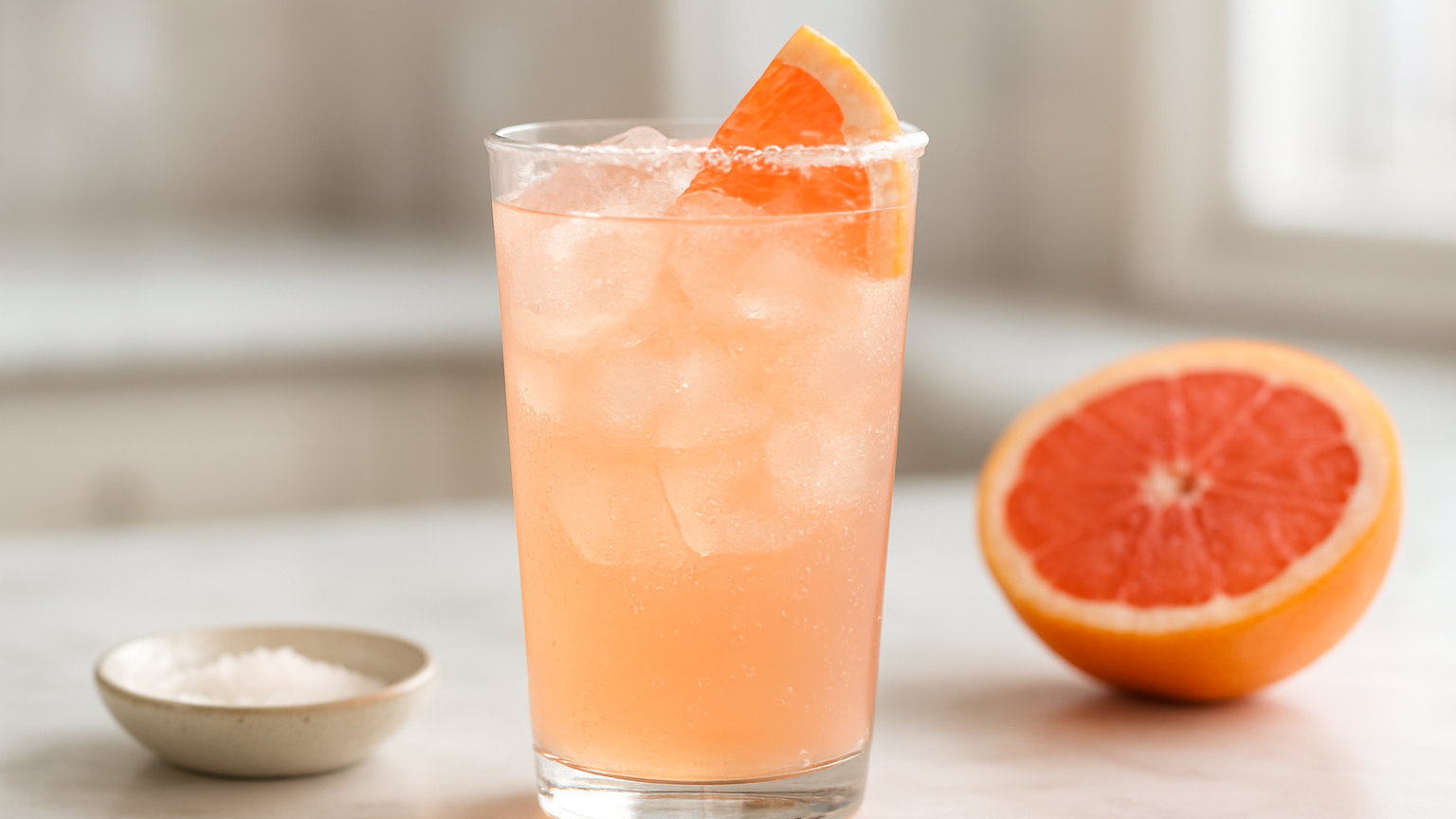
The margarita gets the attention abroad while the paloma is what people actually drink in Mexico, and it is the easier drink by some distance. There is no shaking, no orange liqueur and no rim to prepare unless you want one. Tequila, grapefruit, a little acid and salt, built directly in the glass.
What are the measures?
Fifty millilitres of blanco tequila, 15ml of fresh lime juice, a generous pinch of salt and 150ml of grapefruit soda, built over ice in a tall glass. Stir once, gently, and garnish with a grapefruit wedge.
If you are using plain soda water rather than grapefruit soda, use 100ml of fresh pink grapefruit juice, 10ml of agave syrup and 80ml of soda. That version is sharper, less sweet and considerably better, at the cost of juicing a grapefruit.
Why is the salt not optional?
Because salt suppresses bitterness. Grapefruit carries a genuine bitter component alongside its acidity, and without salt that bitterness sits at the front of the drink and makes it hard work.
A pinch stirred into the liquid does more than a salted rim, since it is distributed through the whole drink rather than concentrated on the first sip. Do both if you like, but if you only do one, salt the drink rather than the glass.
How much salt is right?
Less than you think. A pinch between two fingers, roughly a quarter of a teaspoon at most. You should not be able to taste salt as saltiness. If you can, you have gone past the point where it is helping and the drink will taste savoury rather than bright.
Which tequila should you use?
Blanco, and 100 per cent agave. The words to check on the label are those two, and anything described as mixto contains up to 49 per cent other sugars, which produces a rougher drink.
Blanco is unaged and bright, which suits the grapefruit. Reposado works and gives a rounder, slightly oaky version that some prefer in colder weather. Añejo is generally wasted here, since the citrus overwhelms the barrel character you paid for.
Which grapefruit soda works best?
The Mexican brands are traditional and noticeably drier and more bitter than most European grapefruit drinks, which tend towards sweetness. If yours is sweet, cut the drink with 30ml of soda water and add 5ml more lime.
Check the label for real juice content. Products with no actual grapefruit in them taste of sweetened citric acid, and no amount of good tequila rescues that.
How does it compare to a margarita?
They share a spirit and an acid and are otherwise quite different drinks:
- A paloma is long, around 220ml, against a margarita at around 110ml.
- A paloma is roughly 8 per cent alcohol by volume in the glass; a margarita is closer to 20.
- A paloma is built and stirred; a margarita is shaken and strained.
- A paloma is bitter and refreshing; a margarita is sharp and concentrated.
That makes the paloma the better choice for a warm afternoon or for drinking over a longer stretch, which is precisely how it is used at home.
When should you make it in a jug?
It scales more easily than almost any tequila drink, because there is nothing to shake. For six: 300ml tequila, 90ml lime juice, a teaspoon of salt and 600ml of grapefruit juice, mixed and chilled ahead. Pour 150ml over ice per glass and top each with soda at the moment of serving.
Do not add the soda to the jug. Carbonation will not survive more than a few minutes in an open container, and a pre-mixed sparkling jug is flat by the time the second glass is poured.
How strong is it actually?
Around 8 per cent alcohol by volume in the glass, which is roughly a third of a margarita. That is much of its appeal in warm weather, since it can be drunk over a longer stretch without the strength building up.
A 50ml measure of a 40 per cent tequila is two units, so three palomas across an afternoon is six units. Worth knowing against the UK guideline of no more than 14 units a week spread across three or more days, particularly when a long drink does not feel like a strong one.


