
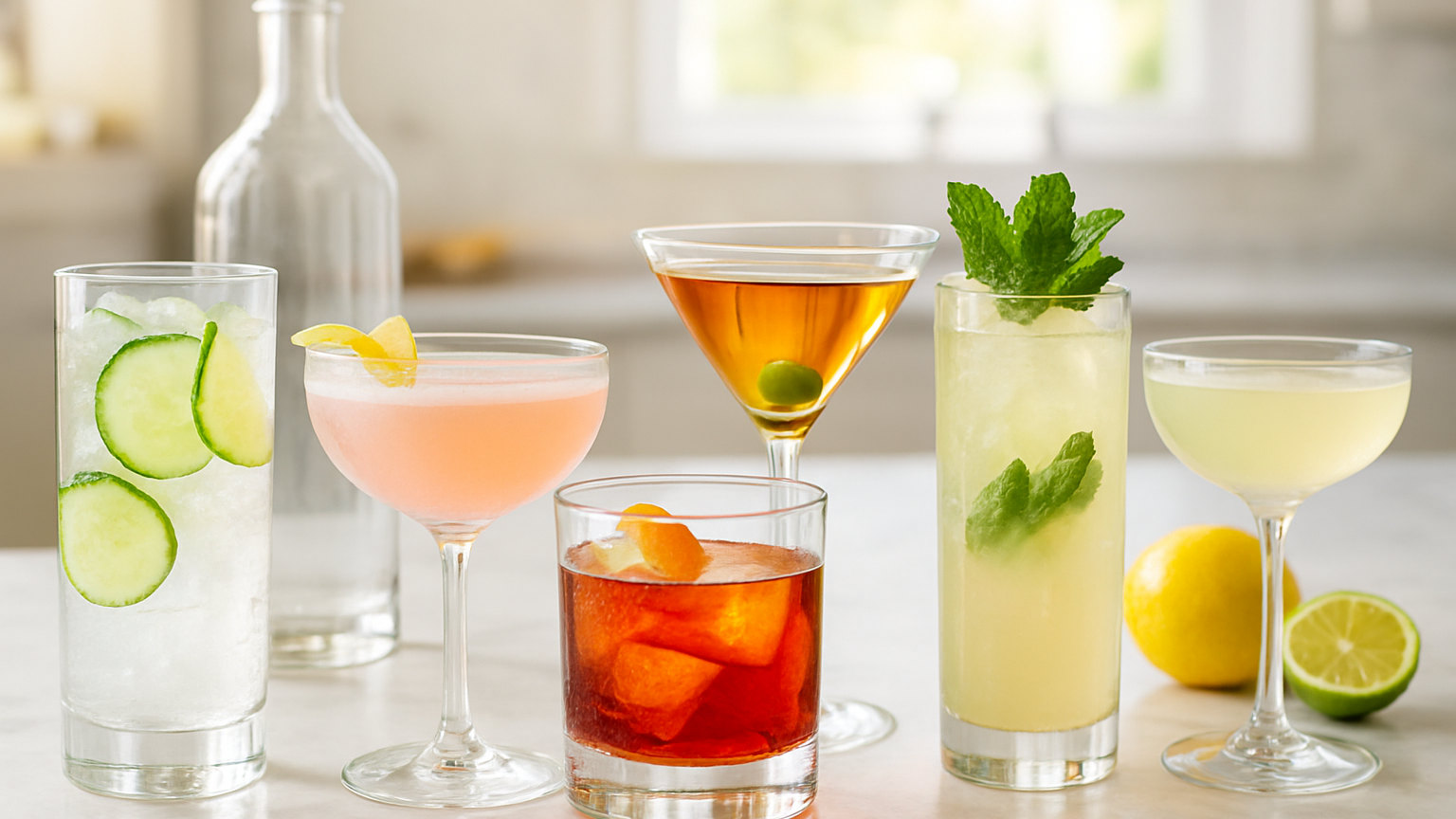
Gin earns its shelf space faster than any other spirit, because its juniper backbone gives other ingredients something to work against. Where vodka needs the mixer to be interesting, gin contributes half the flavour itself. One bottle plus a handful of cheap supporting items covers a genuinely varied list.
What do you need alongside the gin?
- Fresh lemons and limes
- Sugar, for simple syrup
- Tonic water in small bottles or cans
- Soda water
- Dry vermouth, kept in the fridge
Those five cost less than the gin and unlock everything below. Dry vermouth is the only one that spoils, so buy a small bottle and treat it as a fresh ingredient rather than a store cupboard item.
Which drinks come from gin and citrus alone?
The gimlet is the place to start. Fifty millilitres of gin, 20ml of fresh lime juice and 15ml of simple syrup, shaken hard and strained into a chilled coupe. Three ingredients, ninety seconds, and it is one of the cleanest drinks there is.
Extend it with soda and you have a Tom Collins: 50ml gin, 25ml lemon juice, 20ml syrup, built over ice in a tall glass and topped with 100ml of soda. Same structure, longer format, considerably lower in alcohol by volume of drink.
What is the difference between a Collins and a fizz?
Method more than ingredients. A Collins is built in the glass over ice and stays long. A gin fizz is shaken first, often with egg white, then strained into a smaller glass and topped with a splash of soda, giving a foamier and more concentrated drink.
How do you make a dry martini?
Sixty millilitres of gin and 10ml of dry vermouth, stirred with plenty of ice for thirty seconds and strained into a chilled glass. Lemon twist or an olive.
That is a six to one ratio, which is dry by historical standards and about where most bars sit now. If it tastes harsh, add vermouth rather than reducing it. A wetter martini at three to one is a more forgiving and arguably more interesting drink, and the fashion for near-neat gin has more to do with image than flavour.
Stir, never shake. There is no citrus juice or egg in it, so shaking only clouds the drink and roughens the texture.
What about the gin and tonic?
Fifty millilitres of gin to 150ml of tonic, in a glass filled completely with ice. The tonic matters more than the gin, because it makes up three quarters of the glass and its sugar and quinine levels vary enormously between brands.
Match the garnish to the gin rather than defaulting to lemon. A traditional London dry suits lime. A citrus-forward contemporary gin suits grapefruit peel. A floral one suits cucumber or rosemary.
Which gin should you buy for all of these?
A juniper-forward London dry at 40 to 43 per cent. It is the only style that works across every drink above. Contemporary gins built around cucumber, rose or elderflower make an excellent gin and tonic and then vanish entirely in a martini or a negroni.
If you own one bottle, it should be traditional. Buy the interesting one second, once the classics are covered.
How far does one bottle actually go?
A 70cl bottle at 40 per cent contains 28 units of alcohol, which is fourteen 50ml drinks. Worth knowing when planning for guests, and worth keeping in mind against the UK guideline of no more than 14 units a week spread across three or more days.
Long drinks such as a Collins or a gin and tonic stretch the same bottle considerably further in terms of time spent drinking, which is one of the practical arguments for the format beyond simply enjoying it.
Which drink should you learn first?
The gimlet, because it teaches the ratio that most of the others depend on. Two parts spirit, one part citrus, one part sugar is the template behind the daiquiri, the whiskey sour and the margarita as well. Once your gimlets are consistently balanced, every other shaken drink on the list follows without needing a separate recipe.


