
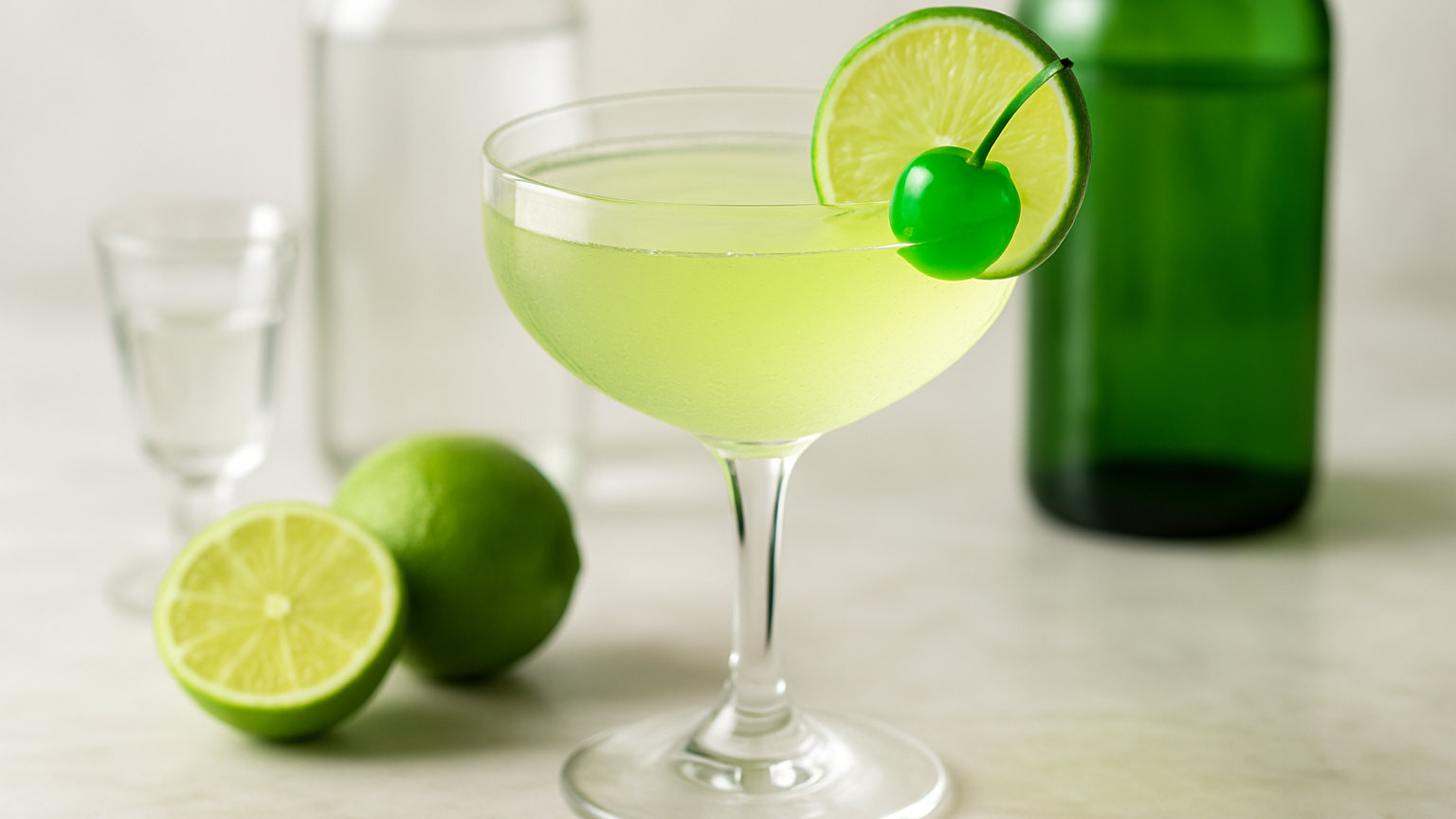
The last word is equal parts gin, green chartreuse, maraschino liqueur and lime juice. It dates from Detroit around 1915, disappeared for decades, and was revived in Seattle in the 2000s.
What is the recipe?
- 22ml gin
- 22ml green chartreuse
- 22ml maraschino liqueur
- 22ml fresh lime juice
Shake hard with ice for 12 to 15 seconds. Double strain into a chilled coupe. No garnish is needed, though a cherry is common.
Why does it work?
Because four assertive components hold each other in check. Chartreuse is intensely herbal, maraschino is dry and almond-like, lime is sharp, gin brings juniper.
Any one of them alone would dominate a drink. In equal measure they cancel out into something balanced, which is the whole interest of the recipe.
What is green chartreuse?
A French herbal liqueur at 55 per cent, made by monks from a large number of botanicals to a closely held recipe. It is intensely herbal, sweet and bitter simultaneously.
Yellow chartreuse is the milder version at around 40 per cent and it makes a gentler, less characteristic drink here.
Is there a substitute?
Nothing close. Other herbal liqueurs point in the same direction and none replicates it, which is why the drink is difficult to make without the specific bottle.
What is maraschino liqueur?
A clear cherry liqueur made from marasca cherries including the stones, which gives it a dry, nutty, almond-like character.
It is nothing like the syrup that maraschino cherries sit in, and using that syrup instead will not work.
Which gin should you use?
A robust London dry. It is only a quarter of the drink and it is competing with two very assertive liqueurs, so anything delicate disappears.
How strong is it?
Around 2.6 units, which is higher than most equal-parts drinks because chartreuse is 55 per cent and maraschino around 32.
Three quarters of the volume is alcohol and only a quarter is juice, so there is little diluting it beyond the shake.
What are the related drinks?
- Final ward. Rye and lemon in place of gin and lime.
- Naked and famous. Mezcal, yellow chartreuse and orange aperitivo.
- Paper plane. Bourbon, amaro and orange aperitivo.
- Industry sour. Green chartreuse, fernet and lime.
The equal-parts template has produced a considerable family, and this is the drink most of them descend from.
Can you batch it?
Mix the gin, chartreuse and maraschino ahead in equal parts and keep it cold. Add fresh lime and shake per serve.
Squeeze the lime on the day, since it dulls within a few hours.
What glass should you use?
A chilled coupe. Served up without ice, so a cold glass matters given how concentrated the drink is.
What ruins it?
Maraschino cherry syrup in place of the liqueur, and yellow chartreuse in place of green. Both change the drink into something quite different.
Why did it disappear and come back?
It fell out of print after prohibition and stayed obscure for decades. A Seattle bartender revived it in the early 2000s and it spread quickly through the cocktail revival.
Green chartreuse becoming widely available again was part of why the revival stuck.
Should you adjust the ratio?
Some bartenders reduce the maraschino slightly, since it is the component most likely to dominate. Equal parts is the classic specification and worth starting from.
How much lime do you need?
Around 22ml, so roughly one lime per drink. Roll it firmly on the worktop before cutting, which breaks the membranes and increases the yield.
What glass and temperature?
A coupe from the freezer, served up. Three quarters of the drink is alcohol, so it warms fast and a cold glass matters.
How long does a bottle of chartreuse last?
Around forty drinks at 22ml a measure, and it keeps indefinitely once opened. That makes the cost per drink reasonable despite the price on the shelf.
Is it a good first equal-parts drink?
Not the easiest, since green chartreuse and maraschino are both assertive and neither is a common cupboard bottle. The paper plane is more approachable if you are starting out.
Once you have the bottles, this is the one the whole family descends from and worth learning first in that sense.


