
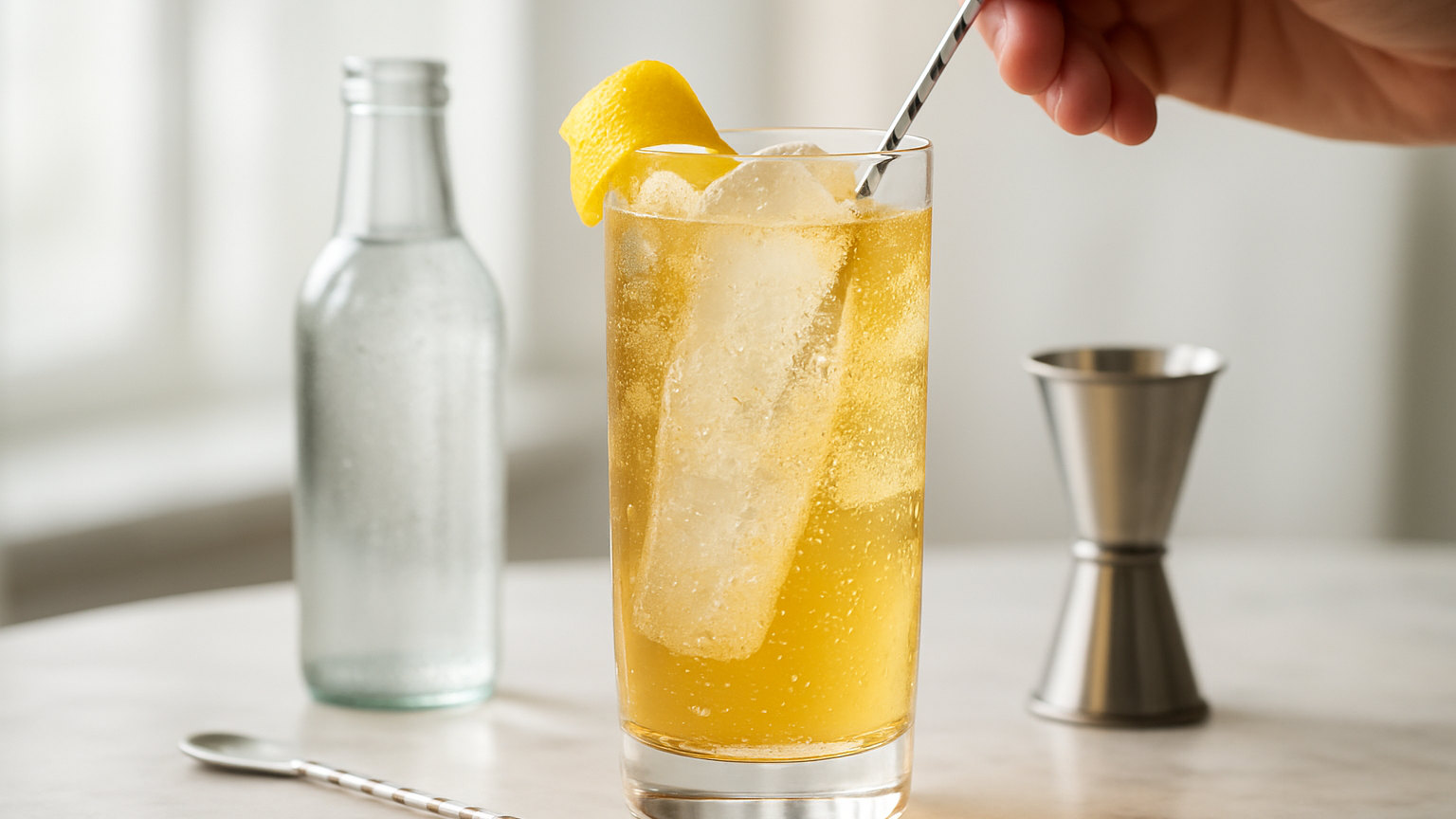
A highball is two ingredients poured into a tall glass, and it is taken seriously enough in Japan that bartenders spend years refining it. That seems absurd until you drink a properly made one next to a carelessly made one. The difference is entirely in technique, because there is no recipe to speak of.
What is the right ratio?
One part spirit to three parts mixer is the standard, so 50ml of spirit to 150ml of soda. Some prefer one to four for a longer, lighter drink, particularly with a strongly flavoured whisky.
The ratio is worth measuring rather than pouring by eye, because a highball that drifts to one to two becomes noticeably hot and loses the refreshing quality that is the entire point of the format.
Why does the ice matter so much?
More than in almost any other drink, for two reasons. A highball is drunk slowly over twenty minutes or more, so the ice has to last. And cold liquid holds carbon dioxide where warm liquid releases it.
Fill the glass completely with ice. This is counterintuitive and most people use half what they should, worrying about dilution. A full glass of cold, dry ice actually dilutes less than three cubes, because a larger mass of ice warms more slowly and melts less.
Does the ice need to be clear?
Clear ice melts marginally more slowly because it has fewer trapped air pockets and impurities, but the difference is small. Dry, hard ice straight from a cold freezer matters far more than clarity. Ice that has been sitting out, or that is wet on the surface, has already started melting and will dilute the drink fast.
How should you pour it?
The order and the technique both change the result:
- Fill the glass with ice and stir briefly to chill it, then pour off any meltwater.
- Add the spirit and stir again, thirteen or so rotations, to chill it before the mixer arrives.
- Add fresh ice if the level has dropped.
- Pour the soda down the inside of the tilted glass, not into the middle.
- Lift once from the bottom with a bar spoon. Do not stir.
Every one of these steps exists to preserve carbonation. Pouring soda into the middle of a glass of ice knocks a large proportion of the gas out immediately, and stirring afterwards removes most of the rest.
Why does carbonation matter beyond texture?
Because bubbles carry aroma to your nose. A flat highball does not just feel dull, it smells of less, and most of what you experience as flavour is aroma. This is why a carefully built highball tastes noticeably more of the whisky than a carelessly built one containing exactly the same amount.
Use small bottles or cans of mixer rather than a large bottle. A litre of soda loses most of its carbonation within two days of opening, and there is nowhere for that loss to hide in a two-ingredient drink.
Which spirits suit the format?
Almost all of them, and the results differ usefully:
- Japanese or blended scotch: the classic. Light, clean and built for it.
- Bourbon: sweeter, works well with a lemon twist.
- Rum: white rum with soda and lime is essentially a cuba libre without the cola.
- Gin: becomes a gin and soda, which is drier and better than it sounds.
- Heavily peated whisky: divisive, but the soda opens up the smoke considerably.
What garnish helps?
A twist of lemon peel expressed over the surface, which adds aroma without acidity. A wedge squeezed in adds juice and changes the drink into something else, which is fine but is a different decision.
Nothing more than that. The highball is a format built on restraint, and the reason it rewards attention is that there is nothing else in the glass to compensate for a careless pour.
It is also the format that lets you drink slowly. A highball sits around 8 per cent alcohol by volume in the glass against 25 or more for a shaken cocktail, which is a substantial difference across an evening and much of the reason the style is drunk the way it is.


