
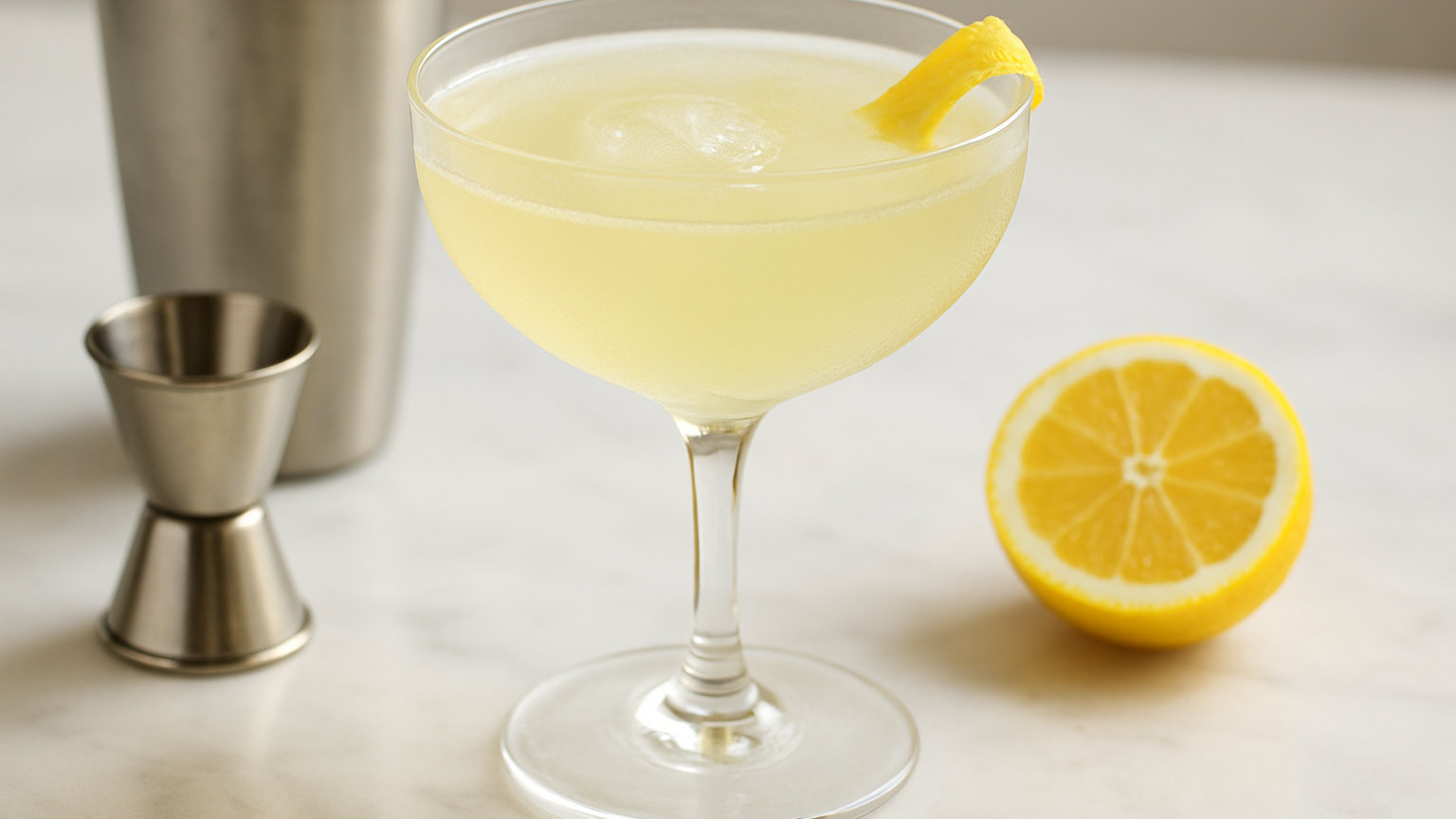
The corpse reviver no 2 is equal parts gin, orange liqueur, aromatised aperitif wine and lemon juice, served in a glass rinsed with absinthe. The original printed recipe carries a warning that four taken in swift succession will unrevive the corpse.
What is the recipe?
- 22ml gin
- 22ml orange liqueur
- 22ml aromatised aperitif wine
- 22ml fresh lemon juice
- A small measure of absinthe, for the rinse
Rinse a chilled coupe with absinthe and discard the excess. Shake the rest hard with ice and double strain into the rinsed glass. A lemon twist or cherry is optional.
What does the absinthe rinse do?
Pour a small quantity into the glass, swirl to coat the inside, then tip the rest out. What remains is a film that perfumes the drink without adding a measure of a very strong spirit.
Absinthe is 45 to 68 per cent and intensely aromatic. A full measure would dominate everything else, so the rinse is the point rather than a shortcut.
Can you skip it?
The drink still works and it loses a good deal. The anise sits behind the citrus and gin and ties them together.
A few drops added directly is a reasonable alternative if you would rather not waste any.
Why equal parts?
Because each component checks the others. Gin brings juniper, the orange liqueur brings sweetness, the aperitif wine brings herbal bitterness, lemon brings acidity.
It is one of the earliest equal-parts cocktails and the structure later reappeared in the paper plane and the last word.
What is the aperitif wine?
The original specified a French aromatised wine that was later reformulated, so the modern product differs from what the recipe assumed.
Any dry aromatised aperitif wine works. Some bartenders substitute a dry vermouth with a little extra sweetness, which is close.
Why is the name a warning?
Because the corpse reviver category was a family of morning-after drinks, and this one is notably easy to drink for something at nearly full strength.
The printed caution about four in succession was a joke and it is a fair description. At around 2 units and tasting almost entirely of citrus, it is easy to lose count.
Which gin should you use?
A London dry at 40 per cent or above. It is only a quarter of the drink and it is competing with three assertive components.
How strong is it?
Around 2 units. Only a quarter is full-strength spirit and the aperitif wine is low, so it is more modest than four measures suggests.
Should it be shaken?
Yes, since it contains citrus. Shake hard for 12 to 15 seconds and double strain into the prepared glass.
Can you batch it?
Mix the gin, liqueur and aperitif wine ahead in equal parts. Add fresh lemon and shake per serve, and rinse each glass individually.
What glass should you use?
A chilled coupe, rinsed with absinthe before the drink goes in. The rinse and the chill happen together, so prepare the glass first.
What ruins it?
A full measure of absinthe instead of a rinse, and bottled lemon juice. The first buries everything and the second tastes flat.
Why is it so easy to drink?
Because the lemon and orange liqueur dominate the flavour while three quarters of the volume is alcoholic. It tastes like a citrus drink and drinks like a cocktail.
That gap is exactly what the original warning was pointing at.
What are the other corpse revivers?
The no 1 is cognac, apple brandy and sweet vermouth, stirred and considerably richer. Several later numbered versions exist and none is widely made.
The no 2 is the one that survived, by some distance.
How much lemon do you need?
Around 22ml, so roughly half a lemon per drink. Squeeze it on the day, since it dulls within a few hours and there is nothing here to disguise flat citrus.
How much absinthe does the rinse use?
Around 5ml poured in, swirled and tipped out, of which perhaps 1ml stays. A small bottle lasts a very long time at that rate.


