
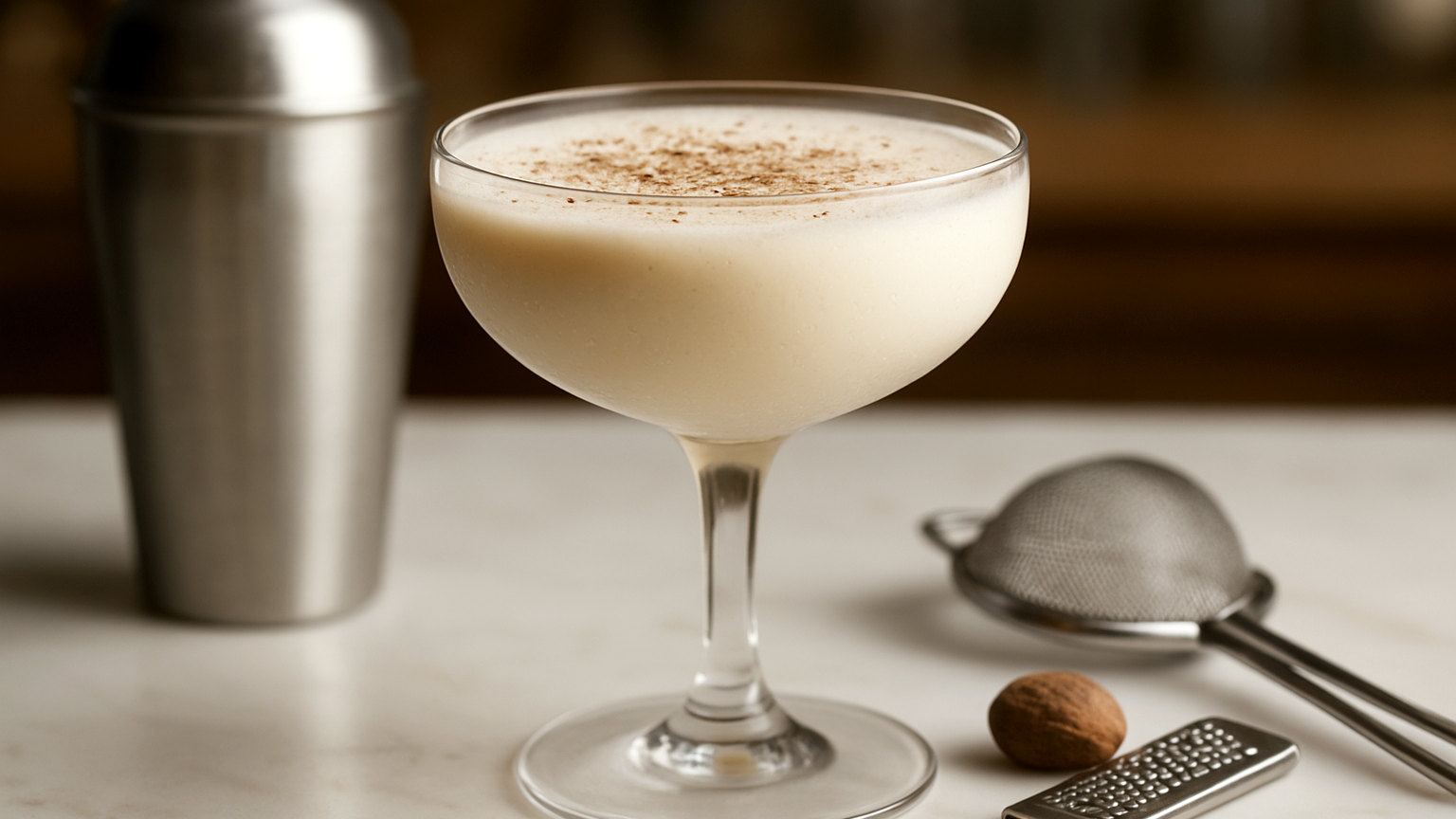
A brandy alexander is cognac, crème de cacao and cream in equal parts. It is one of the oldest dessert cocktails still ordered and it remains one of the best, provided the cream is shaken properly.
What is the recipe?
- 30ml cognac
- 30ml crème de cacao, dark or white
- 30ml double cream
- Freshly grated nutmeg
Shake hard with ice for 15 seconds. Double strain into a chilled coupe. Grate nutmeg over the surface.
Why equal parts?
Because each component balances the others. Cognac brings warmth and fruit, cacao brings sweetness and chocolate, cream softens both and carries the texture.
Shifting the ratio unbalances it quickly. More cognac makes it thin and boozy; more cacao makes it cloying.
Dark or white crème de cacao?
Dark gives a deeper chocolate flavour and a browner drink. White keeps it paler and tastes very similar. The choice is largely visual.
Why shake hard?
Because shaking aerates the cream, which lightens the texture and gives the drink a slight foam. A stirred alexander is heavy and flat.
Fifteen seconds with plenty of ice. The drink should arrive cold, pale and slightly frothy rather than thick.
Why nutmeg?
Because it lifts the whole drink. Chocolate and cream are both rich and rounded, and freshly grated nutmeg adds an aromatic sharpness that cuts through.
Grate it fresh over the surface rather than stirring in ground nutmeg, which is far less aromatic and sinks.
Which cream should you use?
Double cream gives the richest result and shakes to a good texture. Single cream is lighter and works well.
Whole milk produces something noticeably thinner, which is a reasonable option if you find the standard version heavy.
How strong is it?
Around 1.6 units. Only a third of the drink is a full-strength spirit, and the cream and sugar disguise it entirely.
What is the difference from an alexander?
The original alexander used gin rather than brandy. The brandy version appeared later and largely displaced it, which is why the name is usually assumed to mean cognac.
Both are worth making and the gin version is drier and more herbal.
Should it be double strained?
Yes. Ice shards in a creamy drink are unpleasant and spoil the smooth texture the drink depends on.
Can you batch it?
Poorly, since cream drinks separate on standing. Pre-measure the cognac and cacao together and add cream per serve.
When should you serve it?
After dinner, in place of a dessert. It is rich enough to stand in for a pudding, which is exactly the role it was created for.
What ruins it?
Stirring instead of shaking, and ground nutmeg from a jar. The first leaves it heavy, the second contributes almost no aroma.
Which cognac should you use?
A decent VS or VSOP. It is only a third of the drink and it is competing with chocolate and cream, so an expensive XO contributes nothing you will taste.
How long does it hold?
Serve it immediately. Cream drinks separate as they warm, and the aeration from shaking collapses within a few minutes.
How does it compare to the gin version?
Sweeter and more dessert-like. Cognac is fruity and rounded, so it adds to the richness; gin is dry and aromatic, so it cuts through it.
Both are around 1.6 units and worth trying side by side, since the difference is larger than swapping one spirit usually produces.
Can you make it dairy free?
Partly. Oat cream substitutes reasonably and gives a similar texture. Crème de cacao generally contains no dairy, though labelling varies and is worth checking.
Coconut cream works and brings a strong flavour of its own.
Where does the name come from?
Disputed, as with most drinks of the period. The gin version came first in the 1910s and the brandy version followed, and no origin story for either is well documented.
Should you use dark crème de cacao?
It gives a deeper chocolate flavour and a browner drink, which suits the cognac well. White keeps it paler. The two taste very similar, so the choice is mostly about how you want it to look.


