
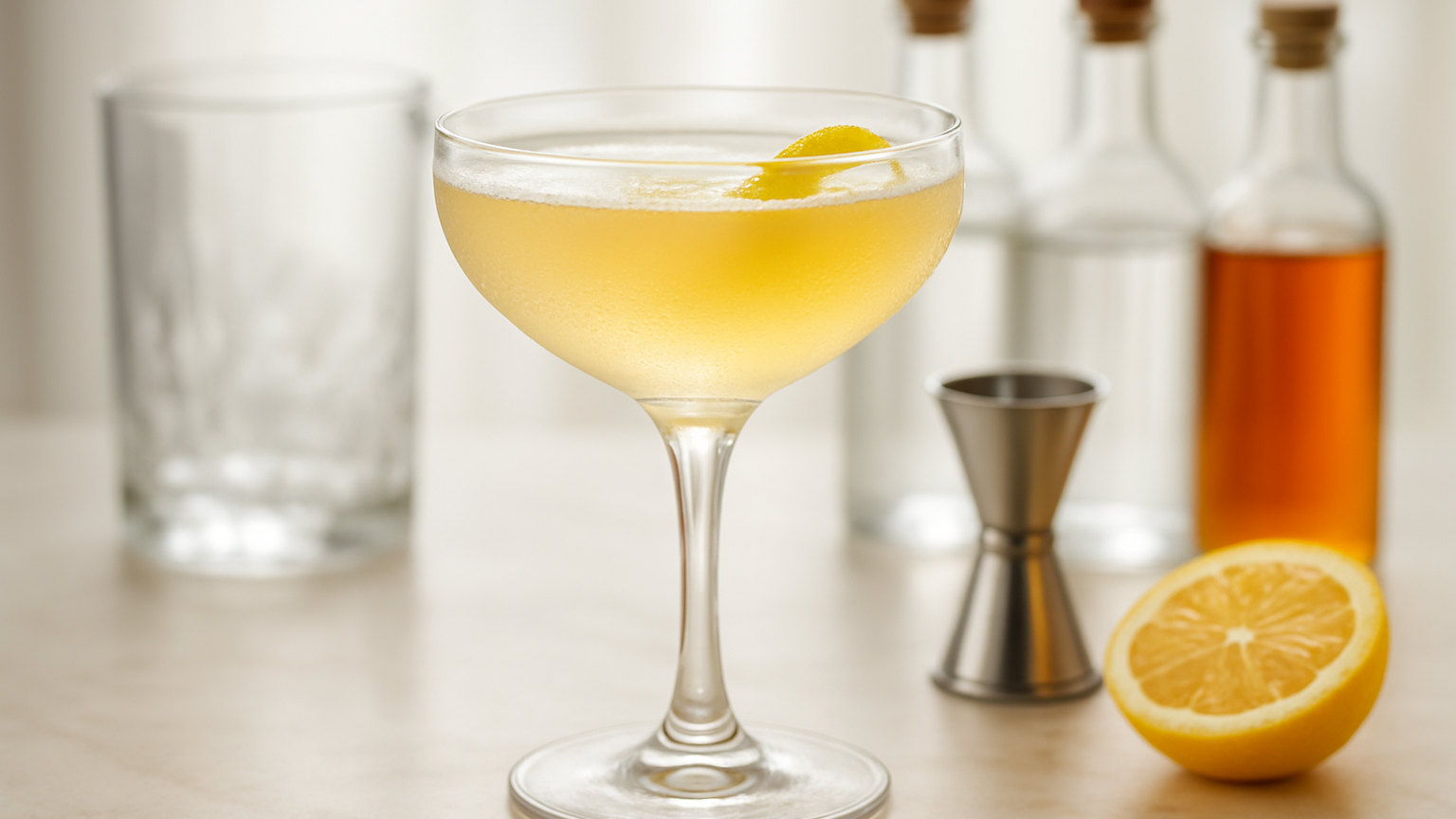
Between the sheets is cognac, white rum and orange liqueur with a little lemon. It is essentially a sidecar with rum added, and the addition makes it a noticeably stronger drink.
What is the recipe?
- 30ml cognac
- 30ml white rum
- 30ml orange liqueur
- 15ml fresh lemon juice
Shake hard with ice for 12 to 15 seconds. Double strain into a chilled coupe. Garnish with a lemon twist.
How does it differ from a sidecar?
The rum, and the proportions. A sidecar is cognac-led with a supporting liqueur; this splits the base between two spirits and uses less lemon.
The result is richer and less sharp, and it is stronger because three quarters of the volume is alcohol.
Why so little lemon?
Because the drink is built around the interplay between the two spirits rather than around citrus. Fifteen millilitres is enough to lift it without turning it into a sour.
Increasing it to 20 or 25ml makes a sharper, more sour-like drink, which some prefer and is a legitimate adjustment.
Does it need sugar?
No. The orange liqueur provides all of it, and adding syrup makes the drink cloying.
Which rum should you use?
A clean white rum. The cognac is already contributing fruit and depth, so a heavily estered Jamaican rum competes rather than supports.
A lightly aged gold rum works and makes a rounder version.
Which orange liqueur?
A drier curaçao style at 38 to 40 per cent. It is a third of the drink, so a cheap sweet triple sec at 20 per cent changes the balance substantially and lowers the strength.
How strong is it?
Around 3 units after dilution, which is comparable to a large glass of wine in a small coupe. That is high for a shaken drink and it does not taste like it.
Three quarters of the volume is spirit and liqueur, with only 15ml of juice, so there is very little diluting it.
When should you drink it?
Before dinner or later in an evening, and slowly. It is not a session drink and two is a substantial amount.
Where does the name come from?
Disputed and probably suggestive, dating from Paris in the 1930s. Several origin stories circulate and none is well documented.
Can you batch it?
Mix the three spirits ahead in equal parts and keep it cold. Add fresh lemon and shake per serve.
Given the strength, measuring rather than free pouring is worth doing.
What glass should you use?
A chilled coupe. Served up without ice, so the glass should come from the freezer given how strong the drink is.
Should it be shaken?
Yes, since it contains citrus. Shake hard for 12 to 15 seconds with plenty of ice and double strain into a chilled glass.
What ratio should you settle on?
Equal parts of the three alcoholic components with half a measure of lemon. Raising the lemon to 20ml makes a sharper drink that is easier to manage.
How should you pace it?
Slowly. At around 3 units in a small coupe it is one of the stronger shaken classics, and the orange liqueur and cognac make it taste considerably gentler than it is.
Which cognac should you use?
A decent VS or VSOP. It is only a third of the drink and it shares the base with rum, so an expensive bottling is largely wasted here.
Where does it sit in the cocktail family?
Directly alongside the sidecar, sharing the cognac, orange liqueur and lemon structure. The rum is what separates them, and it pushes the drink towards a richer, less citrus-led style.
What ruins it?
A heavily estered rum, which fights the cognac, and free pouring. At this strength, measuring matters more than usual.
Can you make it lighter?
Raise the lemon to 25ml and drop each spirit to 25ml. That gives a sharper drink at around 2.5 units, which is easier to have more than one of.


