
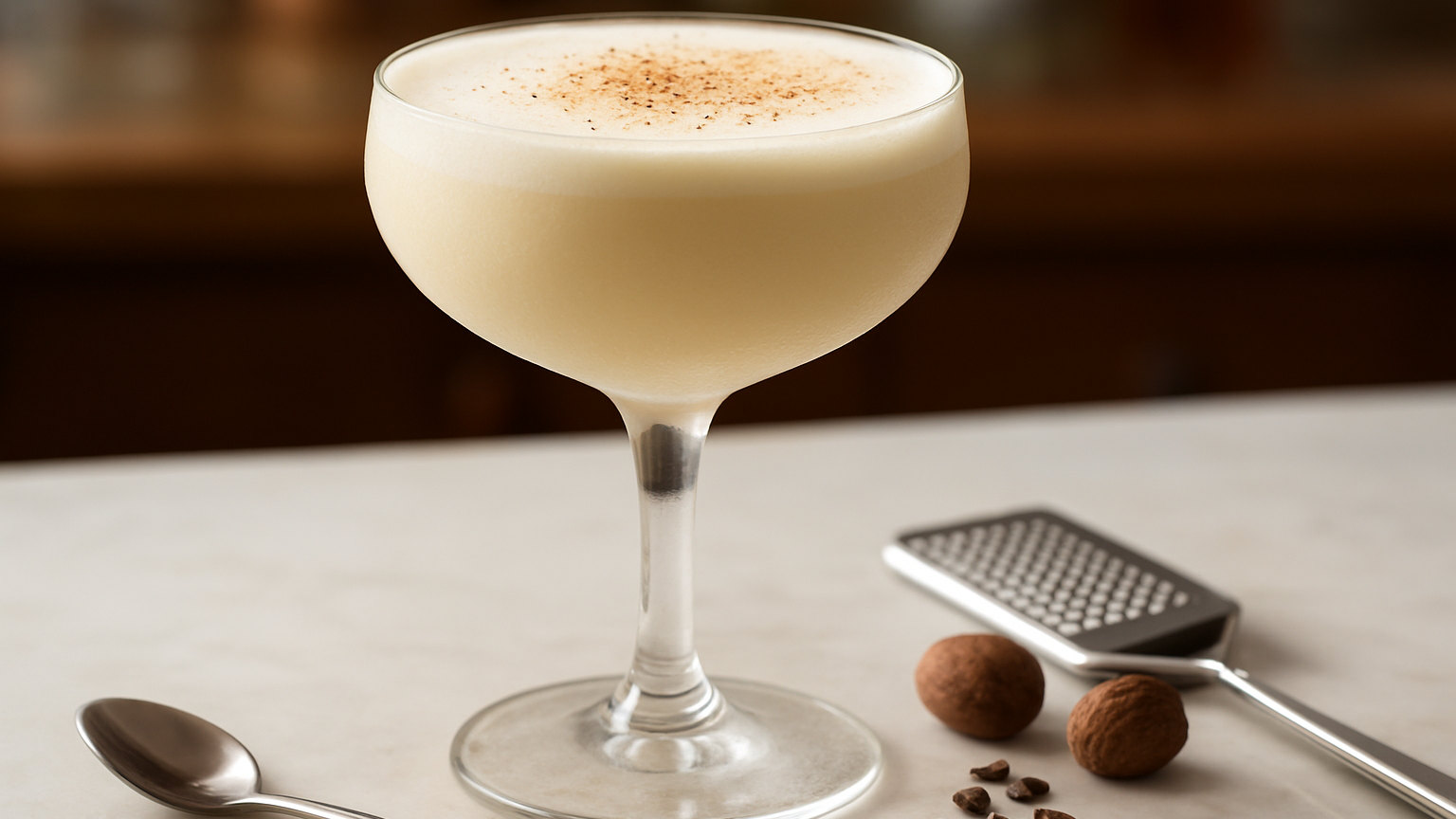
The alexander is gin, crème de cacao and cream in equal parts. It came first and the brandy version largely displaced it, which means most people meet the descendant rather than the original.
What is the recipe?
- 30ml gin
- 30ml crème de cacao, white
- 30ml double cream
- Freshly grated nutmeg
Shake hard with ice for 15 seconds. Double strain into a chilled coupe. Grate nutmeg over the surface.
Why does gin work with cream?
Because juniper and the botanicals in gin are aromatic rather than sweet, so they cut through the richness instead of adding to it. The result is drier and more interesting than the brandy version.
It sounds unlikely and it is one of the more surprising combinations in the classic repertoire.
Which gin should you use?
A London dry with clear juniper. A soft floral contemporary gin disappears entirely under chocolate and cream, which defeats the purpose.
Strength matters too. At 40 per cent the gin is fighting for attention; at 45 or above it holds its own.
How does it differ from a brandy alexander?
The base spirit, and the character changes completely. Cognac is fruity and rounded, so the brandy version is sweeter and more dessert-like.
Gin is dry and aromatic, so this version is sharper and more balanced. Both are around 1.6 units.
Why white crème de cacao?
Because dark would muddy the pale colour the drink is known for. The two taste very similar, so the choice is visual.
Why nutmeg?
Because it lifts the whole drink. Chocolate and cream are rich and rounded, and freshly grated nutmeg adds an aromatic sharpness that cuts through.
Grate it fresh rather than using ground nutmeg, which is far less aromatic and sinks into the drink.
Why shake hard?
Because shaking aerates the cream, which lightens the texture and gives a slight foam. A stirred alexander is heavy and flat.
Fifteen seconds with plenty of ice, then double strain to keep ice shards out.
Which cream should you use?
Double cream gives the richest result. Single cream is lighter and works well, and whole milk gives something noticeably thinner.
How strong is it?
Around 1.6 units. Only a third is full-strength spirit and the cream and sugar disguise it entirely.
Why did the brandy version take over?
Probably because cognac suits sweetness more obviously, and because gin fell out of fashion in the mid twentieth century. The original is worth reviving.
Can you batch it?
Poorly, since cream drinks separate on standing. Pre-measure the gin and cacao together and add cream per serve.
What ruins it?
A delicate contemporary gin, which vanishes under the chocolate and cream, and stirring instead of shaking.
How long does it hold?
Serve it immediately. Cream drinks separate as they warm and the aeration from shaking collapses within a few minutes.
When should you serve it?
After dinner, in place of a dessert. It is rich enough to replace one, which is the role the whole alexander family was created for.
Which crème de cacao should you use?
White, to keep the pale colour. Dark tastes very similar and turns the drink brown, which loses the appearance the alexander is known for.
Should it be double strained?
Yes. Ice shards in a creamy drink are unpleasant and spoil the smooth texture the drink depends on. A fine sieve held under the shaker takes two seconds.
Where does the name come from?
Unrecorded, and it dates from the 1910s. Several explanations circulate and none has good evidence behind it.
Is it worth reviving?
Yes. It is drier and more interesting than the brandy version, and gin against chocolate and cream is a combination almost nobody expects to work.
Can you make it dairy free?
Partly. Oat cream substitutes reasonably and gives a similar texture. Crème de cacao generally contains no dairy, though labelling varies between products and is worth checking.
How much cream should you use?
Thirty millilitres, matching the other two components. Increasing it makes the drink heavier and mutes the gin further, which is the opposite of what the original was for.


