
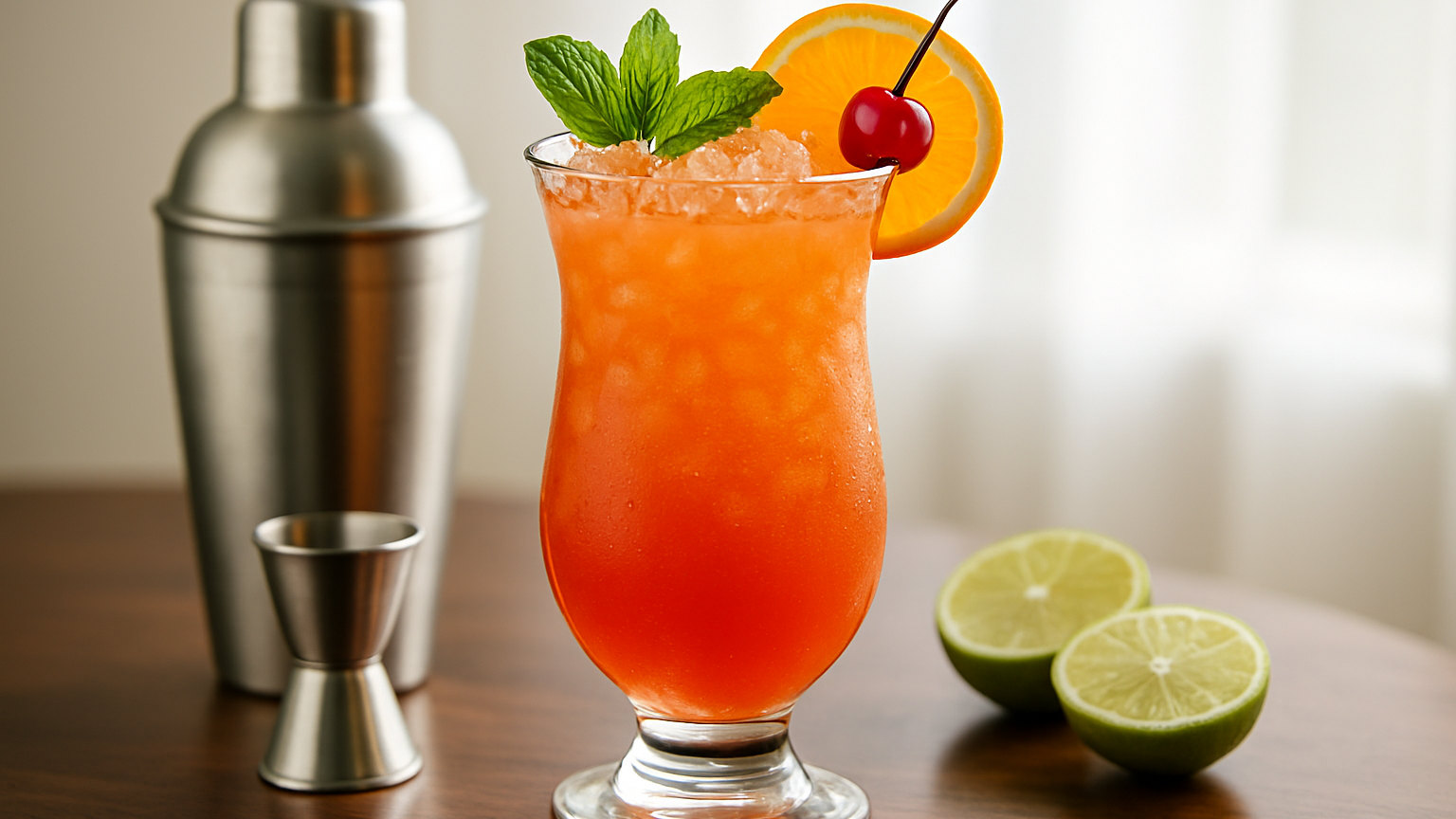
The zombie is the most notorious tiki drink and the one most worth being careful with. It contains three rums including overproof, and the fruit and spice hide that almost completely.
What is the recipe?
- 45ml aged Jamaican rum
- 45ml gold Puerto Rican rum
- 30ml overproof rum
- 20ml fresh lime juice
- 15ml falernum
- 15ml grapefruit juice
- 10ml cinnamon syrup
- 5ml grenadine
- 6 drops absinthe
- 1 dash aromatic bitters
Blend briefly with crushed ice or shake hard, pour unstrained into a tall glass, and garnish with mint.
How strong is it?
Around 4 to 5 units in a single glass, which is comparable to most of a bottle of wine. That is the most important thing to know about the drink.
The citrus, spice and sweetness disguise it almost entirely. Bars historically limited customers to two, and that limit was sensible rather than theatrical.
Why three rums?
Because each does a different job. The Jamaican brings esters and tropical fruit, the gold brings body and sweetness, the overproof brings intensity and lift.
A single-rum version tastes noticeably flatter. The blend is the recipe rather than a workaround.
What does overproof rum add?
Concentration rather than just strength. At 57 to 75 per cent it carries more flavour per millilitre, so 30ml contributes what a much larger measure of standard rum would.
It also raises the unit count substantially, which is worth accounting for rather than pouring by eye.
What is falernum?
A Caribbean syrup or liqueur of lime, clove, ginger and almond. It appears throughout tiki recipes and gives spice and citrus together.
It usually contains almond, so it is an allergen worth flagging when serving to others.
Why so few drops of absinthe?
Because it is powerful enough to dominate a drink at any real measure. Six drops adds an anise lift that ties the spices together without announcing itself.
A rinse of the glass, discarded, achieves something similar if you would rather not measure drops.
Why does the recipe vary so much?
Because the original from the 1930s was a closely guarded secret, and the creator deliberately obscured his specifications. Recipes were reconstructed decades later from coded notes.
Most versions in circulation are simplified, sweeter and use tinned juice, which is why the drink has a poor reputation it does not deserve.
What if you cannot get all the ingredients?
A reasonable simplified version uses two rums, lime, grapefruit, falernum and grenadine. It is a good drink and it is not the same one.
Falernum is the one worth buying, since it appears in a great many tiki recipes.
Can you batch it?
The syrups and rums can be pre-mixed. Add fresh citrus and blend or shake per serve.
Given the strength, batching is worth measuring carefully rather than doing by eye, and telling people what is in it is worth doing.
What glass should you use?
A tall glass or a zombie glass, packed with crushed ice. The dilution as the ice melts is doing real work in a drink this strong.
How should you pace it?
Slowly, with water alongside. One is a substantial drink and two is most of a day for many people, which is why the historical two-drink limit existed.
Serving it to anyone who has not had one before is worth a word about the strength first.
What is cinnamon syrup?
Sugar syrup infused with cinnamon sticks, made by simmering two sticks in 200ml of syrup for ten minutes and leaving it to cool. It keeps a fortnight in the fridge.
It appears across tiki recipes and takes minutes to make, which is worth doing rather than buying.
Why is it so complicated?
Because the original was built to be difficult to copy. The creator used coded ingredient lists and pre-batched mixes precisely so that competitors could not reverse engineer it.
Is it worth making at home?
If you already own several rums and falernum, yes. It is a genuinely good drink rather than a novelty, and the reconstructed recipes are dry and complex rather than sweet.
As a first tiki drink it is an expensive starting point, and a mai tai teaches the same structure with fewer bottles.


