
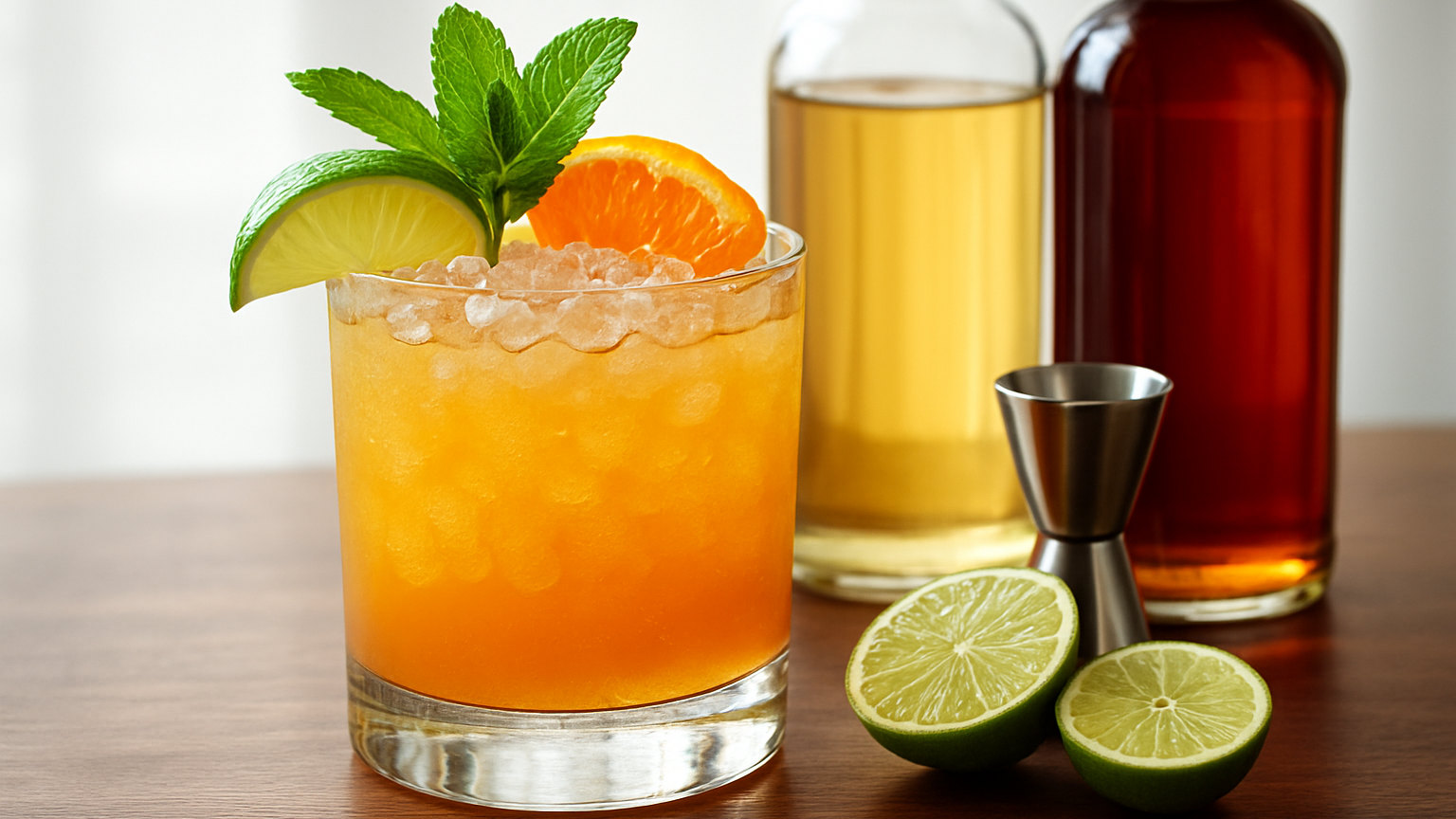
Rum covers a wider range than any other spirit category, from clean and light to intensely funky to grassy and vegetal. Matching the style to the drink matters more here than choosing between brands.
What should each style be used for?
- Light Spanish style white. Daiquiri, mojito, cuba libre. Clean, lets citrus lead.
- Jamaican white or aged. Anything wanting funk. Excellent in a daiquiri variation.
- Aged Barbadian or Guyanese. Old fashioned style drinks, rum sours, sipping.
- Rhum agricole. Ti punch, daiquiri variations. Grassy and distinctive.
- Overproof. Floats, tiki drinks, small quantities for intensity.
- Dark and heavy. Dark and stormy, punches, anything with ginger.
Why is blending rums standard?
Because classic tiki recipes were built that way. A drink might call for a light Puerto Rican rum, a Jamaican pot still and a small measure of overproof, each contributing something the others lack.
It is not a workaround for not having the right bottle. The blend is the recipe, and single-rum versions of these drinks are noticeably flatter.
What does each contribute?
Light rum gives strength without flavour interference. Jamaican gives esters and fruit. Aged gives depth and oak. Overproof gives intensity and lift in small quantities.
What is overproof rum for?
Concentration rather than strength. Rums at 57 to 75 per cent carry more flavour per millilitre, so 15ml can contribute what 40ml of a standard rum would.
They are also used as floats on top of tiki drinks, and in flamed garnishes. Anything involving lighting alcohol should be done carefully, away from anything flammable, with the bottle closed and well clear of the flame.
A 25ml measure of a 75 per cent rum is 1.9 units, roughly what 50ml of a standard spirit gives. Measures need reducing accordingly.
Which rum for a mojito?
A clean white rum, since the drink is already busy with mint, lime, sugar and soda. Something assertive fights the mint.
Press the mint gently rather than muddling it hard. Bruising releases bitter chlorophyll, and the aim is to release oils rather than to shred the leaves.
Which for a dark and stormy?
A dark, heavy rum with the ginger beer doing most of the work. This is a drink where the mixer matters more than the spirit, so spend on a fiery ginger beer.
Build over ice, top with ginger beer, and float the rum on top if you want the layered look.
What about a ti punch?
Rhum agricole, a small amount of cane syrup and a disc of lime with peel attached, squeezed and dropped in. Served without ice or with a single cube.
It is served strong and small, traditionally assembled by the drinker rather than the host. Around 50ml of agricole at 50 per cent is 2.5 units in a very small glass.
What should a rum shelf hold?
Three bottles cover almost everything: a clean white, an aged Jamaican or Barbadian, and an overproof used sparingly. A rhum agricole is a worthwhile fourth.
Does rum quality matter in long drinks?
Less than in a daiquiri. A cuba libre is mostly cola and a dark and stormy is mostly ginger beer, so mid-range rum is ample and the money is better spent on the mixer.
In a daiquiri, a ti punch or anything sipped neat, the rum is the drink and it shows.
What is a rum old fashioned?
Aged rum, sugar syrup and bitters, stirred over ice with an orange twist. It works particularly well with a rich Guyanese or Barbadian rum.
Use less sugar than in a whiskey version, since most aged rum is already sweeter.
What about rum punch?
The oldest format in the category and built on a simple rhyme: one part sour, two parts sweet, three parts strong, four parts weak. Lime, syrup, rum and water or juice.
It scales easily for a group and it is worth measuring rather than eyeballing, since a punch bowl hides the strength completely.


